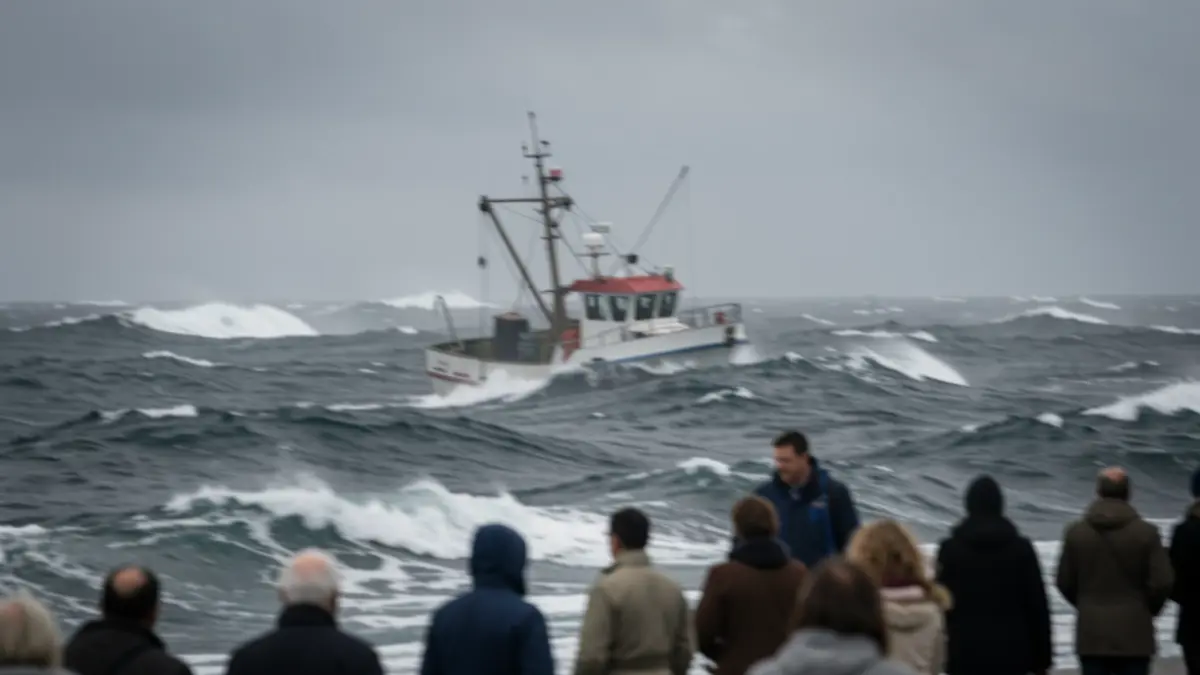
The Audiencia Nacional has issued a ruling to proceed to an abbreviated procedure in the 'Villa de Pitanxo' shipwreck case, proposing to try the vessel's captain, Juan Enrique Padín, and two executives from Pesquerías Nores, José Antonio Nores Rodríguez and José Antonio Nores Ortega. They are being investigated for 21 counts of gross negligence homicide and a crime against workers' rights. The shipowner is listed as subsidiarily civilly liable, and the insurer British Marine as civilly liable.
The legal representatives of the deceaseds' families have appealed to the Supreme Court, arguing that the events could be classified as 'homicide by eventual intent'. This request has been rejected at least three times by the Audiencia Nacional. Homicide by eventual intent, according to the legal definition, requires the subject to know or foresee the high probability of their action causing a serious outcome and, despite this, decide to proceed.
The appeals filed by the families point out that Judge Moreno's investigation has overlooked potential crimes punishable by sentences exceeding nine years in prison, the limit for the abbreviated procedure. They argue that the accused consciously accepted serious structural and operational deficits that created a mortal risk, such as workdays of up to 20 hours and the captain's persistent risky maneuvers in areas with strong winds, systematically ignoring risk factors.
It is alleged that 'the shipowners created a vessel that was a death trap', with alleged illegal modifications to store more fuel than permitted and insufficient survival equipment. Furthermore, the vessel operated in prohibited ice-forming zones, which, according to the families, constitutes intentional homicide.
Conversely, the Public Prosecutor's Office has rejected these arguments, stating that the defendants acted in the belief that the fatal outcome would not occur. In a ruling dated March 26, the Public Prosecutor's Office indicated that the shipowners and the captain trusted the latter's expertise to resolve any maritime incident. The prosecution considers that a duty of care was breached, either through ignorance of this duty or by believing the outcome would not occur, rather than through conscious acceptance of the risk.
The same sources close to the process indicate that these appeals are not suspensive, meaning the deadline for submitting the accusation briefs continues to run. The case is currently at this stage, more than four years after the shipwreck, which occurred on February 15.