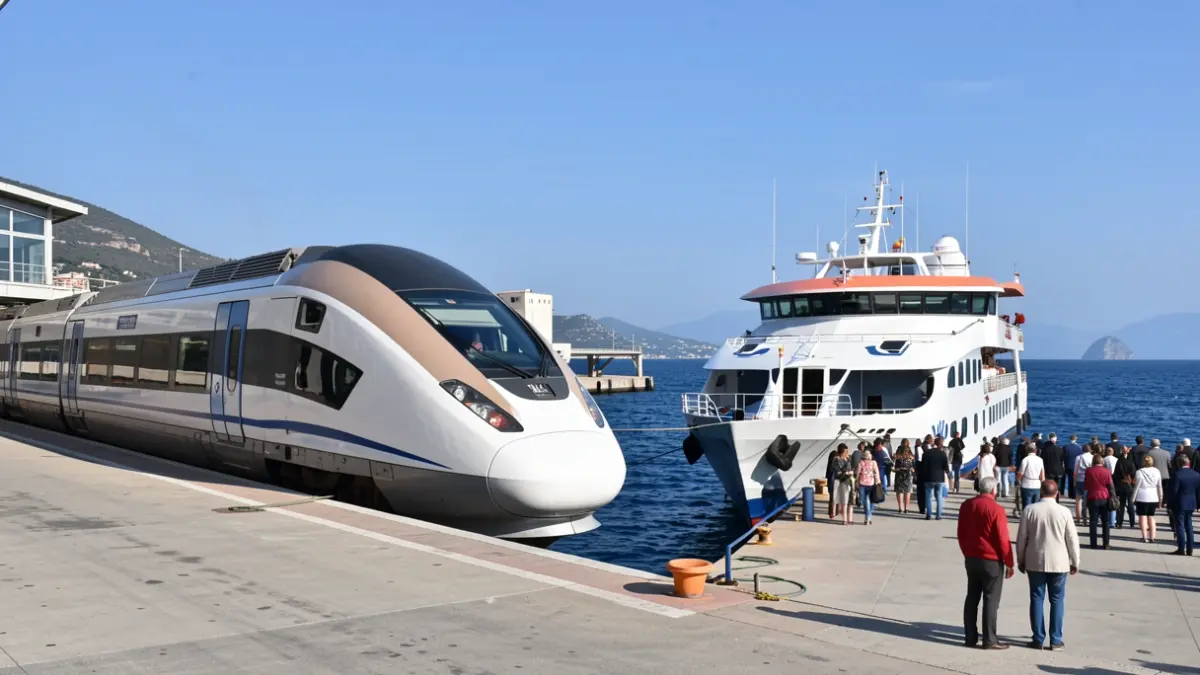
Within the framework of the III Mediterranean Economic and Social Forum, representatives from Iryo and Baleària have championed the importance of rail and maritime transport for the region's connectivity. They emphasized that sole reliance on air travel is insufficient to create a truly connected Mediterranean.
Baleària's president, Adolfo Utor, and Iryo's CEO, Fabrizio Favara, agreed that intermodality, such as connecting Tangier with Madrid via sea and then by train, is the ideal scenario. However, they pointed out that achieving this goal is hindered by the lack of adequate infrastructure and regulations that favor these connections.
Among the proposals to enhance connectivity, the need to link train stations with ports was raised, a connection that is currently non-existent in most cities. Furthermore, the importance of improving service frequencies to ensure sustainability and better territorial connection was highlighted.
Both executives stressed the urgency of completing the Mediterranean Corridor. Fabrizio Favara stated that Iryo is prepared to operate on this infrastructure once it is operational, as its business plan includes homologation for the Iberian gauge.