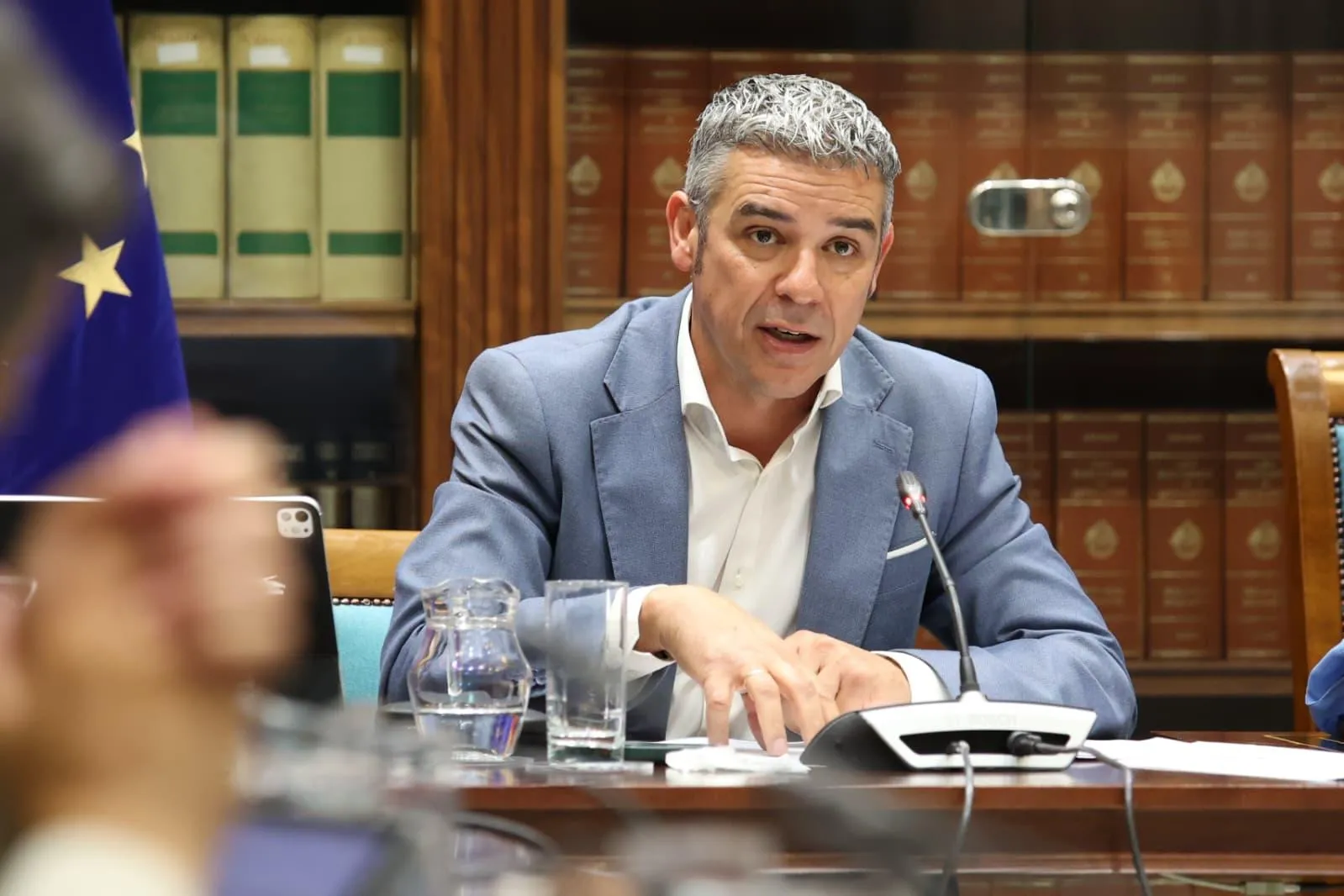
The Minister of Agriculture, Livestock, Fisheries, and Food Sovereignty of the Government of the Canary Islands, Narvay Quintero, reported to the regional Parliament that potato imports to the islands grew by 24.6% in the first eight months of 2026 compared to the same period last year. The average entry price for these products dropped significantly, from 0.59 to 0.42 euros per kilo, a decrease of 28.8%.
Quintero, responding to a question from deputy Francisco Linares (Canarian Nationalist Group), detailed that, according to data from the Canary Islands Institute of Statistics (ISTAC), the total value of these imports decreased by 12.6% despite the increase in volume. He warned that the average entry price of imported potatoes (0.42 €/kg) is below the estimated local production costs of 0.67 €/kg for the 2019-2020 campaign, not including the rise in input costs and transportation and packaging expenses.
Despite the general price increase across the food chain in 2026, the impact on potatoes has been uneven. The price paid by consumers in Tenerife increased by 7% to 2.78 €/kg, and the wholesale price at Mercatenerife rose by 13.2% to 1.98 €/kg. However, the average price at origin for Canarian farmers only increased by 4.4%, reaching 0.92 €/kg, with reduced profit margins, especially in summer (0.70-0.78 €/kg).
The minister highlighted the "double pressure" faced by farmers: the rising production costs in an island territory and the competition from low-priced imports. Quintero emphasized that the increase in consumer prices must translate into improved profitability for those who produce food and maintain agricultural activity.
To mitigate this situation, the Community Program for Support of Agricultural Productions of the Canary Islands (POSEI) allocates around 6.2 million euros annually to support the table potato crop. These aids combine premiums per cultivated area and per ton marketed, and include incentives for farmers integrated into producer organizations and those who contract agricultural insurance.
Quintero stressed the importance of farmer organization and agricultural insurance contracts to improve planning, marketing, and negotiating position. A producer without insurance receives about 9 cents/kg in aid, compared to approximately 28 cents/kg for one who is grouped and insured. He also insisted on strengthening the monitoring of the value chain, compliance with the Food Chain Law, and phytosanitary and labeling controls to ensure adequate consumer information and promote the differentiation of local production, such as the Protected Designation of Origin 'Papas Antiguas de Canarias'.
Finally, the minister concluded that ensuring the profitability of potato cultivation is fundamental to maintaining farms, encouraging young people to enter agriculture, and preserving the agricultural landscape of the Canarian midlands.