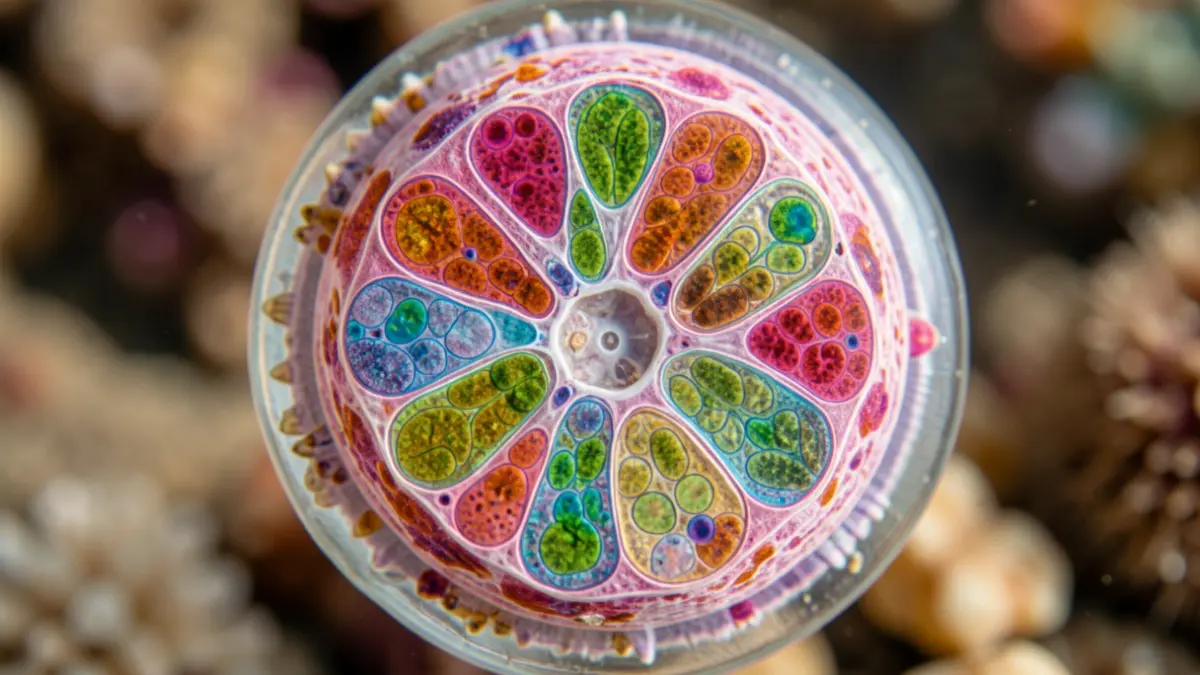
The finding, published in the scientific journal 'PLoS Biology', is the result of an international collaboration with research centers in Germany and the United States, and focused on studying larvae of the sea urchin Arbacia lixula. The experimental phase took place at the ULL as part of Andrés Rufino Navarro's doctoral thesis, under the supervision of researcher José Carlos Hernández.
Initially, the team aimed to analyze the developmental and survival strategies of marine organisms. However, during microscopic analysis, a previously unknown interaction was discovered: the sea urchin eggs integrate components from the chloroplasts of diatoms, cellular organelles found in these algae.
Experiments demonstrated that carotenoid crystals derived from these chloroplasts increase larval viability, potentially explaining the species' wide geographical distribution in the Atlantic Ocean. Larvae were observed to develop 50% faster and exhibit a higher survival rate in illuminated conditions thanks to these components.
The study also identified metabolic effects, such as alterations in fat metabolism and increased phytohormone production, which contribute to improved larval survival. This discovery represents the first evidence of plastid DNA in the germ cells of an animal, originating from diatoms.