The disembarkation of passengers from the cruise ship, which had been anchored in the port of Granadilla (Tenerife), began early in the morning. After confirmation that both passengers and crew remained asymptomatic, the 14 Spanish citizens, comprising 13 passengers and one crew member, were the first to leave the vessel.
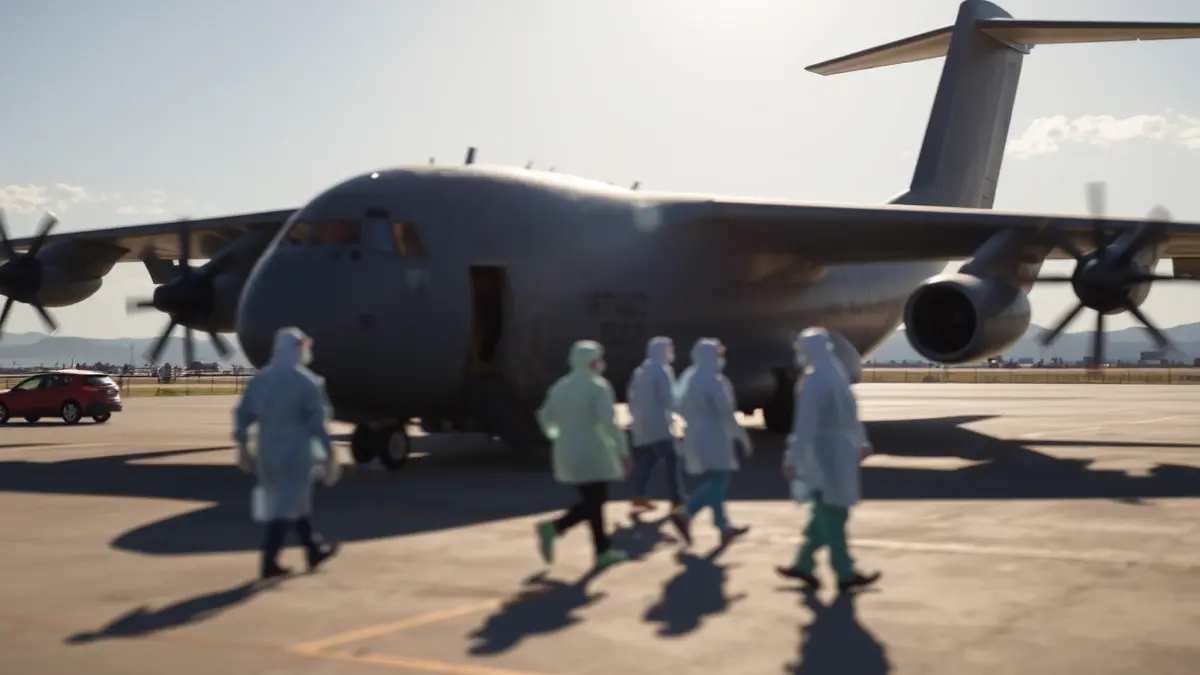
The repatriated individuals were transported by UME buses, escorted by the Civil Guard, to Tenerife South Airport. There, after being equipped with personal protective equipment (PPE), they boarded the military aircraft that took off shortly before noon bound for the Spanish capital.
“"The exact duration will be determined individually. Each of the 14 passengers from the MV Hondius Cruise will be constantly evaluated by the epidemiology team."
One of the main uncertainties is the duration of the confinement. Although a quarantine of up to 42 days has been proposed, experts indicate that the isolation period could be shorter, adjusted to each person's individual evolution. Authorities have confirmed that none of those affected have opposed these conditions, understanding the exceptional nature of the medical situation detected aboard the Oceanwide Expeditions vessel.
The protocol, validated by the Public Health Commission, stipulates that upon admission to the Madrid hospital, all passengers will undergo a high-sensitivity PCR test. This test will be repeated after seven days of stay to detect possible incubation periods. During their stay in the isolation ward, patients will be under constant monitoring of their vital signs.