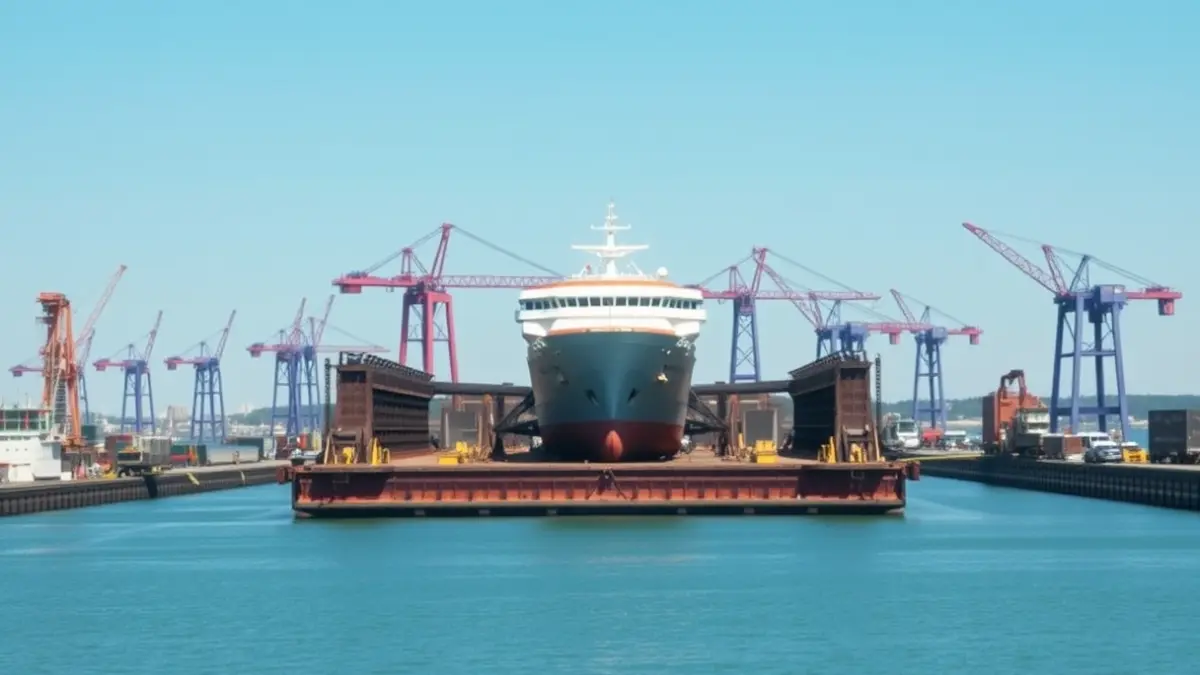
This colossal platform, which arrived in the capital of Tenerife after a two-month journey from China, represents an investment exceeding 50 million euros. Its operational launch, anticipated within the next 90 days, will significantly enhance the capacity for repairing large vessels in the archipelago.
“"Our priority is the creation of a robust industrial ecosystem through qualified employment in the region. Therefore, we invest in the specialized training of local professionals, from certified welders to naval engineers."
Tenerife Shipyards, part of the Hidramar Group, emphasized that key objectives include building a team of experts familiar with the facility's operations, driving local economic growth through global export services, and ensuring a skilled, resident workforce to respond flexibly to client demands.
The floating dock, named Hidramar Ultra 22000, was constructed at the Huarun Dadong Dockyard in Shanghai. Measuring 240 meters in length, equivalent to 20 trucks in a row, it can lift up to 22,000 tons, allowing for the dry repair of large ships in under 120 minutes. This project is considered strategic for the Canary Islands, promising innovation and a significant economic boost.
The platform's construction took 15 months, and its journey to Santa Cruz was complex, requiring private security to navigate high-risk areas such as the Strait of Hormuz and the Indian Ocean. The dock is designed to efficiently service Panamax-size vessels with high operational turnover, meaning large ships.
Currently, the Canary Islands lack sufficient dry-docking capacity for large vessels, limiting repairs to ships up to 175 meters in length. With this new infrastructure, vessels up to 230 meters long and 32 meters wide can be serviced, opening up a substantial market, as approximately 8,500 operational ships worldwide fall within this range, with another 1,700 under construction.