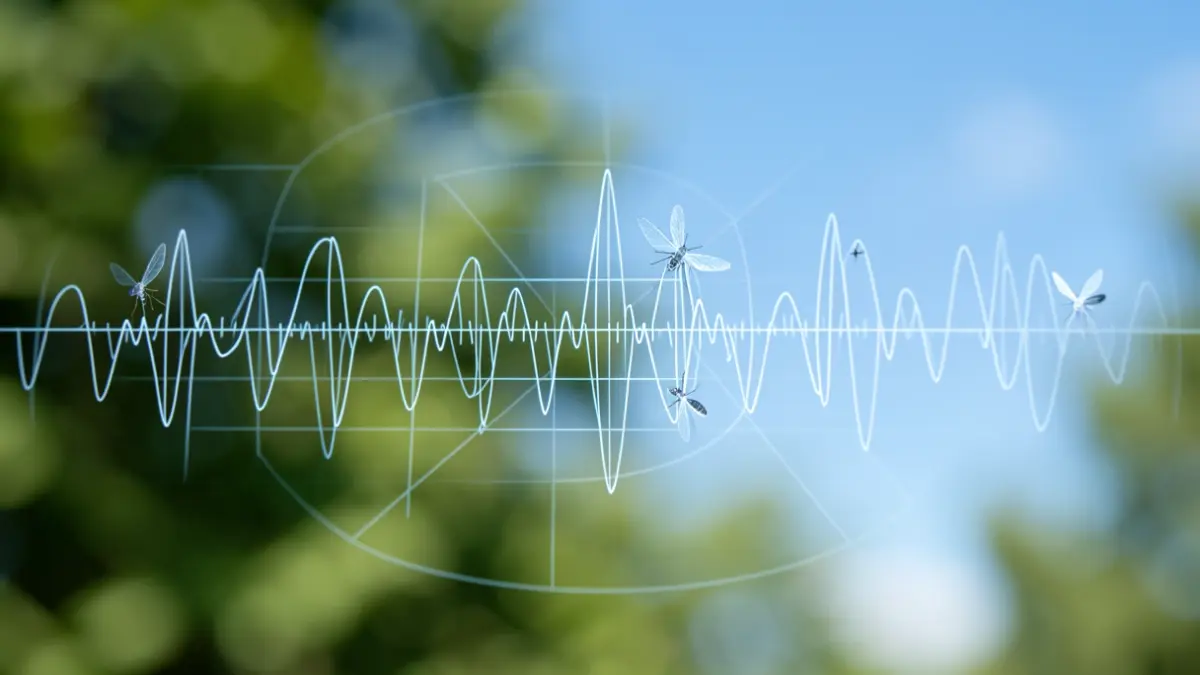
The combination of radar and machine learning allows for the reading of insect flight signatures and recognition of differences between species. This technique could become a fast, scalable, and non-invasive alternative for studying pollinators, according to a study published in the journal PNAS Nexus.
Researchers from Trinity College Dublin in Ireland believe their breakthrough addresses a major challenge in applied ecology: tracking pollinators without capturing or harming them, methods that have historically been slow, invasive, and difficult to scale. The new approach offers a less costly and non-lethal system for observing insect biodiversity.
The key lies in "micro-Doppler signatures," subtle variations in the radar signal produced by precise movements like insect wingbeats. Millimeter-wave radar is better suited to insect size compared to other parts of the radio spectrum. In the study, specimens were captured, individually recorded, and then released, extracting flight information without forcing the insect to remain still or relying on cameras.
The model analyzed over 70 harmonic, spectral, and temporal features from signals reflected by five pollinator species, including bees and wasps. It achieved 85% accuracy in classifying the five species and 96% in specifically differentiating between bees and wasps. Performance improves with longer durations within the radar beam, suggesting future versions with "pass-through trap" structures.
This finding could have significant impacts on agriculture, conservation, and pest control. Experts envision a portable, low-power system for building a global database of radar signatures. By integrating environmental data, changes in flight patterns could be studied, and alterations in the behavior of pollinators, pests, or invasive species could be detected.