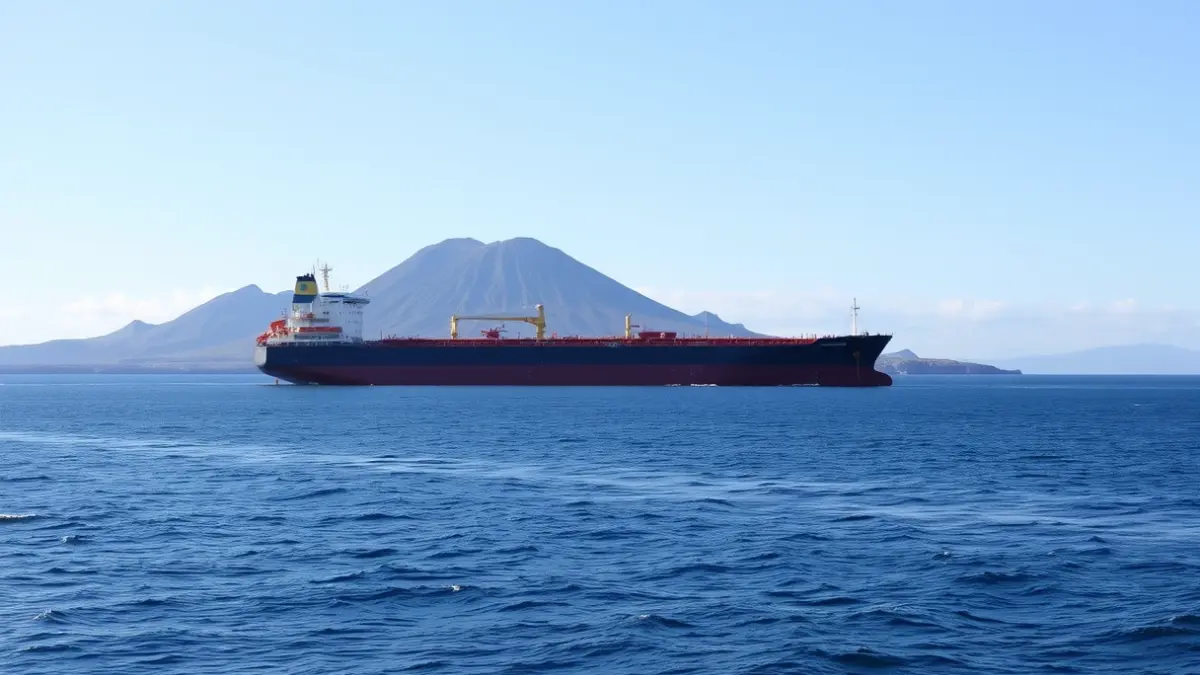
The oil tanker Front Challenger, measuring 275 meters in length, sailed just nine miles off the coast of La Gomera. This maneuver, while legal under the concept of “innocent passage,” has been described as “not advisable” by experts due to the potential risks involved. This incident has once again focused attention on the lack of immediate response to potential emergencies in the archipelago's waters.
The vessel, which was transiting in ballast (without cargo), can carry over 500 tons of fuel for its own consumption. This quantity raises concerns in the event of an incident in the Canary Islands Especially Sensitive Sea Area (ZMES), an area of significant environmental value.
The route was within the Canary Islands ZMES and the maritime traffic separation scheme (TSS) established between Tenerife, Gran Canaria, and Fuerteventura. This system aims to organize the passage of large vessels and minimize risks. Although it is not an irregular vessel, its proximity to the islands is unusual and highlights the limitations of the current system, which primarily focuses on traffic monitoring.
“"The main problem is not the legality of the transit, but the capacity to react to an emergency."
The situation has revived discussions about creating a unified coast guard body in Spain, with a permanent presence and operational capacity in the waters near the Canary archipelago. Currently, Spain has an effective maritime surveillance system, but its passive nature limits immediate intervention in critical situations, especially in adverse weather conditions.