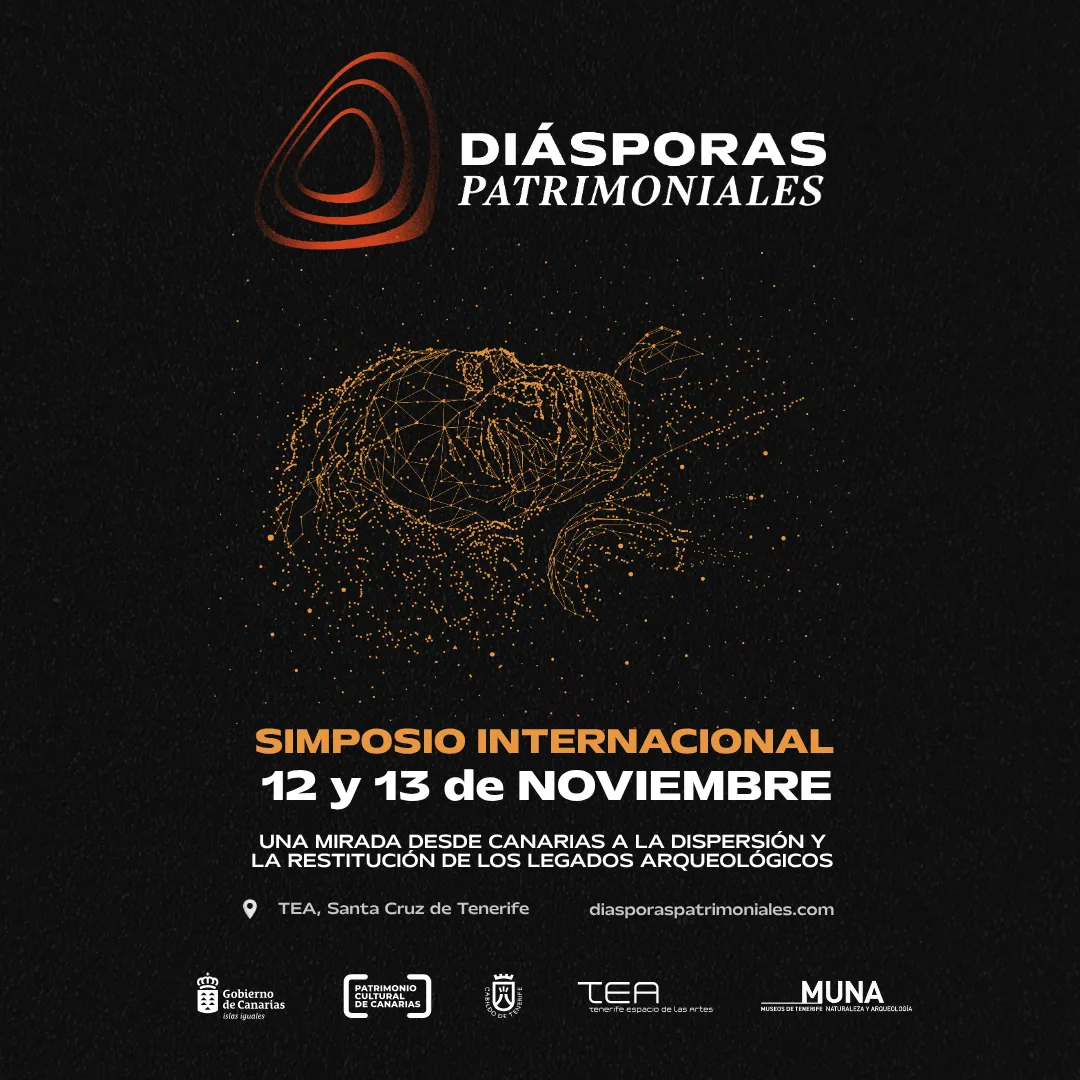
The symposium, dedicated to analyzing the dispersal of cultural heritage and the historical circumstances that have led assets and collections away from their territories of origin, will convene professionals from universities, museums, heritage administrations, and international organizations.
The program will address provenance research, documentation and conservation of collections, relationships between custodian institutions and territories of origin, and international cooperation models. These issues will be examined from scientific, institutional, and ethical perspectives, considering historical processes such as expeditions, exchanges, donations, looting, or illicit trafficking.
The international dimension is a key focus of the symposium, allowing for diverse approaches to provenance research and collection management. The scientific direction is led by Jorge Onrubia Pintado, Isaac Sastre de Diego, and Jared Carballo Pérez, all linked to research, archaeology, and public management.
Participants will include specialists from UNESCO, the British Museum, the Ibermuseos Program, the Organization of Ibero-American States, the French Ministry of Culture, the Egyptian Ministry of Tourism and Antiquities, the Peruvian Ministry of Culture, the Moroccan Ministry of Youth, Culture and Communication, the National Historical and Artistic Heritage Institute of Brazil, and the Weltmuseum Vienna, among other institutions.
Jorge Onrubia, scientific director, notes that “in the history of patrimonial diasporas, legality, legitimacy, and historical justice have not always coincided.” He emphasizes that analyzing these displacements is necessary to understand heritage and its conservation responsibilities.
Onrubia considers Canary Islands a privileged observatory for critically and constructively addressing these issues. “Our goal is to contribute to a shared roadmap that deepens the knowledge of Canarian heritage conserved outside the archipelago and explores, where appropriate, the possibilities for its return,” he stated.
The event will pay special attention to the dispersed cultural heritage of the Canary Islands, addressing topics such as archaeological heritage and bioanthropological collections, including human remains, within the broader debate on heritage dispersal, documentation, conservation, research, and management.
The program is structured into six panels covering the history of collecting, heritage cooperation policies, international experiences from Europe, Africa, and Latin America, the case of the Canary Islands, and issues related to collection trajectories and the scientific and ethical treatment of human remains. Sessions will be held at TEA Tenerife Espacio de las Artes and the Museum of Nature and Archaeology (MUNA).
In-person attendance requires prior registration. Sessions will also be available via live streaming on the YouTube channel of Patrimonio Cultural de Canarias.