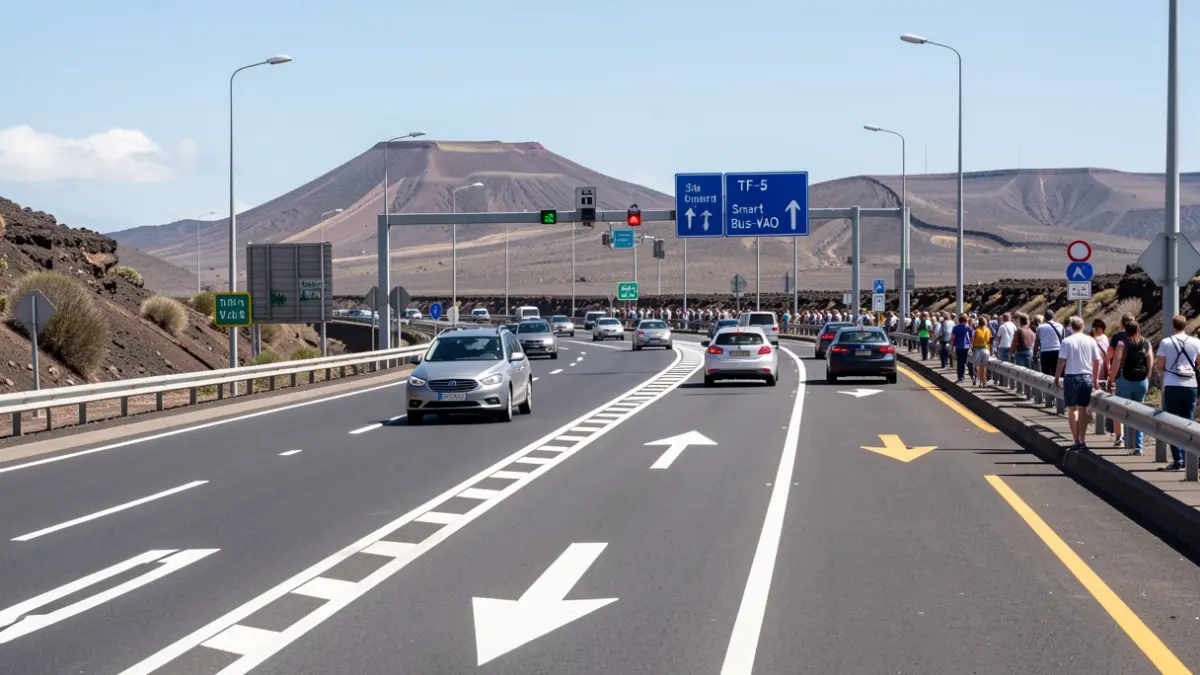
The insular corporation has unveiled the plan, which, according to conducted simulations, could decrease journey times by up to 50% in the upward direction and 21% in the downward direction. These figures are based on simulation studies performed during the project's drafting phase, as stated by the insular president, Rosa Dávila.
With an estimated investment of 6.2 million euros, the project covers approximately 9.7 kilometers of the TF-5, from kilometer point 2+500 to 12+200, in both directions. The design includes the designation of the left lane for exclusive use by buses, taxis, motorcycles, and vehicles with two or more occupants during peak hours.
Outside these high-demand periods, the lane will function as a conventional lane. Rosa Dávila emphasized that this measure is intended to provide faster and more efficient travel on a stretch used by over 100,000 vehicles daily, thereby encouraging public transport use and reducing congestion.
The insular Minister of Mobility, Eulalia García, added that simulation studies confirm significant improvements in travel times for buses and high-occupancy vehicles. The implementation of Intelligent Transport Systems (ITS) will allow for dynamic management of the reserved lane's operation, adapting to real-time traffic conditions.
The project incorporates variable message signs, monitoring cameras, automatic control systems, and luminous beacons to inform about lane usage conditions and enhance road safety.
Additionally, among other matters approved by the Governing Council, the initial approval was given to the road surface rehabilitation project for the TF-82, between kilometer points 7+380 and 16, within the municipalities of El Tanque and Los Silos. This work, with a budget exceeding 2.9 million euros and a seven-month execution period, aims to improve the conservation, road safety, and functionality of this strategic island road, which is used by over 11,000 vehicles daily.