Since ancient times, the use of 'voladores' (firecrackers) and fireworks has been a constant in the popular festivals of the Canary Islands. The roar of the firecrackers and the smell of gunpowder evoke a deep symbolism, associated with purification and transmutation, and even creation, like the primordial cosmic explosion.
In the context of patron saint celebrations and festivities in towns and neighborhoods, 'tirar voladores' emerges as a manifestation of joy and jubilation. The detonation of a 'volador' is inherent to the festivity, being a deeply rooted custom even in religious acts, where they accompany processions and culminate with final firecracker displays.
“"In the Canary Islands, a 'volador' (not a rocket) is a tube filled with gunpowder, attached to a stick, which, when lit, is propelled and explodes in the air."
The expression 'tirar voladores' is characteristic of the islands and other Spanish-speaking regions, referring to the act of lighting the fuse of a 'volador' and letting it ascend to explode in the air, in a clear display of enthusiasm and delight.
However, this phrase is often used in its negative form: 'No tirar los voladores antes de la fiesta' (Don't throw the firecrackers before the party). This variant serves as a warning not to rush or get ahead of events until the right moment arrives and everything is resolved. It is a response to excessive optimism and a call for patience, similar to the Spanish proverb 'no vendas la piel del oso antes de cazarlo' (don't sell the bear's skin before hunting it).
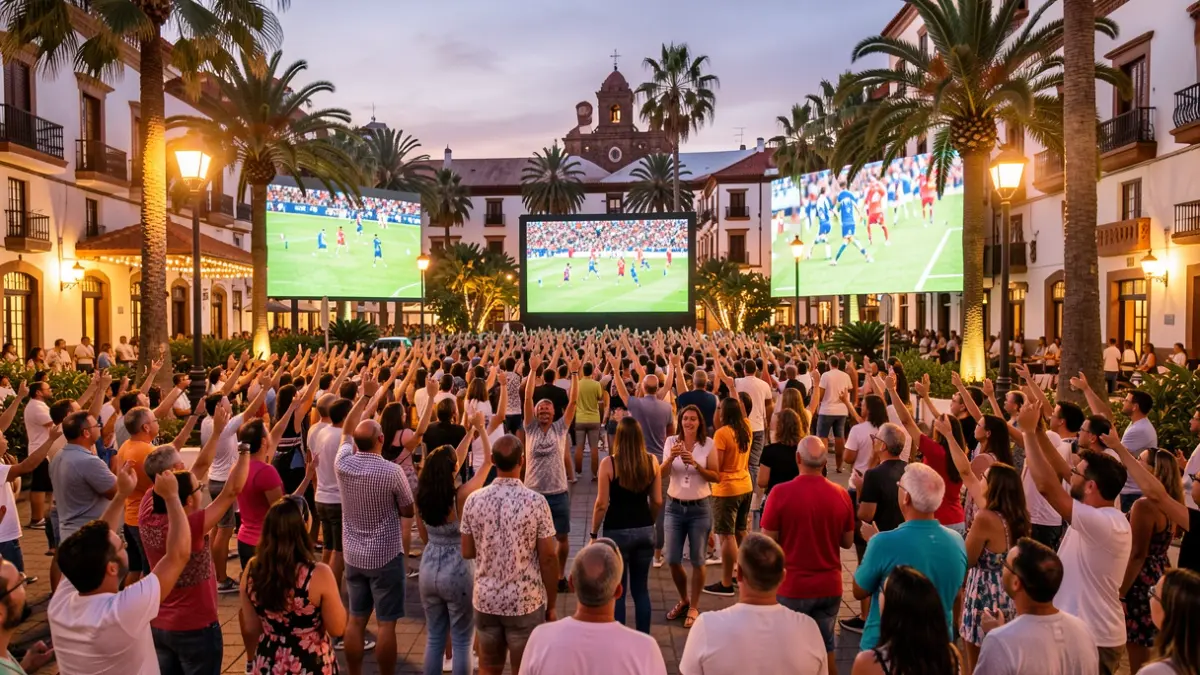
Although 'voladores' are common in patron saint festivals, they are also used in sporting events to celebrate victories, such as in football or Canarian wrestling, in Latin sailing regattas, in family gatherings, or to welcome the New Year. The phrase 'no está la cosa para tirar voladores' (things are not for throwing firecrackers) is used to indicate that there are no reasons for celebration, confirming that this act is one of exultation and requires prudence to 'claim victory' at the opportune moment, preventing the 'volador' from 'salir desrabonado', meaning to fail prematurely.