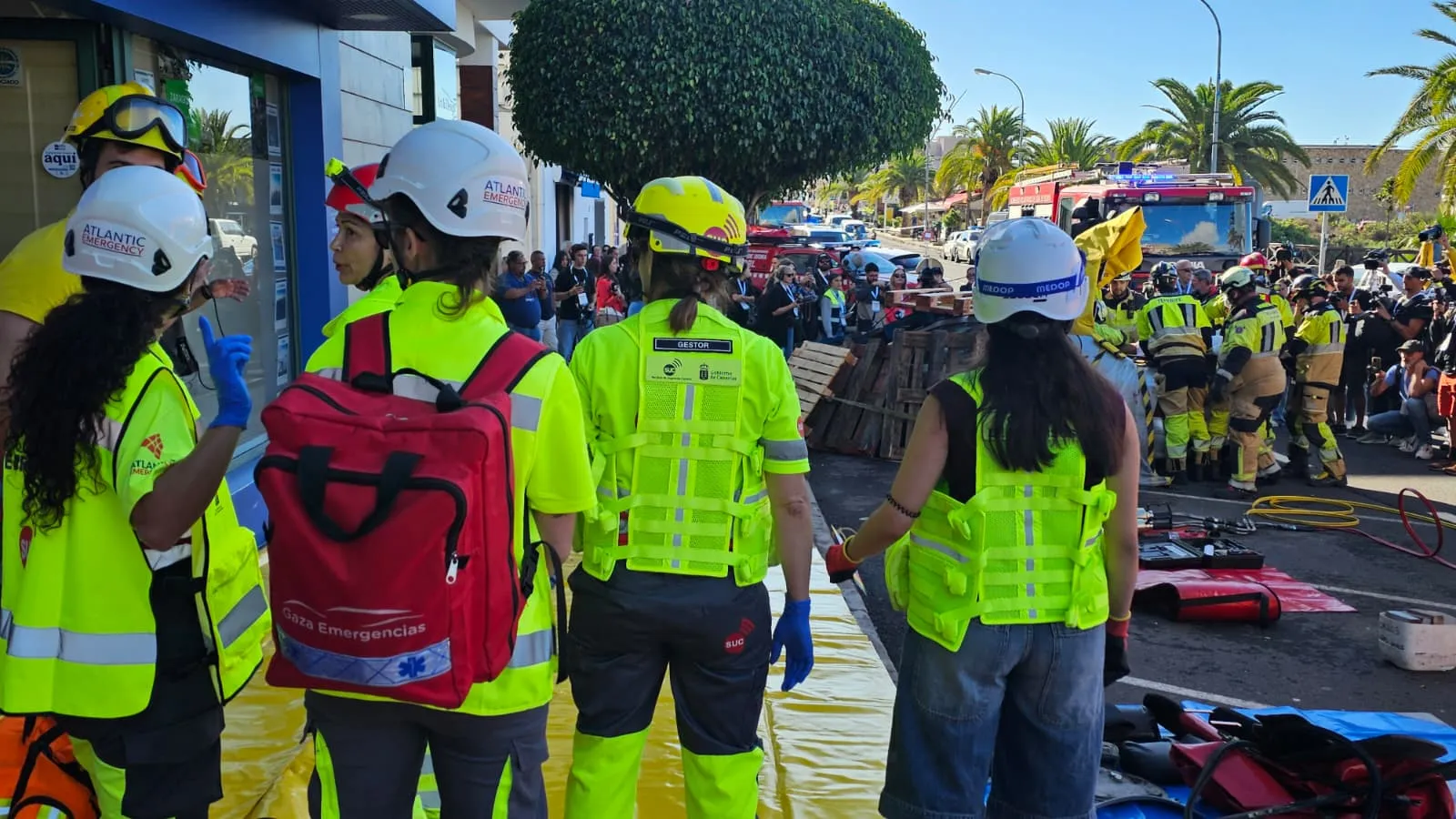
Nearly sixty professionals and interns participated in the exercise, simulating the care of injured and evacuated individuals at an Advanced Medical Post (PSA). The main objective was to improve coordination among intervening services and test the SUC's management as the single health command for multi-victim emergencies.
The drill aimed to reduce response times, foster synergies between the SUC, Primary Care, health resources, and emergency psychologists, and practice protocols for treating and classifying casualties. For the SUC, these training sessions are crucial for ensuring a rapid and effective response to incidents involving a large number of affected individuals.
The operation involved SUC medical doctors, nurses, coordination technicians, resource managers, health technicians, and administrative staff. Primary Care doctors and nurses from the Canary Health Service also participated, along with the Red Cross, emergency psychologists from the Official College of Psychologists of Santa Cruz de Tenerife, and private sector companies like Salvaser and Samur Canarias. Students from the European University of the Canary Islands and vocational training courses for Health Emergency Technicians (TES) were also involved.
The Advanced Command Post was located at the municipal sports center, coordinating actions in two triage areas, the PSA, and evacuation and assistance points. At the PSA, the simulation involved treating casualties transferred by ambulance and their identification. These 'field hospitals' included logistics vehicles and the Mobile Unit for Catastrophes.
At the Guía de Isora youth hostel, Primary Care staff from the Canary Health Service (SCS) managed the reception of evacuated individuals and assessed their vulnerabilities and care needs. An SUC team monitored the exercise from the emergency room.
The SUC deployed basic life support ambulances, sanitaryized and medicalized ambulances, coordination and rapid intervention vehicles, as well as a Mobile Unit for Catastrophe Attention (UMCAT) and an inflatable medical post. Non-urgent Health Transport ambulances also participated in simulating the transfer of evacuated individuals.