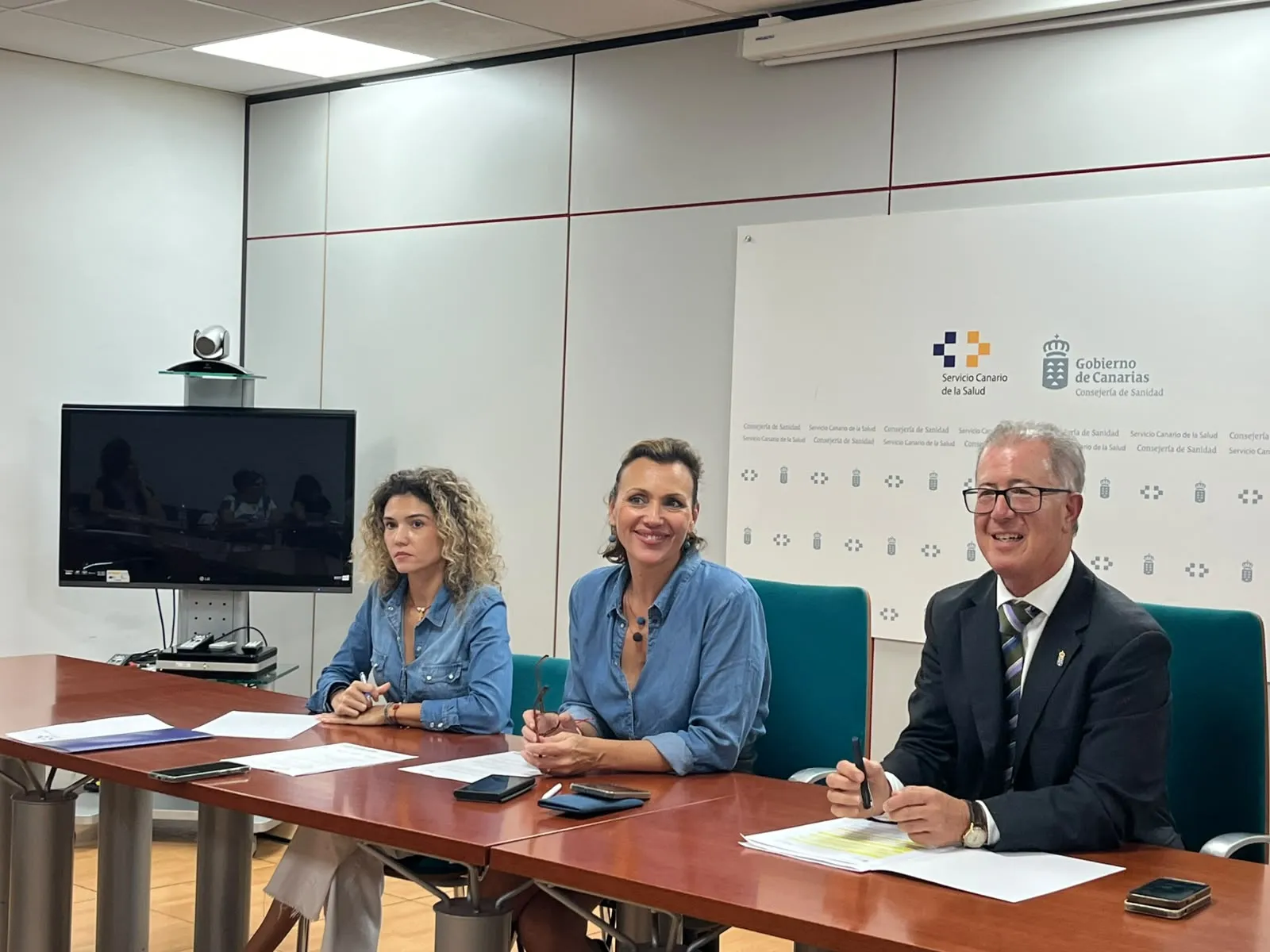
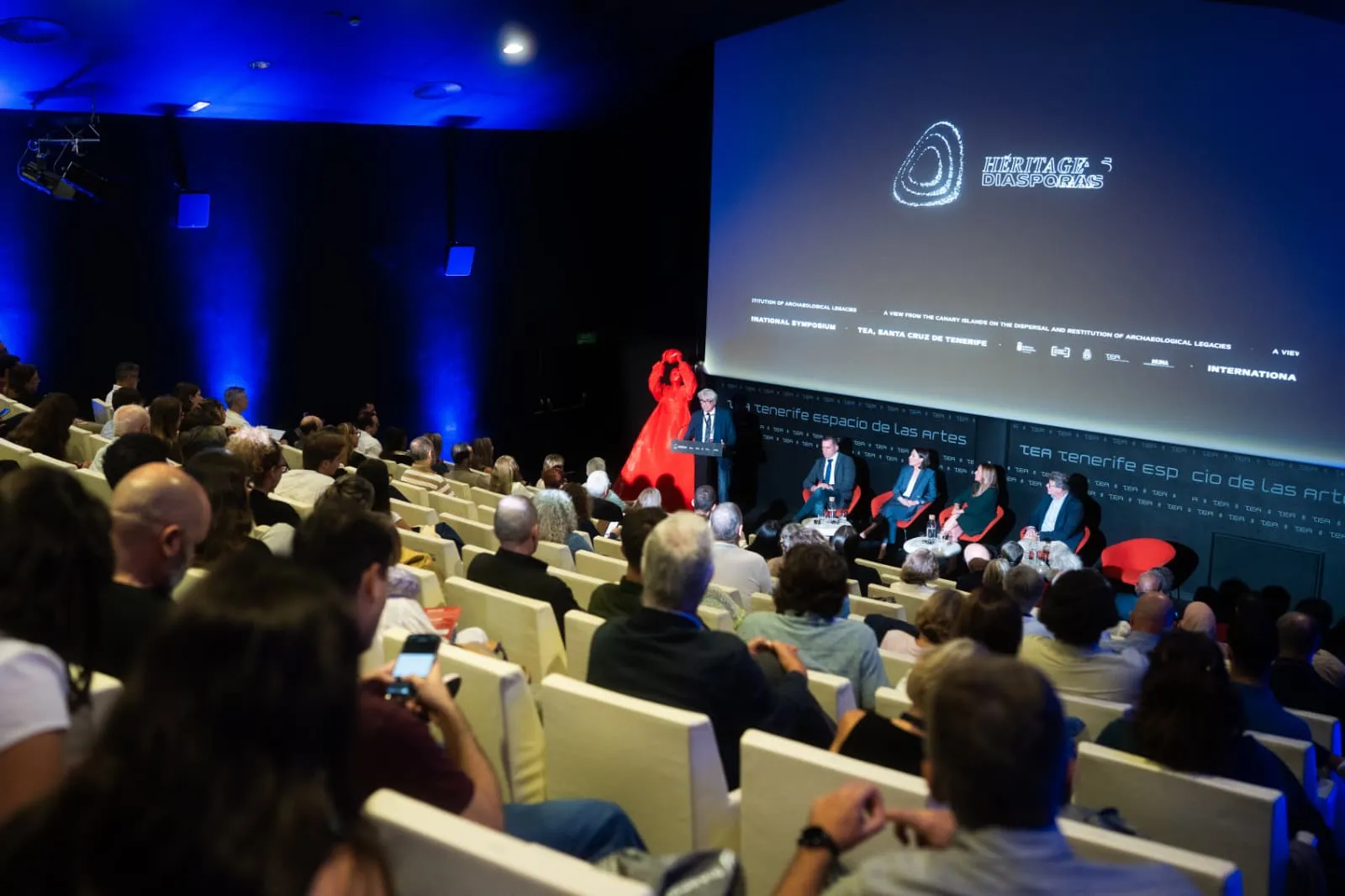
The inaugural session featured institutional representatives from the Government of the Canary Islands, the Tenerife Island Council, Museums of Tenerife, and the scientific direction of the event. The symposium brings together twenty-five specialists, museum directors, researchers, and representatives from heritage administrations and organizations from thirteen countries to reflect and debate on the dispersal and restitution of archaeological legacies.
Authorities including the Minister of Universities, Science, Innovation and Culture, Migdalia Machín; the President of the Tenerife Island Council, Rosa Dávila; the Minister of Culture and Museums of the Tenerife Island Council, José Carlos Acha; and archaeologist Jorge Onrubia, all agreed in highlighting the importance of the Canary Islands leading this international debate.
Migdalia Machín emphasized the significance of organizing such a high-level forum in Tenerife, stating, "we are not only talking about recovering our memory, but about doing so with scientific rigor, cooperation between institutions, and open dialogue with the international community." Furthermore, the Government of the Canary Islands has "a firm commitment to protect, study, and return to the islands the heritage that forms part of our identity." For her part, Rosa Dávila placed special emphasis on the case of the Erques Mummy, currently preserved in the National Archaeological Museum in Madrid, stating, "The Erques Mummy is part of the history and memory of Tenerife. We are talking about a person who lived on our island and whose remains constitute an exceptional testimony of the Guanche culture. We want it to return home, and we will continue working through dialogue, scientific rigor, and institutional cooperation to make its return possible."
According to Jorge Onrubia, "the role embodied by the Canary Islands within the historical processes linked to the dispersal of objects and human bodies" explains that "it turns the islands into a privileged observatory from which to critically and constructively address the complex and controversial series of issues orbiting around the dynamics of translocation, dispersal, and appropriation of archaeological legacies."
This first day is structured into three panels that allow for an analysis, from historical, institutional, and scientific perspectives, of the processes that have conditioned the dispersal of cultural goods, the power relations involved in the formation of collections, and the current mechanisms for cooperation and heritage restitution.
The opening of the second day, scheduled for tomorrow, November 13th, starting at 9:30 AM, will be led by the President of the Canary Islands, Fernando Clavijo. This session will focus on the Canary Islands as a case study, analyzing the archaeological and bioanthropological collections linked to the archipelago that are preserved outside the islands.
Throughout the day, three thematic panels will address historical de-localizations, current scientific collaborations, and expectations for the restitution of the archipelago's heritage, as well as the unique trajectories of these collections and the ethical dilemmas surrounding the management and exhibition of human remains. Researchers from Canarian and national universities will participate, alongside officials and specialists from internationally renowned museum institutions such as El Museo Canario (Gran Canaria), the Archaeological Museum of Tenerife, the Musée de l’Homme (France), the Weltmuseum Wien (Austria), The British Museum (United Kingdom), the Montané Anthropological Museum (Cuba), the INAH (Mexico), the Pachacamac Museum (Peru), and the Ministry of Tourism and Antiquities of Egypt.
Following the academic sessions, the event will conclude with the reading of the “Declaration of Santa Cruz de Tenerife” by the Scientific Committee, conceived as a starting point to continue the dialogue between participating institutions and specialists. As a cultural closing, at 5:30 PM in the Plaza del TEA, the performance ‘MONUMENTA. Nueve encarnaciones guanches’ by artist Yapci Ramos will take place, a proposal focused on the silenced memory of Guanche women and open to the public. The sessions can also be followed live via the YouTube channel of Patrimonio Cultural de Canarias.