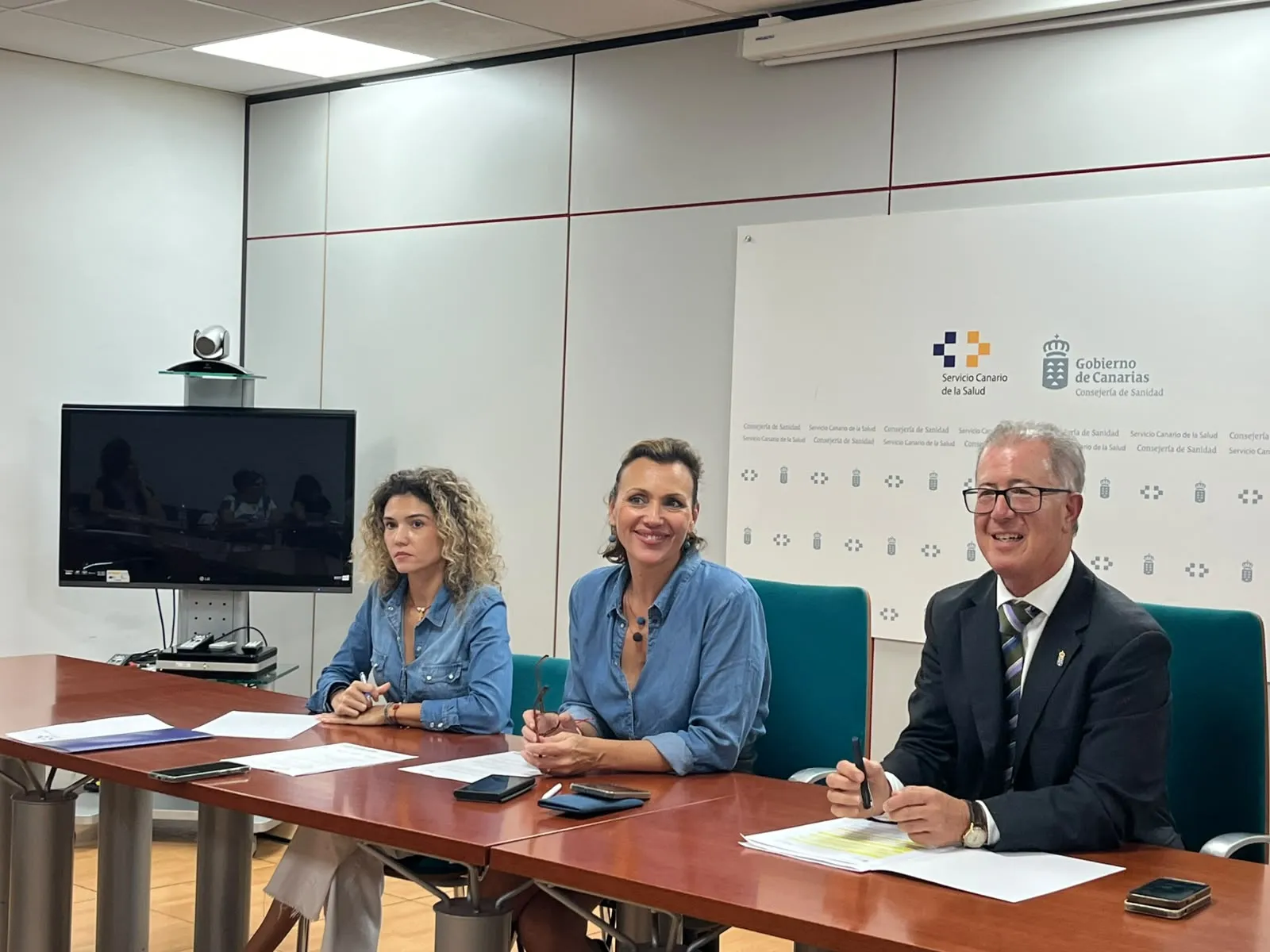
The Tenerife Health Area, attached to the Ministry of Health of the Government of the Canary Islands, held a new meeting of the Insular Council for Psychosocial Rehabilitation and Community Action (CIRPAC) on Thursday, November 12. The meeting, held in the Boardroom of the Canary Health Service in Santa Cruz de Tenerife, aimed to analyze the actions, implemented advances, and challenges within the framework of the Canary Islands Mental Health Plan's development on the island. The meeting was chaired by the director of the Tenerife Health Area, Diana Mora, accompanied by the Director General of Mental Health and Addictions of the Canary Health Service (SCS), Fernando Gómez-Pamo. Representatives from both university hospitals on the island, as well as professional teams linked to psychiatric and psychological care areas, also attended.
Diana Mora highlighted the effectiveness of CIRPAC for monitoring and evaluating mental health resources and services, as well as for sharing needs and challenges in a coordinated manner. She also emphasized the work carried out by the different teams involved in the island's mental health services.
Fernando Gómez-Pamo reviewed the new resources launched during the current legislature. For child population, five resources were presented: the third Early Attention Unit at the Hospital del Sur, two home care units for minors with severe mental disorders (at the University Hospital of the Canary Islands and the Hospital Nuestra Señora de La Candelaria), the Suicide Prevention Program in the Educational Sphere, and an outpatient unit in Santa Cruz de Tenerife for Migrant Children Psychosocial Ambulatory Units (UPAIM).
Regarding the adult population, four resources were presented: the new 'Puentes de salud' project (2026), aimed at harm reduction for people with social vulnerability issues who are homeless and have addiction disorders; a pioneering program for the care of women with severe mental disorders during pregnancy, childbirth, and the postpartum period, providing adequate therapeutic support; the new psychiatric emergency area of the University Hospital Complex of the Canary Islands (HUC); and the new Mental Health Unit of La Laguna, with a specific consultation for Dual Pathology. The upcoming Day Hospital for Eating Disorders (TCA) at the CAE of La Orotava was also mentioned.
The Director General emphasized the importance of joint work between administrations, professionals, and social entities. The meeting also addressed advances and needs identified in various care devices, reviewing actions to improve mental health care in Tenerife, in line with the objectives of the Canary Islands Mental Health Plan. Other aspects discussed included community care, coordination between care levels, and the integration of socio-health resources to offer a more accessible and effective response to citizens.