
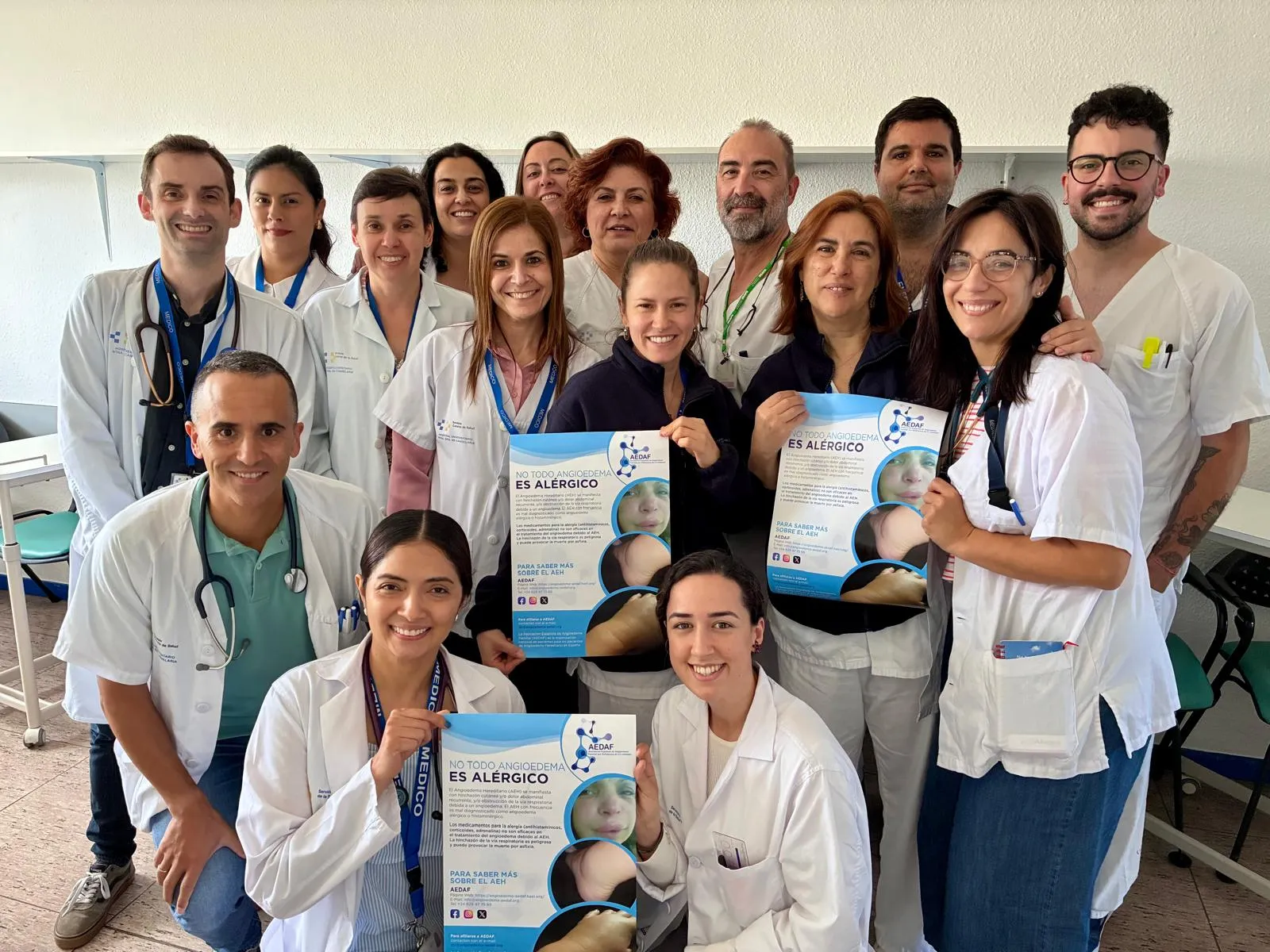
This international accreditation certifies the unit's high quality in treating a chronic and hereditary condition that causes skin swelling, primarily affecting the face, respiratory tract, and intestines. To achieve this, the unit met over 32 evaluable criteria, including the availability of a specialized monographic clinic, a trained multidisciplinary team, and the use of standardized tools for its management.
The unit comprises three professionals who provide comprehensive care in coordination with other hospital services such as Hospital Pharmacy, Anesthesia, and Digestive Endoscopy. The hospital's Allergology Department serves 8,000 patients annually, of whom approximately forty are diagnosed with hereditary angioedema.
Allergists conduct family screenings and create genealogical trees to early detect asymptomatic or undiagnosed direct relatives, as the pain from intestinal edema can be very debilitating, and respiratory compromise can occur if the airways are affected.
The team also has a long research trajectory, participating in international clinical trials and contributing to the National Registry of Rare Diseases (REPER). Their main research focus is the complete sequencing of the exome to identify genetic variants causing angioedema.
Furthermore, professionals organize training sessions for primary care professionals, other hospital services, medical students, and patient associations.