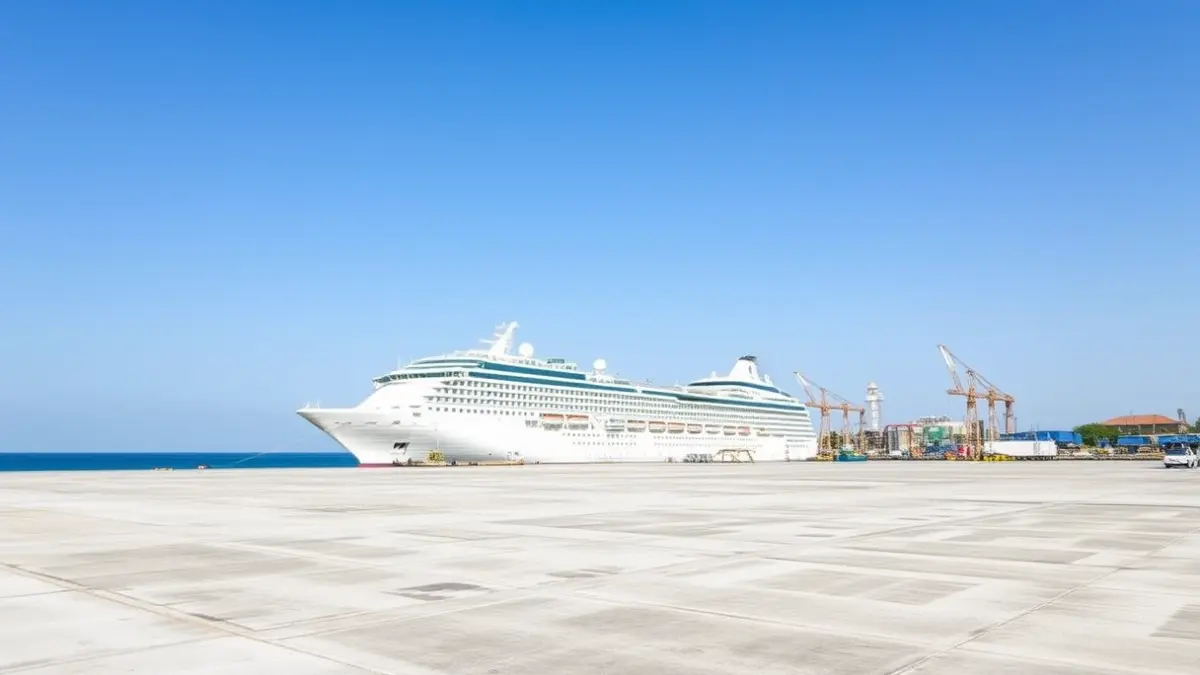
The MV Hondius, which departed from Ushuaia on April 1 bound for the Cape Verde archipelago, has been anchored off Praia since Sunday. On board are 88 passengers and 59 crew members of 23 nationalities, and the hantavirus outbreak has resulted in three fatalities.
The OMS's selection of the Port of Granadilla, in coordination with the Spanish Government, is due to its minimal commercial activity and its close proximity to Tenerife South Airport, just ten minutes away. These conditions facilitate the logistics for an isolated and coordinated evacuation, adhering to a health emergency protocol. Furthermore, its direct connection to the TF-1 highway allows for efficient transport to key locations such as the Hospital Universitario Nuestra Señora de la Candelaria, less than 50 kilometers from the dock.
The planned operation includes the repatriation of all foreign passengers to their respective countries via special transport from the airport, provided their clinical condition allows. Initial care at the port will be provided by Health personnel. The fourteen Spanish citizens on board will be transferred, after examination at the dock, by military aircraft to the Torrejón de Ardoz base for admission to the Gómez Ulla Military Hospital in Madrid, where they will undergo quarantine.
This is not the first time that southern Tenerife has served as an entry point for an international health emergency. In February 2020, an Italian tourist infected with COVID-19 at the H10 Costa Adeje Palace hotel led to the confinement of nearly 900 guests and about fifty employees, marking the second COVID-19 case in Spain. Tenerife South Airport was also the logistical hub on that occasion.
Despite its role in these emergencies, the infrastructure of the Port of Granadilla is not yet operating at full capacity. Its commercial activity is the lowest among the Canary Islands' ports, limited to gas unloading for DISA, wind turbine work, and naval repairs. Adverse weather conditions, particularly wind, restrict its operability for gas vessels and large container ships for more than half the year, which has hindered plans to establish regular ferry lines.