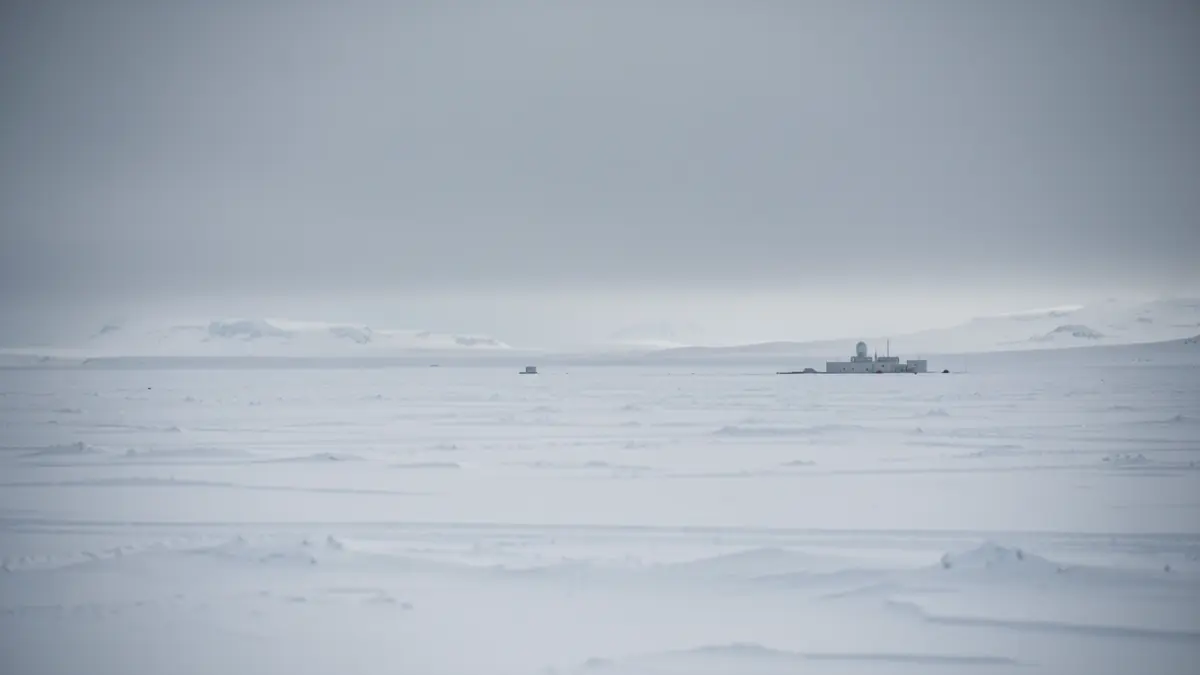
Juan Carlos Suárez, a technician for the State Meteorological Agency (Aemet) in the Canary Islands, has recently returned from a scientific mission to Antarctica. During his stay of more than a month and a half, from February 1st to March 20th, Suárez lived on Livingston Island, an archipelago located a few kilometers from the Antarctic Peninsula, where weather conditions are extreme, with winds exceeding 100 kilometers per hour and sub-zero temperatures.
Suárez, originally from Arucas, was part of an expedition crucial for understanding Earth's climate and anticipating climate change. His role involved providing technical support to the predictive scientist and offering meteorological advice to expeditions under the Spanish Polar Committee. Life in Antarctica, he explains, is unpredictable and entirely dependent on weather conditions.
The journey began on January 24th in Gran Canaria, with stops in Madrid and a several-day wait in southern Chile due to adverse weather. Finally, on February 1st, he landed on Livingston Island. Suárez thus becomes the first person from Gran Canaria to reach the Antarctic continent during the annual campaign of the Spanish Government's Ministry of Science, which is vital for feeding global data and studying climate change.
The daily routine at the scientific base included research tasks, meals, meteorological planning meetings, and dinners. Suárez emphasizes the importance of organization and discipline in such an extreme environment, as well as the team's strong willingness to collaborate. Communication with his family in Gran Canaria, despite a time difference of only three hours, was limited by the intense workday.
The mission concluded on March 18th, when the Oceanographic Research Vessel Hespérides collected the Spanish expedition. Suárez describes the experience as unique and incomparable, highlighting that in Antarctica, everything depends on the weather. Despite the difficulties, he assures he would repeat the mission if given the opportunity, thus contributing to the advancement of Spanish science.