The initiative, led by the Biocon group of the Ecoaqua Institute at the ULPGC, is part of the BioMAR project, integrated into CanBio. Its objective is to combine the traditional knowledge of Canarian fishermen with cutting-edge science to locate these elasmobranchs and equip them with satellite tags. These tags will allow, for the first time, to understand their migratory routes and how they use the archipelago's waters, as much of their behavior remains a mystery.
Thresher sharks are difficult to observe because they inhabit deep waters, far from the surface. However, fishermen in Gran Canaria, especially in the south, have reported continuous encounters with them, confirming their presence in the region. The tagging phase is expected between late this year and early 2027, coinciding with the time when, according to fishermen's experience, specimens are most likely to be found.
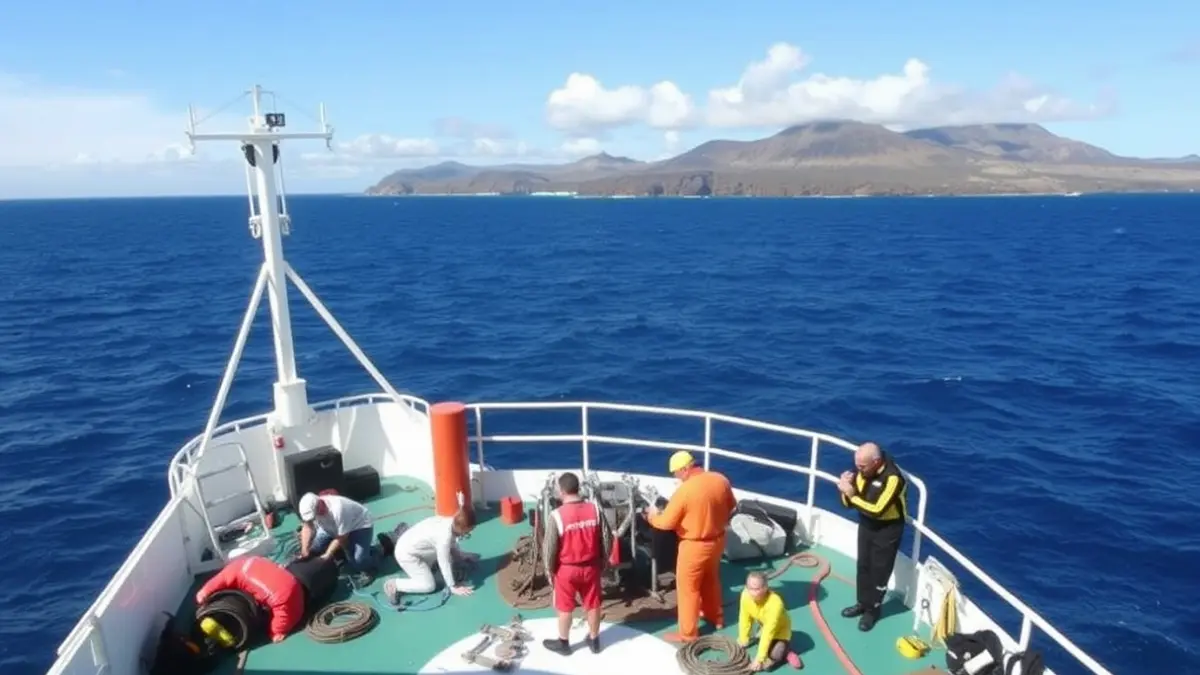
The procedure for handling these animals, which can exceed two and a half meters and weigh around 200 kilograms, is rigorous and designed to minimize stress. It includes securing the shark alongside the boat, keeping it oxygenated, covering its eyes, and controlling its powerful tail before attaching the tag. The Ecoaqua team, with previous experience in tagging other pelagic species such as hammerhead or mako sharks, has refined its protocols to ensure the safety of both the animal and the researchers.
“"It will be an adventure."
Satellite tags, costing approximately 5,000 euros each, will provide crucial data on whether the sharks remain in the Canary Islands year-round or undertake long transatlantic migrations, as well as the distribution between males and females and the distances they travel. The initial goal is to tag at least one specimen, with the aspiration of reaching three, although the high price of the transmitters represents an economic limitation.
In addition to the thresher shark, collaboration with fishermen will be fundamental for studying the seven species of dogfish present in the Canary Islands, about which there is much confusion in identification. The project also has a network of acoustic receivers distributed throughout the islands to track movements and habitats, and the tagging of 30 dogfish is expected to begin soon once ministerial permits are obtained.
This effort builds on eight years of work by the CanBio project, which has allowed mapping the behavior of other species such as angel sharks and manta rays. Studies have revealed, for example, that male and female angel sharks use the coastline differently and that temperature affects these species in distinct ways, vital information in the context of ocean warming. Acoustic tags have confirmed that angel sharks remain in specific areas of the Canary Islands, such as the La Graciosa marine reserve, throughout the year.