The discovery occurred after a citizen's report, leading a team of firefighters from the Gran Canarian capital to remove the specimens. Subsequently, the Early Warning Network for Invasive Exotic Species of the Government of the Canary Islands (RedEXOS), under the Ministry of Ecological Transition and Energy, was informed. Morphological analysis of the samples confirmed the identification of the invasive species, present in Spain since 2010.
In response to this detection, the Regional Government, the City Council of Las Palmas de Gran Canaria, and the Cabildo of Gran Canaria have launched a joint protocol. This includes the installation of attractive traps in urban parks near the discovery site and in the vicinity of the Port of Las Palmas, in collaboration with the Port Authority, to locate potential additional nests and assess the extent of the detected population before initiating broader control efforts.
Experts consider it positive that the focus was detected in spring, when colonies are still growing and reproduction is less likely. However, there is uncertainty about how the Canarian climate will affect the species. The public is advised to report sightings and avoid direct interaction, as the hornets are typically only aggressive near their nests. For any sightings, contact CECOES 1-1-2 or send information to the RedEXOS WhatsApp number (646 601 457).
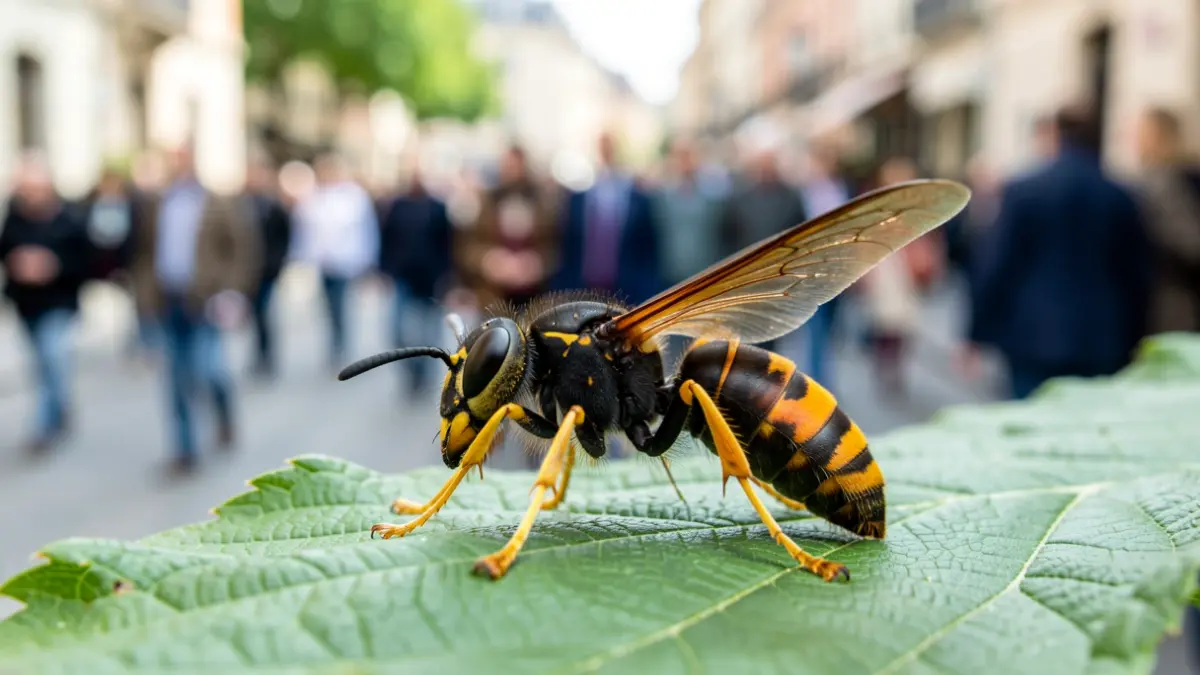
The Asian hornet, which can reach up to three centimeters, is distinguished by its dark body, yellow legs, and an orange-yellow band on its abdomen. While its toxicity is similar to other wasps, its sting can be more painful due to its larger size and venom quantity, posing a greater risk to allergic individuals. The Ministry warns that standard protective equipment is insufficient and nest removal must be carried out by specialized personnel, preferably at night.