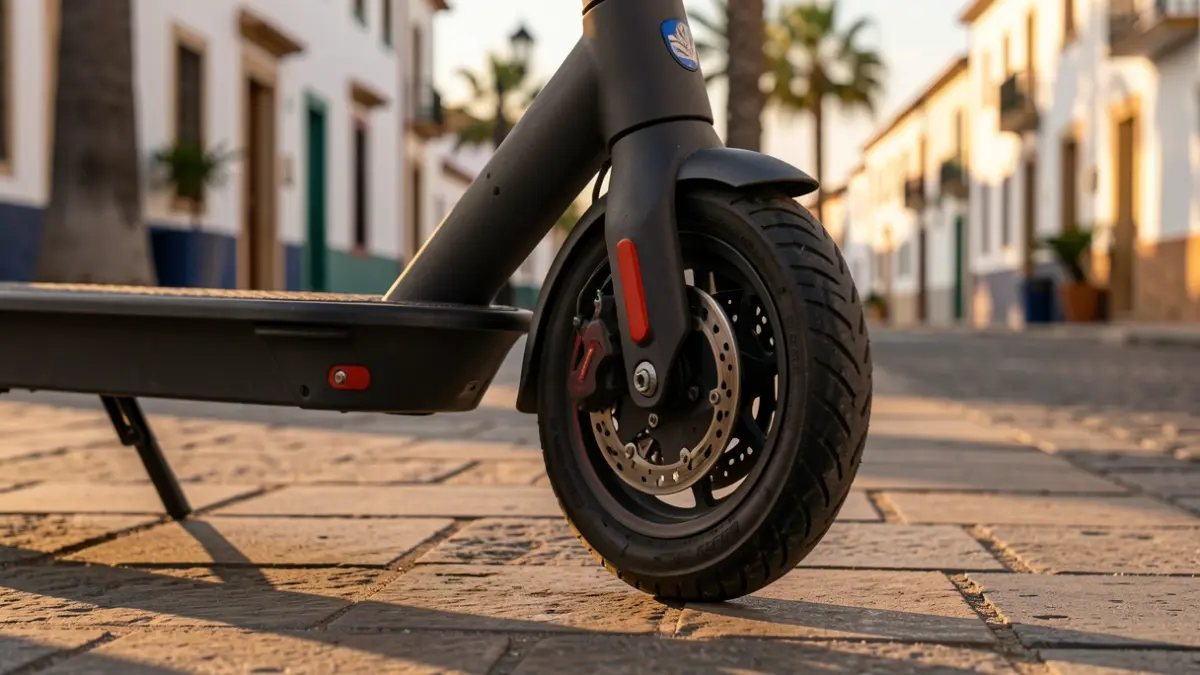
The General Directorate of Traffic (DGT) has begun enforcing a new regulation in the Canary Islands that directly impacts urban mobility. Owners of electric scooters and other Personal Mobility Vehicles (PMVs) lacking an official certificate now face financial penalties that can reach €610, in addition to the potential immediate removal of the vehicle from public roads.
This regulatory change follows the entry into force of Royal Decree 52/2026, published in the Official State Gazette, which amends the General Vehicle Regulations. The DGT now requires all electric scooters circulating on urban roads to be registered in the new Registry of Light Personal Vehicles and possess an official certificate attesting to their compliance with technical requirements. These vehicles must also display a visible identification label.
The regulation particularly affects users in the Canary Islands who acquired their scooters before 2024 and have not yet obtained homologation or a circulation certificate. Older models will only be permitted during a transitional period ending on January 22, 2027. After this date, PMVs without a certificate will no longer be able to circulate legally. The new registration is crucial not only for circulation but also for obtaining the civil liability insurance mandated by state regulations.
Fines for circulating without registration or non-compliance with the new regulations are already being issued in various Spanish cities. Basic fines range from €202 to €610, with potential increases to €800 or even €1,000 for repeat offenses or severe cases. Furthermore, authorities have the power to immobilize or confiscate the vehicle if deemed to be in violation of current regulations.
To verify compliance, the DGT reminds users that only models certified by authorized laboratories can be registered. Users must check if their vehicle has the PMV certificate issued by an authorized manufacturer or importer. The regularization process involves accessing the DGT's electronic headquarters, identifying oneself, providing PMV details, paying the administrative fee, and obtaining the official identification label. The DGT emphasizes that these measures aim to enhance road safety and reduce risks associated with unhomologated vehicles, recalling existing rules such as the prohibition of sidewalk circulation and the 25 km/h speed limit.