Flemish art, originating from the region of Flanders (modern-day Belgium) and residing across the archipelago's islands, is gaining visibility and appreciation. According to Tomás Van de Walle, president of the Canary Foundation of Flemish Art, this heritage is fundamental to understanding the artistic beginnings of the Canary Islands.
Trade routes, particularly those linked to sugar, facilitated the arrival of these Flemish works to the Canary Islands in the early years following the Castilian conquest. Before Seville became the primary artistic exporter to the islands, exchanges with Flemish territories were crucial for introducing paintings, sculptures, and other artistic expressions.
Van de Walle estimates that over 300 works of Flemish origin are preserved across La Palma, Tenerife, and Gran Canaria. This figure could increase with future research into private collections belonging to former merchant families and sugar mill owners.
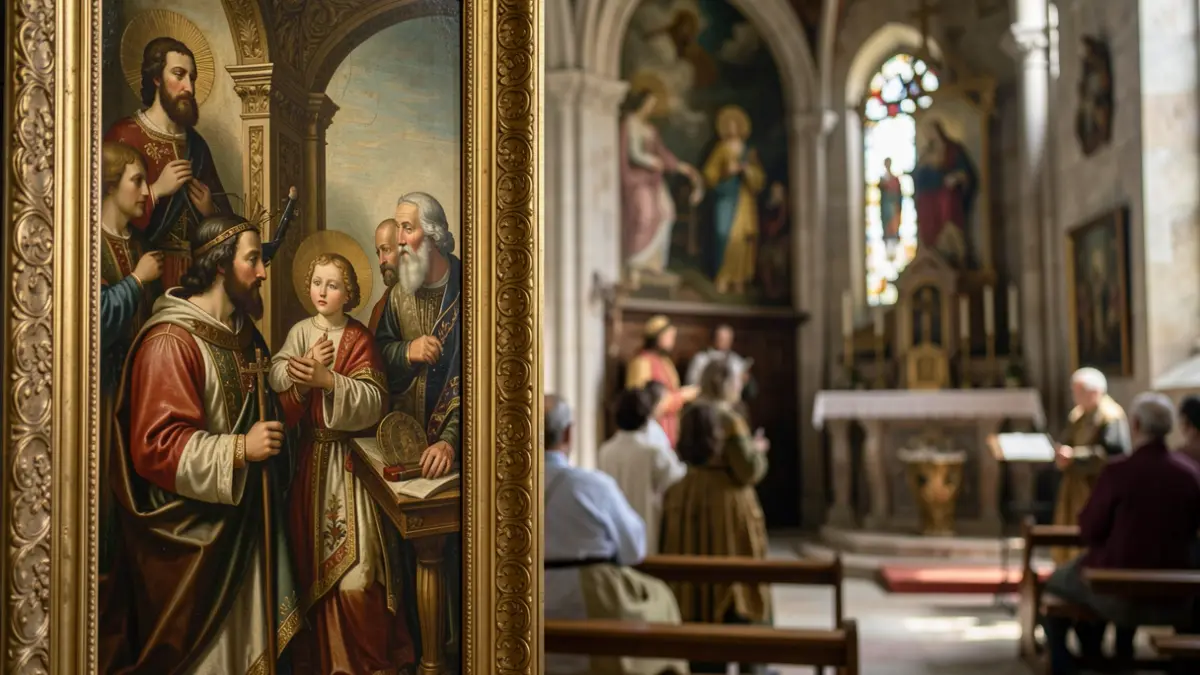
A significant portion of these pieces are housed in religious temples. Notable among them are two triptychs attributed to Joos Van Cleve: one dedicated to the Virgin of Las Nieves, located in Agaete, and another, The Adoration of the Shepherds, housed in the parish of San Juan Bautista de Telde.
The former convent of San Francisco de Santa Cruz de La Palma holds one of the most significant heritage collections, reflecting the island's economic importance on the Atlantic routes of the late 15th and early 16th centuries.
These artworks were often commissioned by local merchants and elites for churches and convents, serving as a display of prestige and religious patronage, as explained by Van de Walle.
The foundation's president also highlighted the improved conservation of this heritage in recent decades. He noted that until the mid-20th century, many works remained uncatalogued or incorrectly attributed, with limited knowledge about them.
The collaborative efforts of island councils (cabildos), the Government of the Canary Islands, and dioceses have been vital for the restoration, study, and valorization of this legacy, which enriches the understanding of Canarian cultural formation in its early centuries.
The influence was mutual: Canarian elements appear in Flemish works, such as the dragon in El Bosco's The Garden of Earthly Delights, interpreted as a symbol of wisdom.
To further explore these connections, the Canary Foundation of Flemish Art has organized workshops in Santa Brígida, in collaboration with the local municipality and the Cabildo de Gran Canaria, bringing together specialists to analyze the presence and significance of Flemish art in the islands' history.