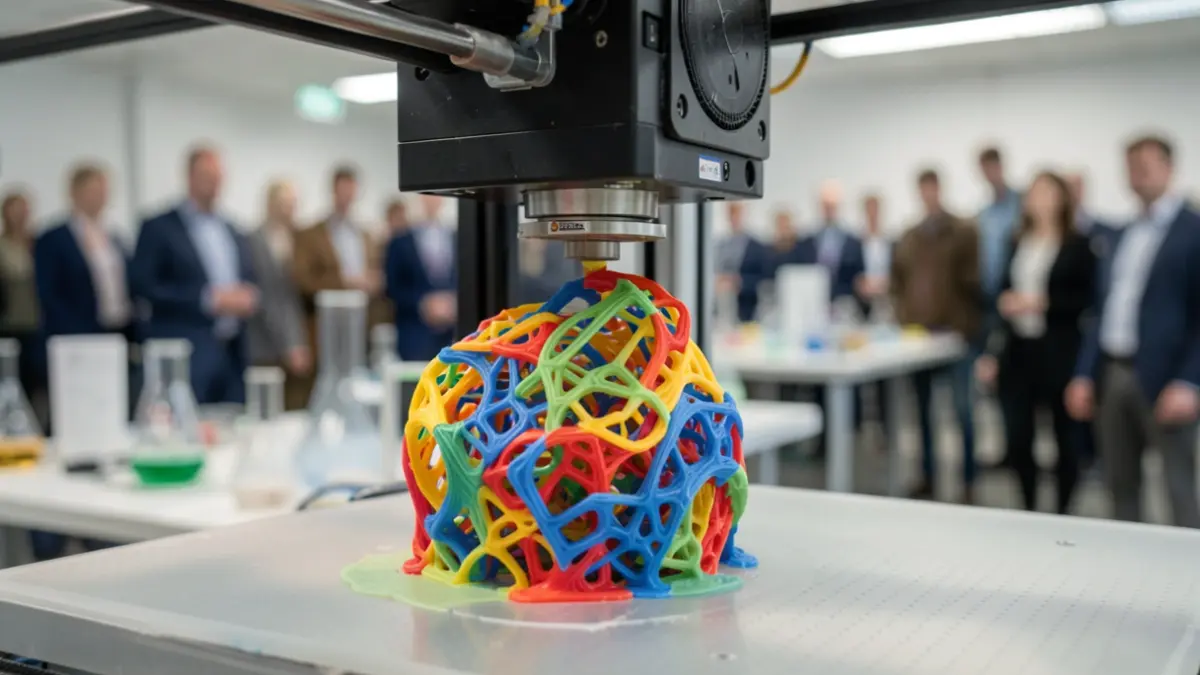
The business initiative, originating from the ULPGC's Integrated and Advanced Manufacturing Research Group, applies university knowledge to develop technological solutions for various sectors. Gradual Research operates through two divisions: DiMeFa3D, focused on healthcare applications, and Bosquejo 3Dstudio, for technological and multidisciplinary projects.
Among its key advancements are the creation of materials that replicate the tactile characteristics of human and animal tissues for synthetic anatomical models, used in medical training and surgical planning. They also develop customized splints and prosthetics using 3D scanning and printing technologies.
The company also utilizes a technology patented by the ULPGC that allows combining different materials within the same printing process, presenting potential applications in tissue regeneration. Gradual Research is currently exploring recognition as a university spin-off to continue translating research results into practical applications.
The FCPCT-ULPGC, as part of the Red CIDE network, has assisted Gradual Research in identifying tools and opportunities for its R&D+i projects, including advisory services through the «SYNERGIA ULPGC» project for exploring funding and connecting with potential collaborating entities to host students from the ULPGC's Degree in Biomedical Engineering.
This recognition highlights the importance of specialized support in the early stages of innovative business initiatives, facilitating access for the Canary business community to resources, knowledge, and collaboration opportunities that contribute to the development of new technological projects.
The Red CIDE is an initiative of the Canary Islands Government's Ministry of Universities, Science, Innovation, and Culture, promoted by the Canary Agency for Research, Innovation, and Information Society (ACIISI), and co-financed by the European Regional Development Fund (ERDF).