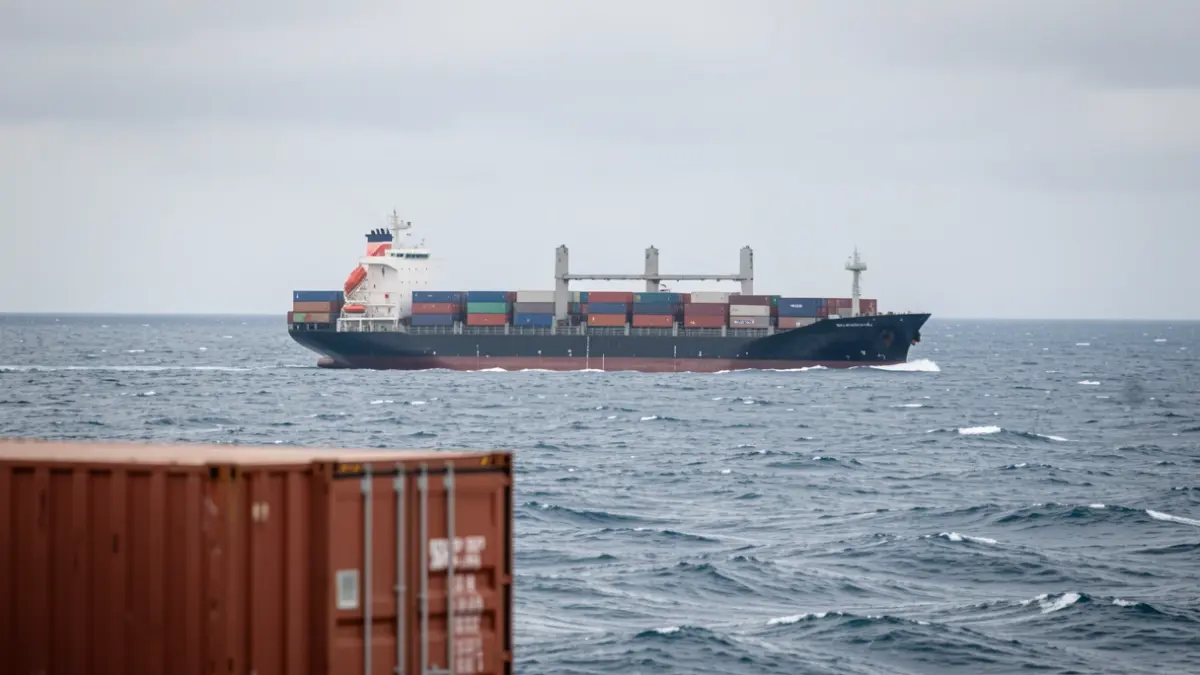
The Popular Party (PP) has announced it will present an initiative in the Parliament of the Canary Islands to demand the central government immediately review and update the standard costs used to calculate aid for freight transport originating from or destined for the archipelago.
The proposal aims to ensure the effective fulfillment of compensation established under the Economic and Fiscal Regime (REF) of the Canary Islands, and to prevent the surcharges associated with insularity, remoteness, and its outermost region status from continuing to be inadequately reflected in state aid.
Regional deputy Rebeca Paniagua, who is promoting the initiative, highlighted the strategic importance of freight transport for the Canarian economy, stating that "the Canarian economy depends absolutely on maritime and air transport to guarantee the supply of essential goods."
The PP recalls that a similar proposal was recently defended in the Mixed Commission on Insularity of the Senate by national deputy Juan Antonio Rojas, receiving majority support from the upper house.
The Popular Party argues that in recent years, a significant gap has emerged between the costs officially recognized by the State and the actual expenses incurred by operators and companies. They point out that between 2021 and 2023, maritime freight rates increased by over 60% on certain routes, and fuel prices rose by more than 40%. These increases, they argue, have not been sufficiently reflected in the update of the standard costs used for compensation.
Paniagua maintains that this situation reduces the effectiveness of the REF system and directly impacts business competitiveness, supply, and the cost of living on the islands.
The initiative urges the Parliament of the Canary Islands to request several actions from the central Executive: the immediate update of standard costs, the creation of an automatic periodic review mechanism linked to market evolution, and the streamlining of aid processing with a maximum resolution period of twelve months. It also proposes a permanent technical evaluation system in coordination with the Government of the Canary Islands and sector representatives.
The popular deputy warned that the problem particularly affects the non-capital islands, where double insularity increases distribution and supply costs. "Defending the REF is defending equal opportunities for Canarians. We cannot allow the costs derived from our island status to continue impacting the shopping basket and the economic activity of the islands," concluded Paniagua.