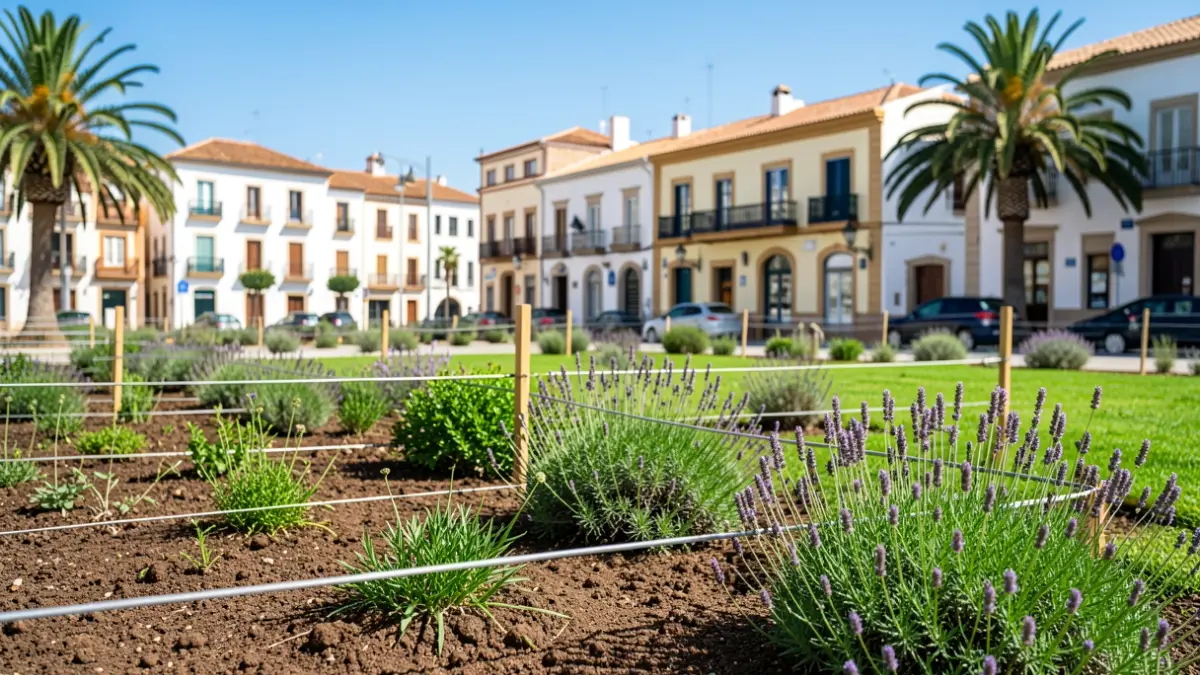
Vegetation restoration and expansion of arboreal spaces in the Plaza de la Ascensión, located in the Las Torres neighborhood of Las Palmas de Gran Canaria, are part of the city's Arboreal Master Plan. The intervention involved removing the pavement covering the trees and expanding the vegetation with Canary Island species such as lavender, sea thyme, and coastal snapdragons.
The main objective of this plan is to care for existing tree species to prevent their deterioration and create new green areas to serve as climate refuges. In the square, rounded stones and resins covering the tree pits were removed, improving drainage and allowing the planted trees to double their surface area to four square meters, facilitating root and trunk respiration and nutrient absorption.
These actions aim to combat root suffocation affecting the trees in Las Palmas de Gran Canaria, caused by excess water, poor drainage, and compacted or clayey soils. Following pavement removal, a new irrigation system was installed, and more climate-resilient Canary Island species, such as magarzas, were planted, which help retain soil moisture and benefit biodiversity.
The Councilor for Parks and Gardens, Gemma Martínez, highlighted that the project responded to a neighborhood demand and that the investment in soil and plants benefits both the trees and the well-being of the local residents. The restored areas will remain temporarily fenced to ensure the survival of the new plants until they are established.
The Arboreal Master Plan, approved last year, outlines a roadmap for the sustainable management of the city's trees until 2035, aiming to make Las Palmas de Gran Canaria a more citizen-friendly and resilient urban area against rising global temperatures. The city currently has over 61,000 trees, with new species, particularly Canarian ones, being continuously planted across various neighborhoods.