In mid-island municipalities like Santa Brígida, where weather conditions change rapidly and the State Meteorological Agency (Aemet) lacks its own stations, the work of citizens like Carlos Hernández is vital. For 50 years, this resident has shown admirable consistency, recording temperatures, humidity, and rainfall from his farm.
Hernández began his collaboration altruistically, motivated by helping acquaintances and the availability of his farm to install a weather station. What started as a temporary aid has become an almost unalterable routine: observe, record, and send data.
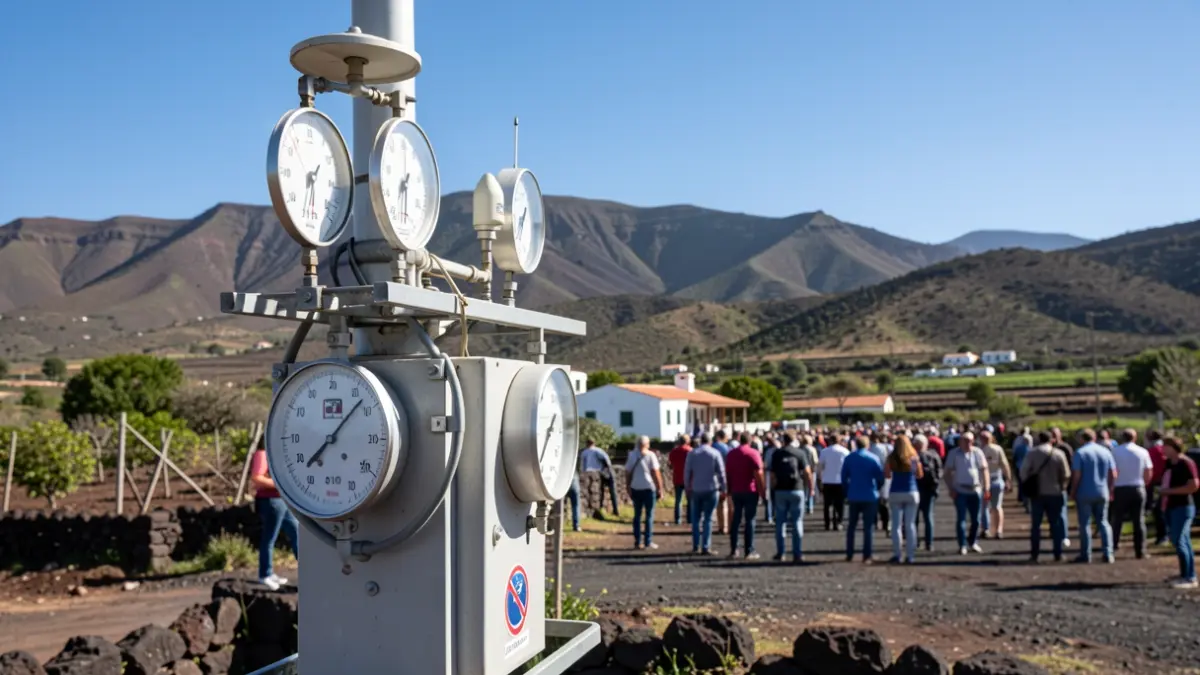
His station is equipped with traditional instruments such as thermometers, rain gauges, and a thermohygrograph, which continuously measures temperature and humidity. Daily, he notes the maximum and minimum temperatures and measures rainfall by pouring the collected water into a graduated cylinder.
The data is sent to Aemet monthly, unless an extreme weather situation occurs. Hernández recalls how the agency's headquarters have changed location and how the meteorological service was formerly part of the Air Force, which initially proposed the role due to the absence of stations in the area.
As a farmer, meteorological knowledge has been very useful for predicting pests and better managing his crops. Even when he cannot visit his farm, the automatic instruments continue to record the necessary information.
José Antonio Monreal, a senior meteorology technician at Aemet in the Canary Islands, highlights the importance of these collaborators. He emphasizes that while automatic stations exist, traditional climatological stations like Hernández's are vital in areas without coverage, maintaining a human network of about 200 collaborators across the Archipelago.