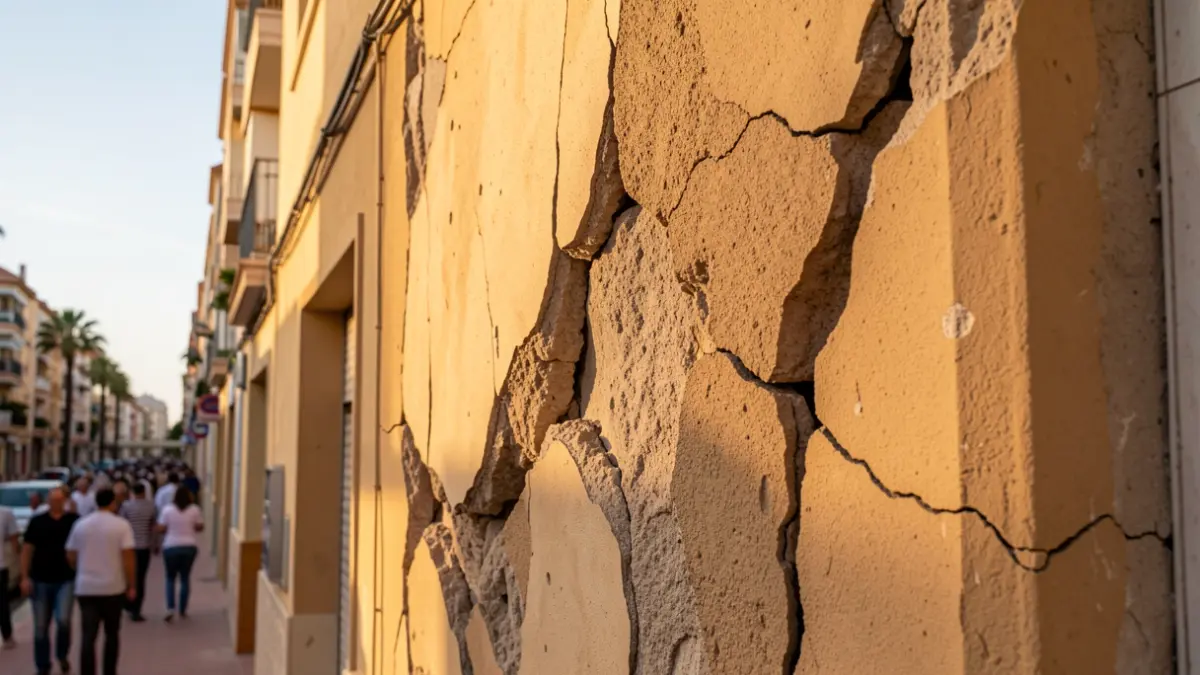
Residents of the building, handed over in 2016 as part of Tamaraceite's ARRU project, report the appearance of serious damages and pathologies in both common and private areas. According to an expert report commissioned by the residents, these issues stem from problems with the soil, foundation, design, or execution of the work, pointing to cracks caused by material deformation or construction errors.
However, the Las Palmas de Gran Canaria City Council has dismissed the request for payment for repairs. Following its own technical analysis, the local government concludes that there is no evidence of structural damage compromising the building's safety or stability. Municipal technicians indicate that the observed defects are minor, affect non-structural elements, and show no active evolution.
The council reminds that the legal liability period for structural damages is ten years from the completion of the work, and that the final work certificate dates from May 2016, with municipal reception in May 2026. They consider the claimed damages do not fall under this structural warranty.
This disagreement adds to the delays in Tamaraceite's urban rehabilitation project, initiated in 2008 to renovate homes promoted by the Francisco Franco Housing Authority between 1969 and 1971, leaving many residents awaiting improvements in their living conditions.