The pain of losing a child can be transformed into a driving force for hope. This is exemplified by Paula Medina, mother of Ancor, who passed away at three and a half years old due to neuroblastoma, a rare and under-researched childhood cancer. Since then, this Gran Canaria resident has dedicated her efforts to raising funds to advance the understanding of this disease.
'A mother grieves forever,' Medina confides, but she recalls her son's words when he was just two and a half, expressing his desire to become a doctor to help other children. 'In the end, I feel this is a way to fulfill his wish,' she states, referring to her commitment.
“"A mother grieves forever"
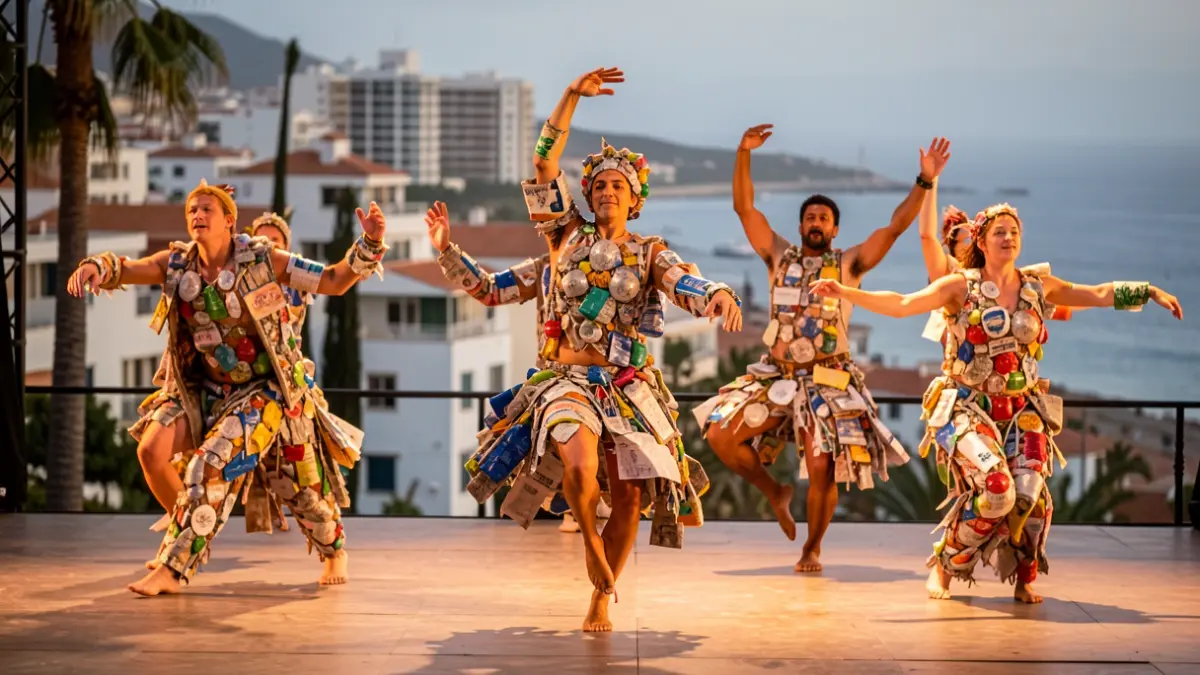
This Saturday, at 8:00 PM, the second edition of the charity gala 'Sonríe a la Vida' (Smile to Life) will take place at the Jesús Arencibia Cultural Space in Tamaraceite. The event will feature the altruistic participation of various artists and collaborators, including Alexis Santos, Ballet Sensación, Dácil Suárez, Fabiola Trujillo, and Iván Quintana, among others, to raise funds for neuroblastoma research projects.
The first edition, held in 2019 at the Nuevo Teatro Viejo in Arucas, successfully raised 4,400 euros. Since then, through galas, raffles, and charity bingo events across different islands, the Ancor-Nen project has managed to collect approximately 30,000 euros for research. 'Nobody here gets paid. We are all volunteers: the artists, the organizers, the technical team... What is raised goes directly to the laboratory,' Medina emphasizes.
Neuroblastoma is one of the most frequent solid tumors in early childhood, though it is still considered a rare disease. While some cases have a favorable progression, diagnosis in advanced stages, as was Ancor's case, leads to scarce survival probabilities. 'My son was diagnosed at stage 4. Doctors even told us he had a 25% chance of survival. Still, he fought for a year and a half,' she recalls about a disease with many unknowns, explaining that 'it is not known why it appears or why in some children it progresses so aggressively.'
The funds raised are directed to the NEN Association, a leading entity in Spain for neuroblastoma research. From the Canary Islands, Paula coordinates the Proyecto Ancor delegation, created in memory of her son.
Currently, three research lines are supported: one in Navarra, led by Dr. María Blanco, studying nanoparticles designed to improve treatment delivery for high-risk neuroblastomas; another at the Sant Joan de Déu Hospital in Barcelona, seeking to understand why some tumors stop responding to therapies; and a third in Madrid, headed by Dr. Marta Osuna, exploring new pharmacological combinations for childhood tumors resistant to conventional treatments.
Speaking of Ancor remains difficult for his mother, with moments of emotion interrupting her narrative. However, when she remembers her son, described as 'a happy child. Very much so,' sadness gives way to a smile. Medina recalls how Ancor, even during the most aggressive treatments, would jump on his bed with medical cables attached, saying he was Spiderman. 'We want to raise awareness. That people know this happens, that there are children and families going through such situations, and that research is the only way to change things,' she concludes.