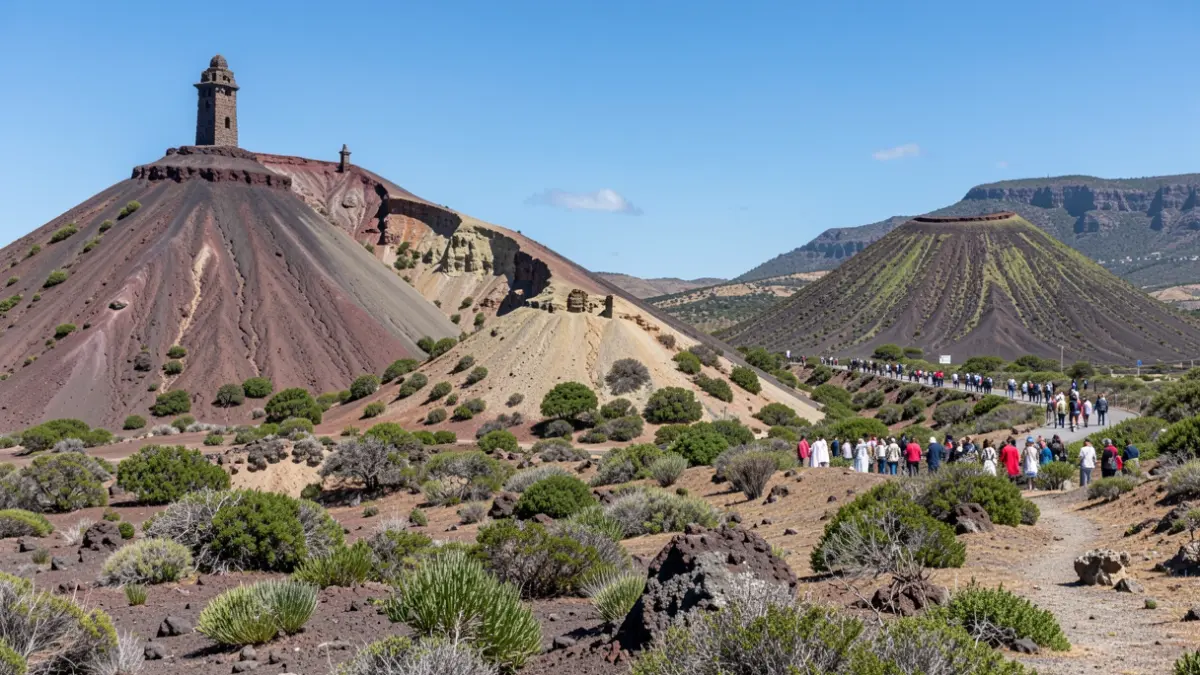
Both files will be integrated into the Canary Network of Natural Spaces, which currently includes 147 protected sites covering over 40% of the islands' territory. The Minister of Territorial Policy, Territorial Cohesion and Water, Manuel Miranda, reported on the opening of this procedure, which will be open for public exhibition until November 30.
The Volcanes de Rosiana space comprises a dozen recent volcanoes with intact primitive structures, serving as an example for the study of the island's formation. This area, already included in a special plan in 1987, possesses volcanic, botanical, faunal, landscape, archaeological, and ethnographic values. The proposed delimitation covers 1,022.2 hectares.
Meanwhile, the Saladar de Bristol, in La Oliva, Fuerteventura, is being proposed as a site of scientific interest following a request from the La Oliva City Council in May 2026. This coastal enclave stands out for its geomorphological interest and its unique vegetation community in Fuerteventura, featuring protected species. Protection initiatives for this site began in 2014, highlighting its high biodiversity.
The objectives for Saladar de Bristol include protecting the ecosystem, conserving ecological interactions, restoring habitats, and preserving areas for the refuge and nesting of birds.