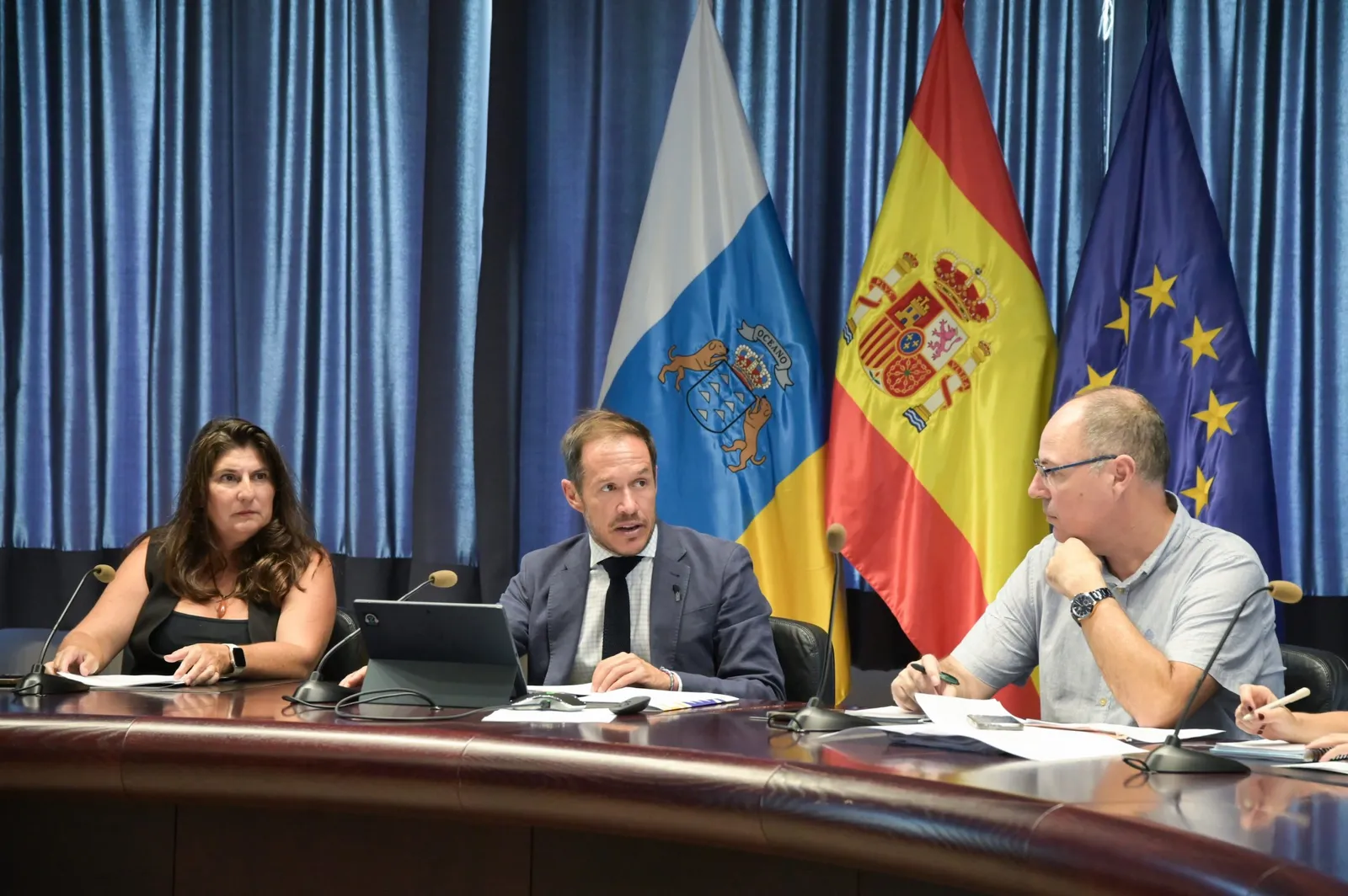
The Ministry of Ecological Transition and Energy held two key meetings this week. The first, chaired by Vice-Minister Julieta Schallenberg, advanced the configuration of the future Canary Climate Action Network, a co-governance body aimed at coordinating climate policies between the regional government, the seven island councils, and the municipalities, considering the territorial specificities of each island. A draft regulation was presented to define its composition and functioning, based on Decree-Law 5/2024.
At the Canary Climate and Energy Action Commission, chaired by Minister Mariano H. Zapata, various initiatives were addressed. Notably, the creation of a working group to calculate the carbon footprint within the Government of the Canary Islands itself, which will be the first to be required to apply the procedure. Information was also provided on the status of the Canary Carbon Footprint Registry, a tool for recording and tracking greenhouse gas emissions, which has already passed public consultation periods.
Minister Zapata highlighted the regional Executive's commitment to implementing concrete and effective climate measures, emphasizing the need for a shared strategy and the involvement of all administrations. "Facing this challenge requires unity and commitment," he stated.
Other topics discussed included the work program of the Canary Climate Action Plan, the Canary Climate Refuge Network (endorsed by FECAM and Ashotel), and the upcoming 1st Canary Climate Change Forum. This forum, to be held on November 4th and 5th in Telde, Gran Canaria, will bring together experts, administrations, companies, and social entities to address aspects such as the impact of climate change on health, economy, biodiversity, and oceans, with a special focus on decarbonization in the Canary Islands.