In a letter sent to the Secretary of State for Migration, Pilar Cancela, the head of the regional executive conveys the concern of the Government of the Canary Islands regarding the need to guarantee adequate attention to migrants from the moment of their arrival, especially during periods of higher intensity of entries via the Atlantic Route.
Clavijo emphasizes that migration is a structural phenomenon that the Canary Islands, as a border territory, has been facing on the front lines for over three decades. Therefore, he considers it necessary for the State to effectively participate in the response, both for its responsibility in managing first reception facilities and for the effects of migratory pressure on entry territories.
The president proposes that the State Program for Humanitarian Attention serve as a basis for articulating complementary health and social care measures, requesting the promotion, in coordination with the Ministry of the Interior and the Government of the Canary Islands, of “a specific program endowed with sufficient state funding.” This extraordinary response, he argues, is “indispensable” to guarantee dignified attention and to reinforce the capacity of the Canarian public services.
Proposed actions include reinforcing medical and nursing staff, early detection of diseases and vulnerabilities, initial psychological support, intercultural mediation and health translation services, as well as coordination protocols with the Canarian Health Service.
Clavijo reminds that the Canary Islands are one of the main entry points to Europe, posing challenges in first reception and immediate healthcare. He stresses the need for a coordinated response among administrations to detect health problems early and attend to emergencies.
The president highlights the role of the Canarian Health Service in assisting migrants requiring medical attention, a task that, combined with extraordinary needs at certain times, creates “additional pressure on the autonomous community's health resources” which should be addressed based on institutional and financial co-responsibility.
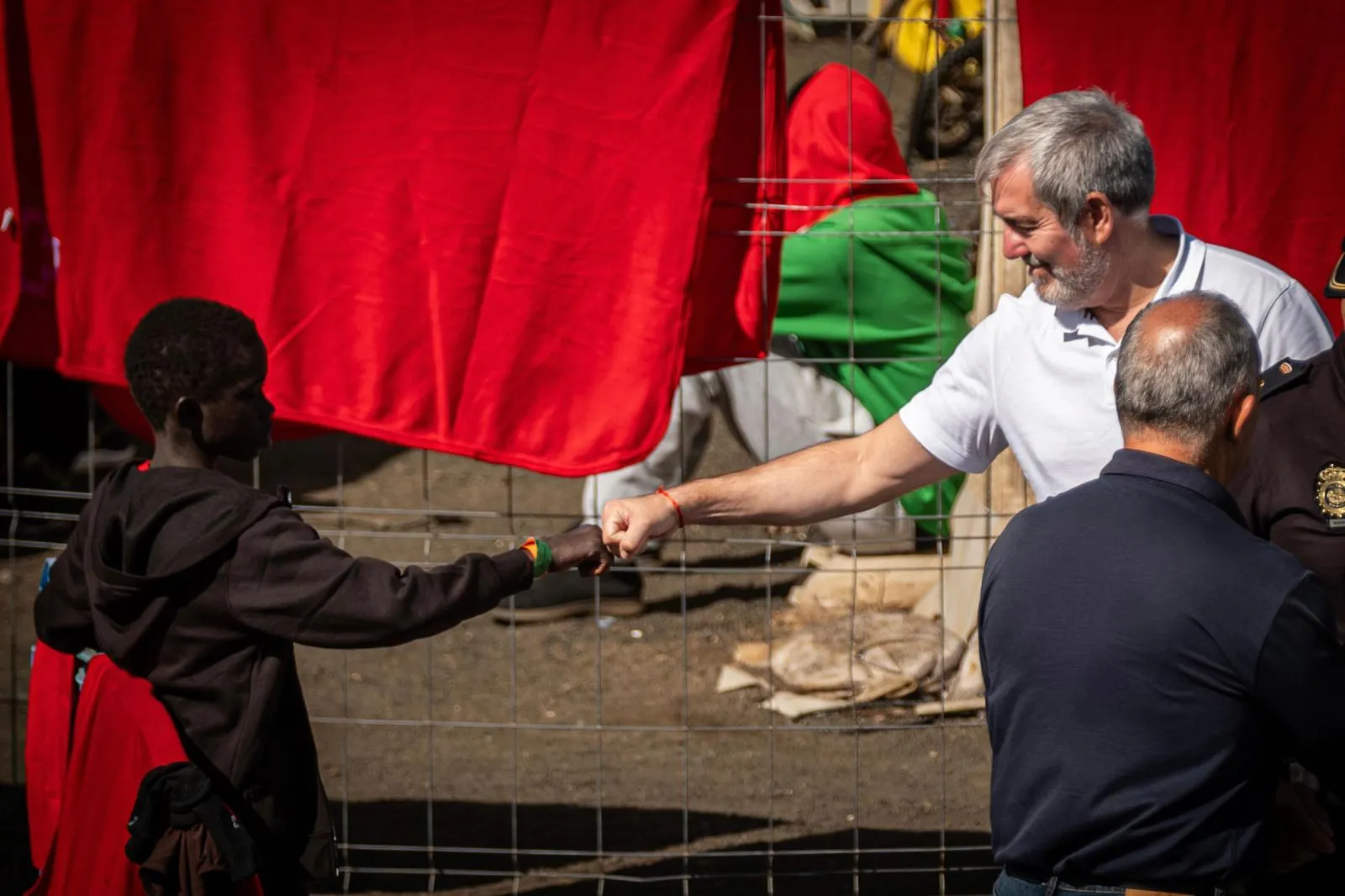
The request comes on the same day that Clavijo traveled to El Hierro to witness firsthand the island's situation, where nearly 3,000 migrants have arrived so far this month. He assessed at the La Restinga dock, the island hospital, and the local CATE the state of reception resources and the assistance pressure the island is suffering, with public services at their limit.
After expressing his support for the personnel of Maritime Rescue, healthcare workers, and Red Cross volunteers, he called on the central government to fulfill pending commitments to reconcile the care of arriving migrants with the usual activity in La Restinga.
He requests that the State install a module at the El Hierro CATE with medical and nursing staff, so that routine care after triage does not require displacing professionals from the Insular Hospital, which reduces care capacity for residents.
He also asked for space at the dock to be cleared for asphalting and conditioning, with the collaboration of the Cabildo.
During October, nearly 4,000 migrants have arrived on the Canarian coasts, a 240% increase compared to the first 25 days of October last year. So far this year, 11,150 migrants have arrived, compared to 14,133 registered by October 25 last year.