The Ministry of Ecological Transition and Energy of the Government of the Canary Islands has launched a new marine litter monitoring program along the archipelago's coastline. This initiative will provide a more precise understanding of the waste reaching Canarian shores and how it evolves over time.
The project is part of Circularocean, a European initiative that promotes circular economy solutions to mitigate ocean pollution, as detailed in a statement from the Ministry.
“"With this program, we take an important step to better understand a complex problem like marine litter and to act more effectively. Having rigorous and comparable information is key to protecting our ecosystems and moving towards more sustainable waste management."
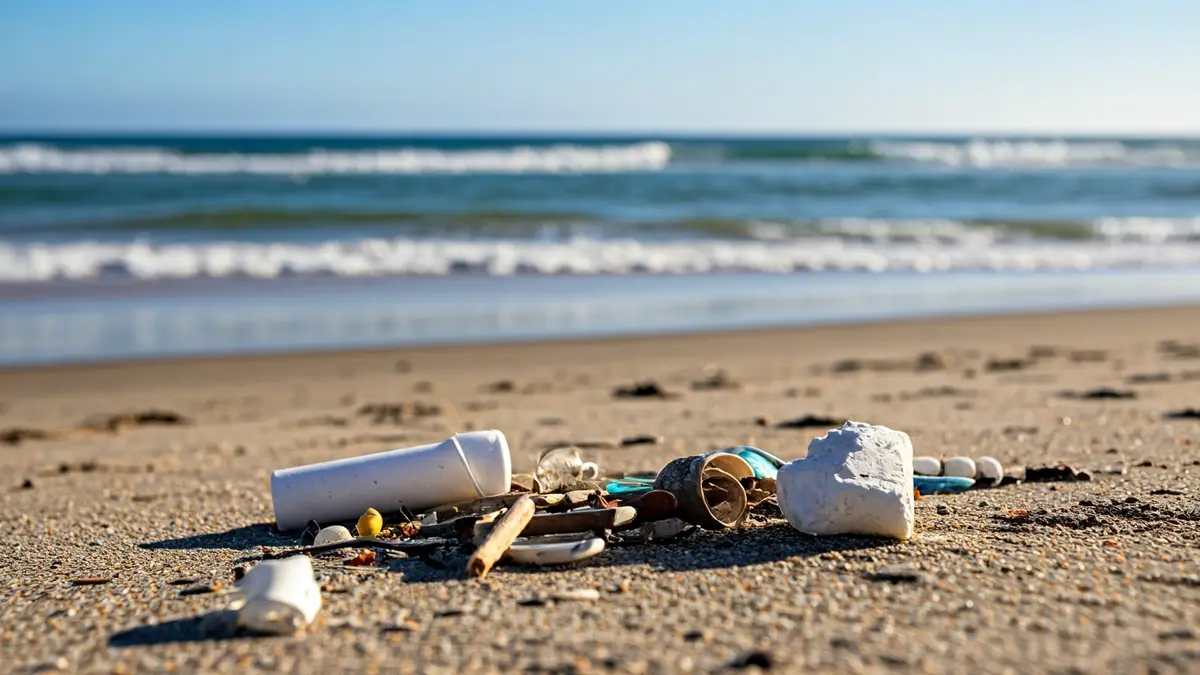
Sampling campaigns will commence in April on 30 beaches spread across the entire archipelago, including the islet of Alegranza. These campaigns will be conducted seasonally throughout the year to gather detailed information on the quantity and typology of waste, as well as the potential origin of the materials found. The collected data will facilitate trend analysis, detection of pollution patterns, and the design of more effective measures to reduce waste on the Canarian coast.
A key aspect of the program is the creation of a standardized data system, which will allow for comparison between different areas of the Canary Islands and alignment with European environmental monitoring methodologies. Until now, available information on marine litter in the archipelago was fragmented across various projects and entities, hindering a global overview of the problem. To overcome this, the program collaborates with the Technological Center of Marine Sciences and the environmental organization SEO/BirdLife.
The Circularocean project is part of the Interreg MAC 2021-2027 Territorial Cooperation Program, co-financed by FEDER funds. This initiative involves 15 entities from different Atlantic regions, including the Canary Islands, Azores, Madeira, Cape Verde, Ghana, and São Tomé and Príncipe. The common goal is to advance towards a circular economy model applied to the marine environment, reducing waste and improving its management through international cooperation, knowledge exchange, and the development of common tools. With this new program, the Canary Islands strengthens its role in the fight against marine pollution in the Atlantic, a global environmental problem that directly affects biodiversity, tourism, and ocean health.