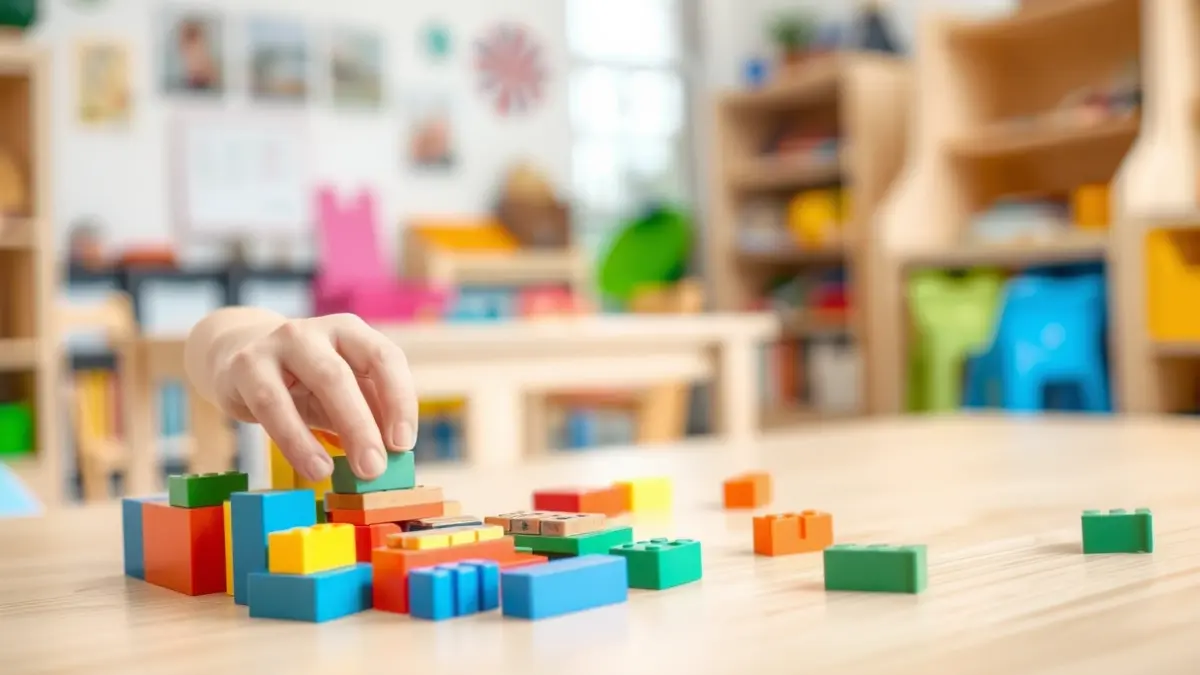
This achievement is part of the Recovery, Transformation and Resilience Plan, marking a significant step forward in expanding the first cycle of early childhood education across the islands. Counselor Poli Suárez presented the details of this progress to the Parliament of Canarias, emphasizing his department's commitment to early education.
“"Continuing to expand the provision for this educational stage is one of the most important actions of this legislature."
Currently, the Canary Islands have 225 classrooms and 3,667 public places in operation, benefiting a growing number of families. Suárez highlighted that, despite some ongoing construction, the plan for the end of the current academic year is to meet and exceed the ministerial targets.
The Department planned to enable an additional 1,656 places and 110 classrooms during this academic period. Of these, 1,438 places are already operational, representing 89.83% of the total planned and a significantly faster opening pace than in previous years. The counselor stressed that in the last two academic years, more classrooms have been opened than in the two preceding years combined, effectively doubling and almost tripling the growth.
“"We have made a very significant leap in these two years and have corrected the delay that existed in the opening of classrooms."
The implementation of these places varies among the islands. Tenerife has the most pending classrooms and places, with 79 classrooms and 1,328 places already enabled, and 103 vacancies and six educational resources yet to be completed. It is followed by La Palma, with ten planned classrooms and 158 vacancies, of which four classrooms and 58 places are still to be created. In Gran Canaria, 89 classrooms and 1,439 places are in operation, with a forecast to reach 92 resources and 1,478 vacancies. Lanzarote has 25 classrooms and 405 places, with one remaining to complete its plan. La Graciosa has one classroom and ten places. The islands of El Hierro (seven classrooms, 102 places), La Gomera (seven classrooms, 92 places), and Fuerteventura (eleven classrooms, 191 places) have already completed the implementation of the 0-3 year old cycle.
The counselor explained that these differences are due to the pre-existing municipal early childhood education offerings, the availability of suitable spaces in educational centers, and the 0-3 year old population in each territory. The planning, according to Suárez, adapts to the reality of each island and is not based on arbitrary decisions.
Collaboration with local councils has been crucial for the plan's development, allowing for reduced construction, optimized spaces, and cost savings. Space transfers in municipalities such as Valsequillo (Gran Canaria), Fasnia (Tenerife), and Barlovento (La Palma) were highlighted. Additionally, the department has provided subsidies for construction, space adaptation, and operational support for the created places, including 200,000 euros for the municipalities of Valverde (El Hierro) and Santa Cruz de La Palma, and others for municipalities like Buenavista, Adeje (Tenerife), and Tijarafe (La Palma).