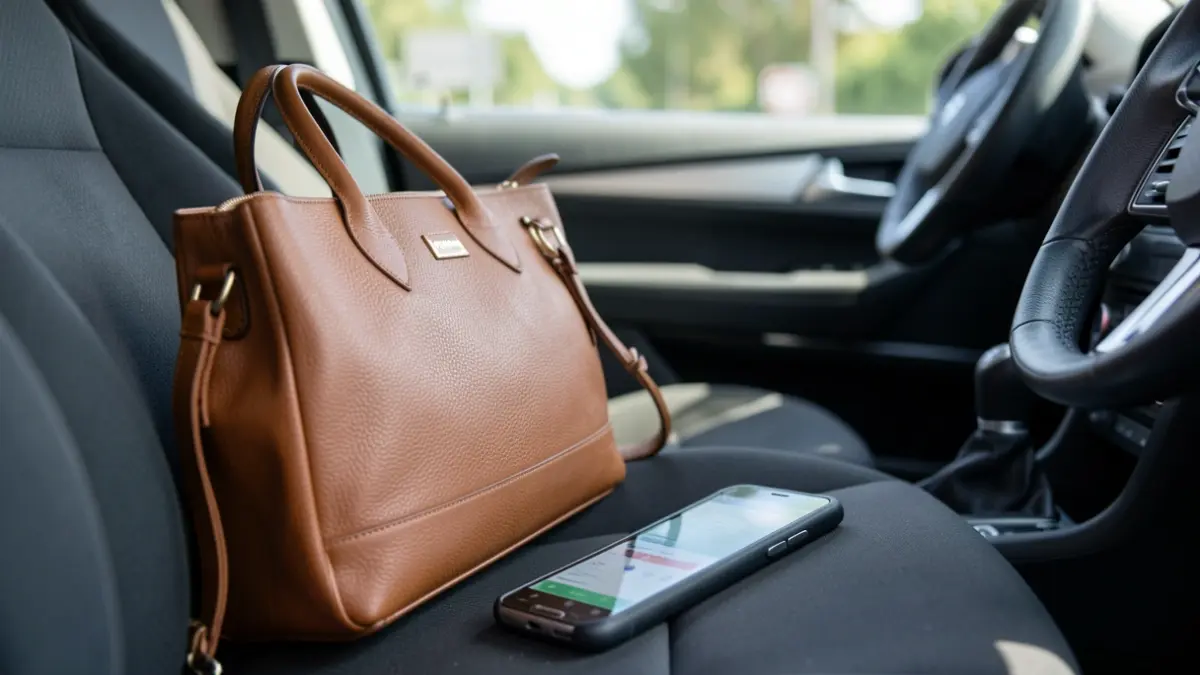
With intensified road surveillance during the summer, the DGT and Civil Guard are focusing on a common risky behavior: transporting loose objects inside the car. Items such as handbags, computers, mobile phones, or even toys can become dangerous projectiles in the event of sudden braking or an accident.
A study reveals that nearly half of Spanish drivers (47%) carry unsecured items in the cabin, and a high percentage (84%) leave them in plain sight. These objects, when ejected, multiply their impact force. For instance, a one-kilogram object at 50 km/h can exert a force equivalent to 40 kilos.
The danger increases with speed. A woman's handbag weighing approximately 950 grams, traveling at 90 km/h, can exert a force comparable to the weight of a fighting bull. This same principle applies to pets traveling without adequate restraint systems.
The Civil Guard has reminded the public via social media about the importance of securing cargo. A small loose dog at 50 km/h could generate an impact force of over 500 kilos. Placing objects on the rear shelf is also discouraged, as they could be ejected forward towards the occupants.
The recommendation is clear: all objects must be secured while traveling. The trunk is the ideal space for luggage, shopping, and backpacks. Smaller items should be stored in the vehicle's storage compartments to ensure the safety of all occupants.