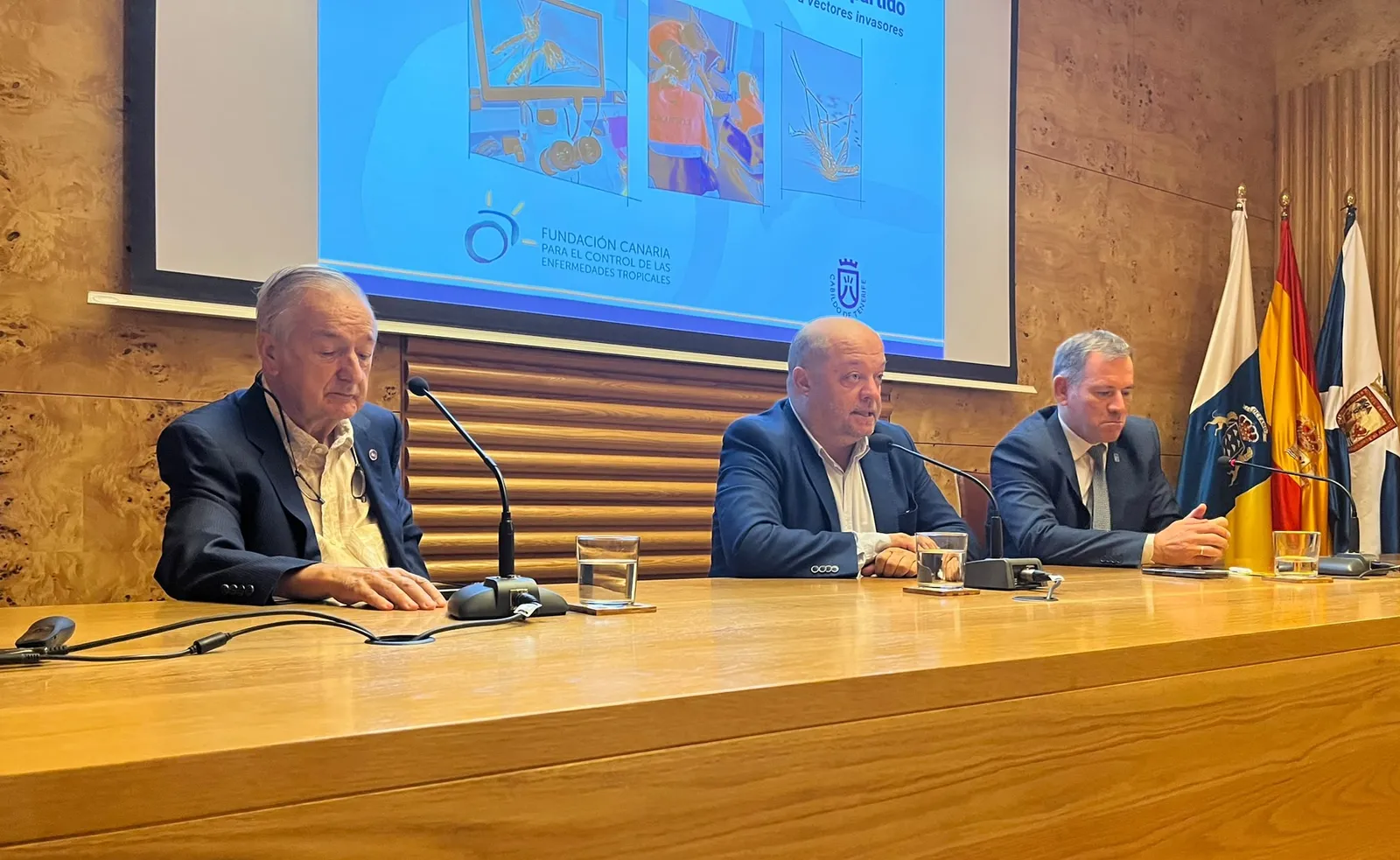
Specialists from Canary Islands, Madeira, and the national level gathered in Tenerife for the ‘Vectors without Borders’ conference to address the control of invasive mosquitoes. The Director General of Public Health, José Díaz-Flores, highlighted the effectiveness of the Canary Islands Health Service (SCS) entomological surveillance system, which has successfully managed 24 detections of invasive species since 2017, preventing their establishment in the Archipelago to date.
This surveillance system allows for the early detection of potential introductions of these vectors, such as Aedes aegypti and Aedes albopictus, and the activation of control measures to prevent the transmission of diseases like dengue, chikungunya, or zika. Díaz-Flores emphasized the importance of permanent international collaboration under the ‘One Health’ approach, which integrates human, animal, and environmental health.
The event, held at the MUNA Museum in Santa Cruz de Tenerife, also featured Basilio Valladares, president of the Canary Foundation for the Control of Tropical Diseases (FUNCCET), and Pedro González, Insular Director of External Action of the Tenerife Island Council. Recent detections of Aedes albopictus in Valle Gran Rey (La Gomera) and Mogán (Gran Canaria), and Aedes aegypti in Pueblo de Mogán, were cited as examples where immediate action was taken.
The Director General also reported on the surveillance of the West Nile virus, first detected in the islands last August with positive cases in equines in southern Gran Canaria. Surveillance efforts were intensified, with no human transmission detected to date.
Entomological surveillance in the Canary Islands began in 2013 following a dengue outbreak in Madeira. The system, developed in collaboration with the University of La Laguna and the Ministry of Health, has successfully managed up to 24 detection incidents of invasive mosquitoes since the first appearance of Aedes in Fuerteventura in 2017.
Díaz-Flores explained that the presence of the mosquito vector is crucial for the sustained transmission of diseases. The conference, organized by FUNCCET and the Tenerife Island Council, also addresses the climatic suitability and potential distribution of Aedes aegypti in Madeira and Tenerife.