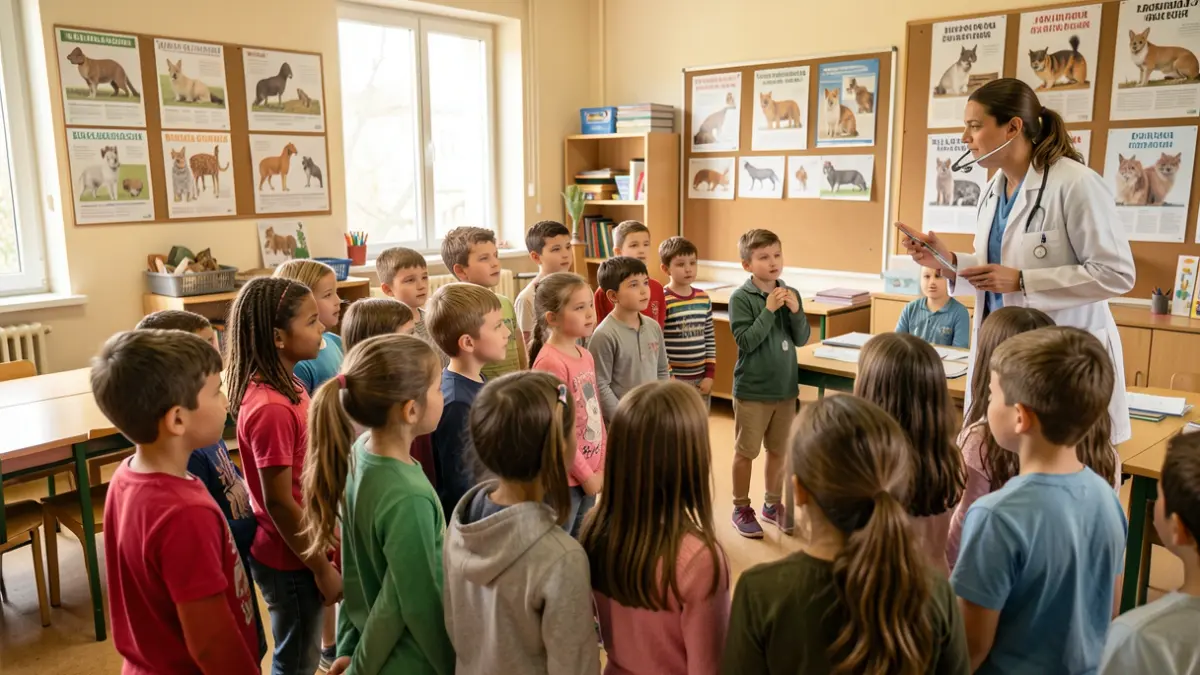
The main objective of this initiative is to raise student awareness about the care and responsibility involved in living with a companion animal. The program, aimed at 4th-grade Primary students, will triple its budget compared to the previous year.
The first edition, conducted during the 2025/2026 academic year, was implemented in 34 centers and received very positive evaluations from participants, highlighting the quality of the content and the opportunity to interact directly with veterinary professionals.
Poli Suárez, head of the Ministry of Education, Vocational Training, Physical Activity and Sports, emphasized the importance of educating students in responsible values and behaviors towards their environment, including coexisting with animals. He noted that this training should begin at an early age and involve expert veterinarians.
Suárez stressed that owning a pet should not be a momentary impulse but a lifelong commitment requiring time, attention, and responsibility. He believes that educating in respect for animals fosters empathy, compassion, and care for living beings, contributing to a more conscious society.
María Luisa Fernández, from the Veterinary College of Santa Cruz de Tenerife, recalled that the Canary Islands' Statute of Autonomy promotes the safeguarding of animals, while state legislation encourages respect and protection towards them. The first edition demonstrated the centers' interest and the initiative's capacity to engage students.
Pablo Varona, from the Veterinary College of Las Palmas, detailed the program's methodology, which includes talks by veterinarians to raise awareness about responsible ownership, respect, and the necessary care for pets. Teachers receive virtual training, students work on content in the classroom, and veterinarians supplement the learning before each center produces a final project.
The collaboration with official colleges and veterinary professionals provides scientific knowledge and experience, ensuring reliable information and addressing students' real questions, thus avoiding the spread of myths about animal welfare.
The project adopts an educational perspective, recognizing animals as sentient beings and encouraging reflection on the consequences of ill-considered decisions. The fundamental role of families is also highlighted, as students can act as conduits to transfer learning to their homes and promote changes in family customs.