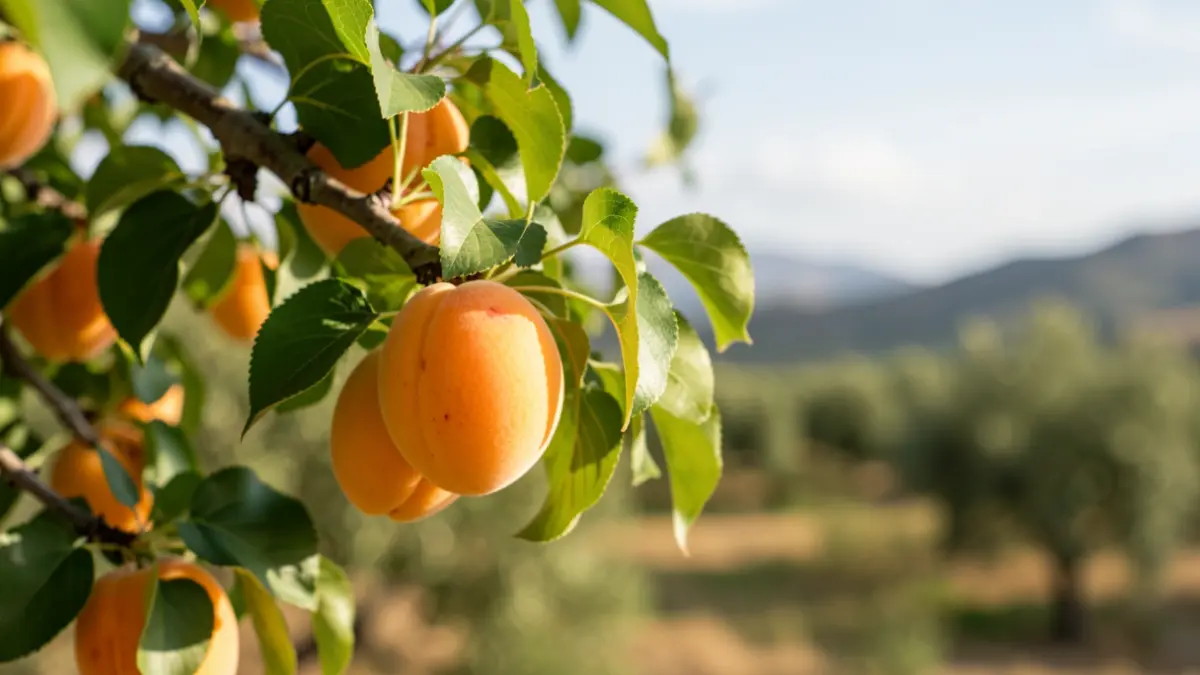
Apricot production in Gran Canaria has seen a notable recovery in the 2026 campaign, reaching a total of 25,000 kilos. This figure represents an improvement compared to the 22,000 kilos harvested in 2025, according to official data from the Arinaga Agrarian Extension Agency.
The approximately 40 producers of the fruit, mainly concentrated in the upper area of San Bartolomé de Tirajana, celebrate the rebound, although the quantity collected is far from the figures of previous years such as 2015 (100,000 kilos) or 2018 (80,000 kilos).
“"The bug gets into the fruit and spoils it."
Miguel Guerra, one of the main growers, has harvested about 4,000 kilos from his farm in Cercados de Araña, a considerable increase from the less than 1,000 kilos in 2025. Despite the improvement, his 500 trees have not yet reached their potential of 10,000 to 15,000 kilos.
The intense rains of the past season, which coincided with flowering, partially affected production, a paradoxical situation after years of extreme drought that forced irrigation with tankers. The Tunte area, including enclaves like Hoya Grande, la Hoya, Manzanilla, Fataga, and Cercados de Araña, is the main nucleus of commercial apricot cultivation in the Canary Islands, marketed under the brand 'Albaricoques de Tirajana'.
The Agrarian Extension Agency points to the lack of generational replacement and climate change, with warmer winters, as challenges for the crop, whose area has been reduced to between 20 and 30 hectares. However, recent rains and good prices have encouraged new plantings.
The good number of cold hours accumulated during the past winter, at the right time and without interference from dust storms, has favored not only the quantity but also the 'excellent quality' of this year's harvest. Previous campaigns such as 2023 (18,000 kilos) and 2024 (6,000 kilos) showed clear effects from warm winters.
The main concern for producers like Miguel Guerra, despite his advanced age, is the fruit fly (ceratitis capitata) plague, which spoils the fruit. He believes that current control products are less effective than previous ones.
Among the cultivated varieties are Canino, Mogador, Mikado, and Currot, as well as others in the adaptation phase. Production is channeled through the regional public company GMR, in collaboration with the Cabildo, for the valorization of fruits from Gran Canaria.