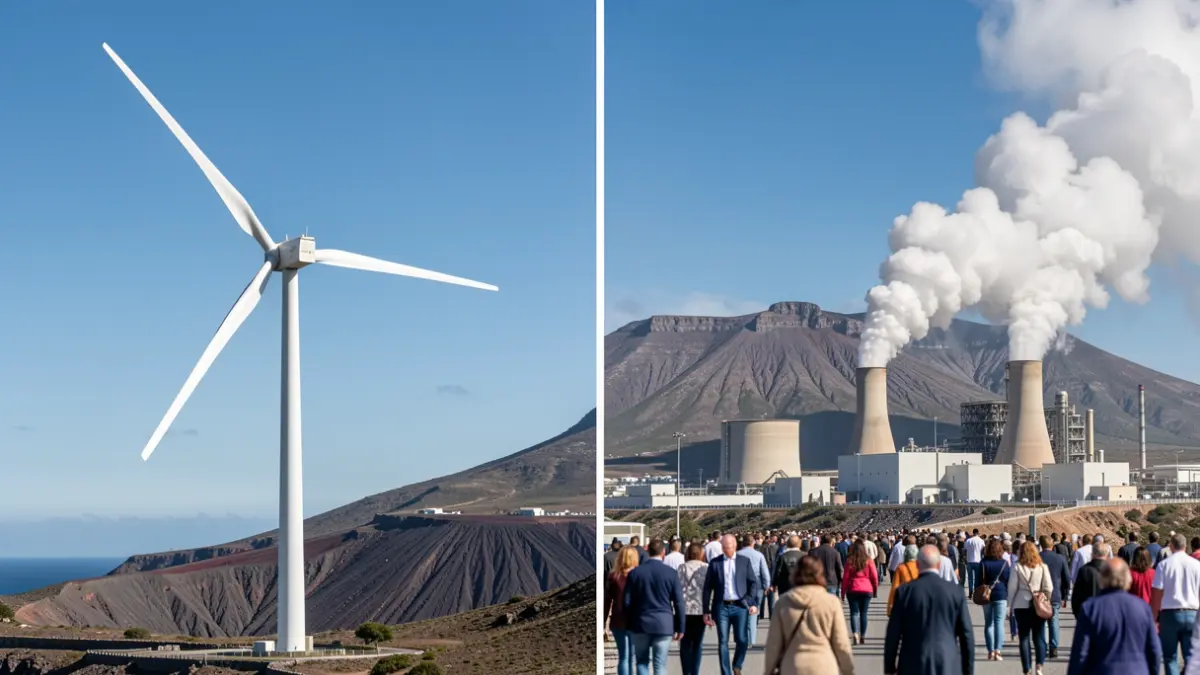
Data from the Electricity Energy Statistics reveals that wind power represented 15.3% of the total energy generated. The proportion of electricity produced through renewable energy has remained stable compared to previous years, but 2025 marked a milestone in the production of clean megawatts in the archipelago.
By island, El Hierro led the generation of electricity through renewable energies, reaching 43.5% of the total. In contrast, La Palma (7.7%) and La Gomera (11.0%) recorded the lowest percentages of renewable generation during the past year.
The total electricity production in the Canary Islands increased by 0.96% over the last year. Generation from renewable energies saw a rise of 1.03%, while production using petroleum derivatives varied by 0.9%.
Within renewable energy sources, wind power decreased by 2.6%, while photovoltaic solar power increased by 14%. Both sources combined accounted for 98.1% of the total renewable energy production in the Canary Islands.
The ISTAC provides a comprehensive visualization of all energy data, covering generation and production to demand and final consumption.