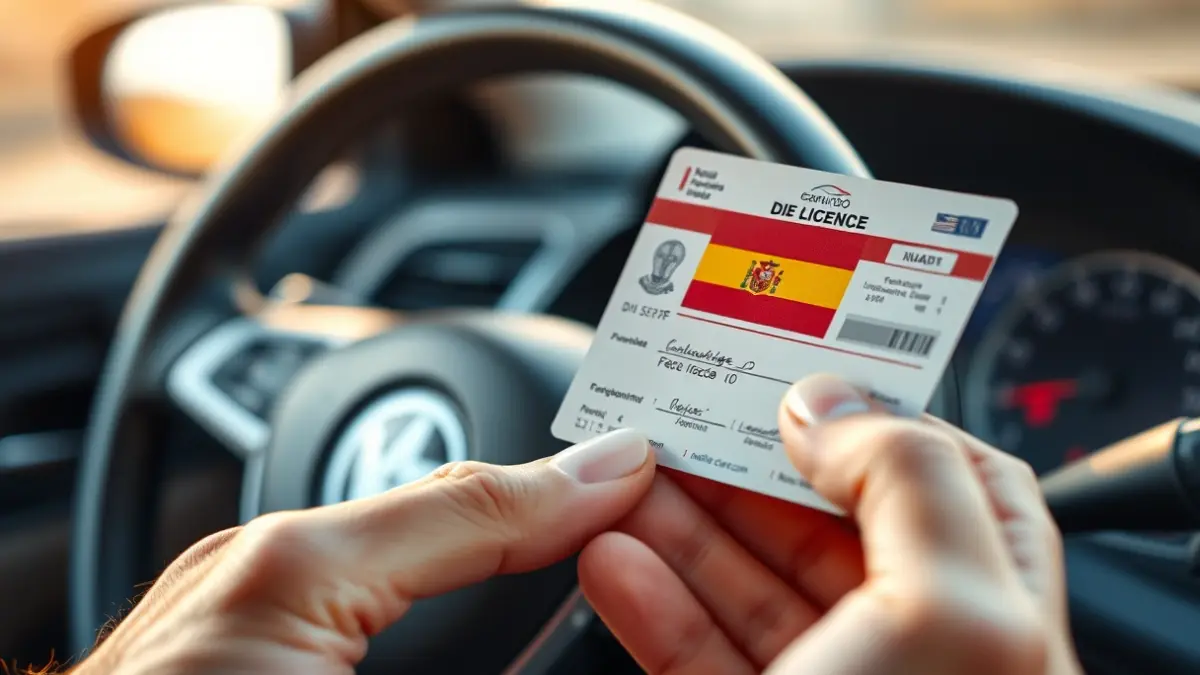
These changes aim to enhance road safety, emphasizing that there is no legal age limit for driving; rather, fitness is based on the driver's physical and cognitive state. However, the frequency of medical examinations for older drivers will increase.
For drivers turning 65 in 2026, meaning those born in 1961, the validity of the Type B driving license will be reduced from 10 to 5 years. For professional licenses, renewal will be required every 3 years. This preventive measure ensures that essential driving capabilities, such as vision, hearing, and reflexes, are assessed more regularly.
“"The DGT insists that there is no legal age limit to stop driving. The criterion for withdrawing a license is not the date of birth, but the driver's physical and cognitive state."
Conversely, drivers reaching 70 years of age in 2026 (born in 1956) will benefit from a full exemption from traffic fees for their driving license renewal. While they will still need to cover the cost of the medical examination at the psychotechnical center, they will save on the administrative fee. Furthermore, the DGT streamlines this process by allowing this age group to complete it without a prior appointment, a procedure that, from the age of 70, must be repeated every 5 years.
The renewal process includes an evaluation at a Driver Recognition Center (CRC), where psychotechnical tests assess coordination, visual acuity, and general health. If limitations are detected, the license is not necessarily revoked; instead, an “apt with conditions” status may be issued, which could include speed restrictions, prohibition of night driving, or the requirement for vehicle adaptations, and even a reduction in license validity to one or two years in cases of controlled degenerative diseases.
For residents in the Canary Islands affected by these changes, it is advisable not to wait until the last minute to renew their driving license, as it can be done up to 90 days before its expiration date. Driving with an expired license can result in fines of 200 euros and potential issues with insurance coverage in case of an accident. Authorized centers in the Islands process renewals electronically with the DGT, providing a temporary paper permit valid nationwide until the definitive plastic license arrives by mail.