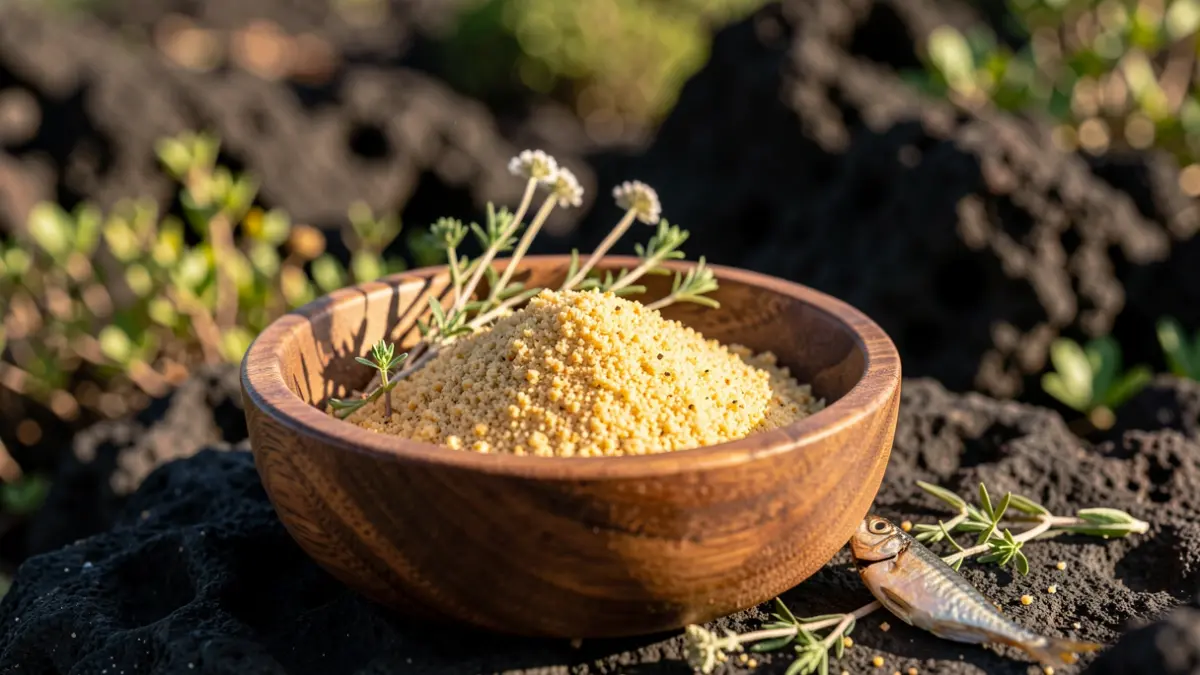
Six centuries after the arrival of Europeans and the subsequent process of cultural assimilation, contemporary Canary Islands still display evident traces of their indigenous past. Toponymy is a clear example, with numerous Amazigh words dotting the archipelago's geography. This heritage also endures in gastronomy, and not solely through the omnipresent gofio. Chef Marcos Tavío, founder of the restaurant 8Aborigen, has set out to unravel and showcase this ancestral culinary legacy.
Tavío conceives his haute cuisine menu as an "archaeological site," using the metaphor of stratigraphy to explain his approach. "The surface elements are dishes from the current history of the Canary Islands, but as the experience unfolds, we taste the foods that the first Canarians consumed," he explains. His cuisine is based on history, on that which, even if unwritten, "lies beneath the earth," much like archaeologists excavate layer by layer.
Marcos Tavío, born in Tenerife in 1962, defines himself as a "kitchen archaeologist" and a pioneer in recovering the Canarian "edible heritage." For him, his cuisine is original because it "springs from the origin of the culture bequeathed to us by the aborigines," always seeking a link to that past, however avant-garde his dishes may be. Archaeology, by excavating Guanche hearths, reveals the foundation of this heritage: cereal seeds for gofio, wild plants, fish bones, mollusk remains, and bones from animals like black pig or goat.
Regarding wrinkled potatoes (papa arrugada), Tavío clarifies that it represents "Canarian-Spanish identity," as the product arrived from America after the conquest. "We cannot limit it solely to the indigenous era," he notes. Gofio, however, is a "hallmark of 21st-century Canarias," just as it was in pre-Hispanic society. The chef uses it as a "fetish ingredient" for avant-garde techniques, always preserving its original essence.
Mojo sauce, on the other hand, does not have indigenous roots but Portuguese ones, arriving in the Canary Islands via Andalusia and Extremadura. Its popularity stemmed from adding "joy to dishes" and flavors with a touch of acidity. At 8Aborigen, mojo is understood as an "evolution," becoming an "elegant sauce" that subtly seeks acidity, sometimes without vinegar, using native plants or the fermentation of fruits and vegetables, a technique known to the ancient Canarians.
Indigenous heritage is also manifested in the consumption of seafood, such as viejas, sardines, anchovies, or mackerel, which remain appreciated today. Limpets are another key mollusk in the islanders' gastronomic identity. The research "From Coast to Coast. Canarian-Amazigh Populations and the Sea," by ictioarchaeologist Carmen Gloria Rodríguez, certifies the relevance of these marine resources in the current diet.
Rodríguez and Tavío are co-authors of the "Archaeology of Taste" project, sponsored by the Cueva Pintada Archaeological Park Museum. This initiative uses archaeology as a source of wisdom to create cuisine inspired by the Amazigh universe. Dr. Jorge Onrubia highlights the ritual function of sheep's milk and meat in indigenous society, not only for nutrition but also as central elements in "commensality" and the construction of "social bonds."
The restaurant La Tunera, in Telde, and its chef Manuel González, are another significant reference. Although his cuisine is not directly inspired by the indigenous diet, it draws from "zero-kilometer" products and the "last herbalists" of rural Gran Canaria. González also delves into the culture of the ancient Canarians and uses gofio in innovative ways, such as in salt flakes, fermented gofio vinegar, creamy mojos, brioches, desserts, and liquid croquettes. His famous sancocho donut coated with gofio cream is a staple at Telde's gastronomic events.
This report concludes that the heritage of indigenous gastronomy remains present on the plates of 21st-century Canarians, demonstrating the profound connection between the archipelago's culinary past and present.