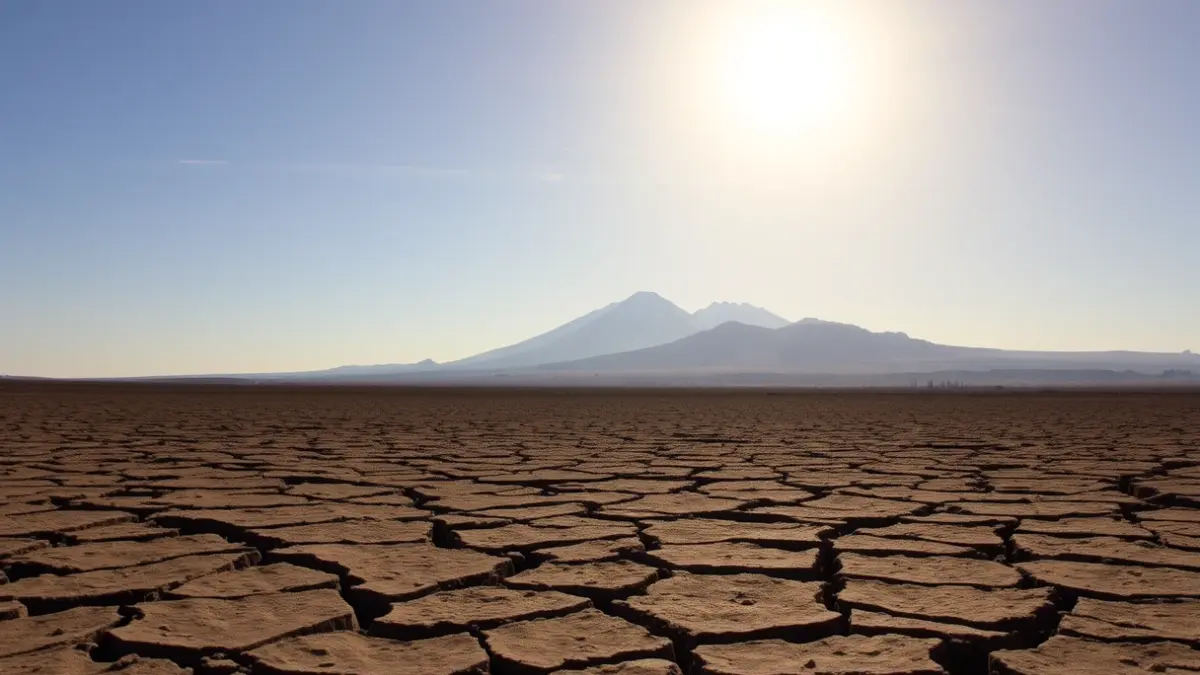
Recent rainfall in the Canary Islands, which made March the wettest month since 1961 with an average of 144.6 liters per square meter, is not enough to reverse the structural drought trend. A study published in the journal Environmental Monitoring and Assessment warns that the natural water balance of the archipelago is being depleted, with the possibility that some islands may lose almost all their freshwater reserves by the end of the century if the climate crisis intensifies.
“"Punctual rains, however intense, do not reverse a structural drought trend. A wet episode like the one we have had partially recharges some aquifers, especially at medium and high altitudes. But the problem is more subtle (and more worrying). The net balance tends to worsen because an increasing proportion of available water is lost due to the effect of heat. Even if there are good winters, this does not necessarily compensate for several consecutive dry years."
The research, which used the SICMA Canarias methodology, projects the evolution of water reserves until 2100 under two climate scenarios: a moderate one and a pessimistic one. The results are disheartening, showing a widespread loss of natural water in both cases. In Gran Canaria, reserves in the northern and central mountainous regions could disappear in the most unfavorable scenario. In Tenerife, northern water pockets could be reduced by up to 50%.
The eastern islands, Fuerteventura and Lanzarote, already have a zero water balance, which would exacerbate water stress with any change. Among the green islands, El Hierro could see a reduction of its reserves by up to 75%, while in La Gomera, a “partial or almost total” decrease is projected. Although La Palma might experience a slight increase in the short and medium term, a progressive decline towards 2100 is expected.
The increasing evaporative demand of the atmosphere, directly linked to rising temperatures, is the most concerning signal. A researcher emphasizes that “we don't need less rain to have more water stress; more heat is enough.” In addition to climate change, demographic and tourist pressure, agriculture, and losses in distribution networks contribute to the problem.
Desalination is presented as a fundamental pillar for water supply in the Canary Islands, provided it is coupled with renewable energies. However, it should not be seen as an unlimited solution. Demand management, loss reduction, crop adaptation, and tourism planning that limits water consumption are crucial for the archipelago's water sustainability.