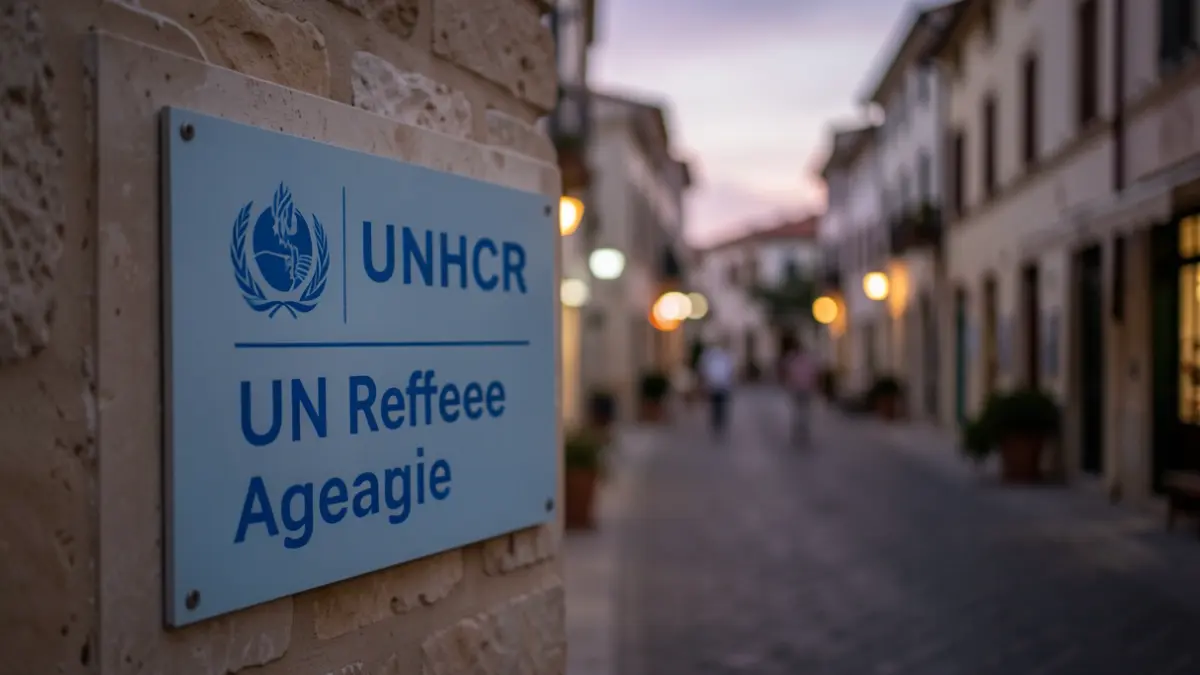
The UN Refugee Agency (UNHCR) has officially closed its office in Gran Canaria, a move announced a year ago and driven by a reduction in its funding. Over the past year, the office had only one staff member, a significant decrease from the four employees it had in previous years.
Although the physical office is closing, UNHCR will not disappear from the archipelago. From now on, its presence will be ensured through regular trips from Madrid. Paula Barrachina, UNHCR spokesperson in Spain, told this newspaper that the objective is to "recover the necessary funds to reopen our presence in the Canary Islands," calling this goal a "priority," especially in the context of the European Pact on Migration and Asylum.
The closure of the Canary Islands office follows similar closures in Ceuta, Melilla, Málaga, and Algeciras. Barrachina emphasized the agency's continued commitment: "We will remain as committed as ever, working to support refugees in Spain and minimize the impact."
Nationally, UNHCR has halved its staff in Spain over the past year, including the elimination of positions in the protection area in Madrid. These adjustments have been implemented in phases to facilitate a smoother transition and ensure project continuity. "We have had to reduce key activities such as interpretation and legal assistance across the territory," stated the spokesperson. In the Canary Islands, "we will remain very present through frequent trips and by working with our partners on the ground," she assured, confirming that the interpreter project will continue to operate.
Globally, UNHCR plans to eliminate approximately 3,500 jobs, representing an overall reduction in personnel costs of around 30%. Despite having a budget similar to previous years (approximately 3.4 billion dollars, with little change since 2015), the number of refugees has nearly doubled, reaching 117 million forcibly displaced people worldwide.
UNHCR's funding has seen significant drops, particularly from the United States, which decreased from 2.1 billion dollars in 2024 to 840 million in 2025. European countries, including France and Germany, have also contributed less. However, UNHCR notes that Spain is the country that contributes the most in private donations globally.
UNHCR describes the impact of these cuts as "devastating," affecting essential medicines, emergency shelter, food, relief items, clean water, and protection services, including those for children and survivors of sexual violence and trafficking, which have been reduced or suspended.