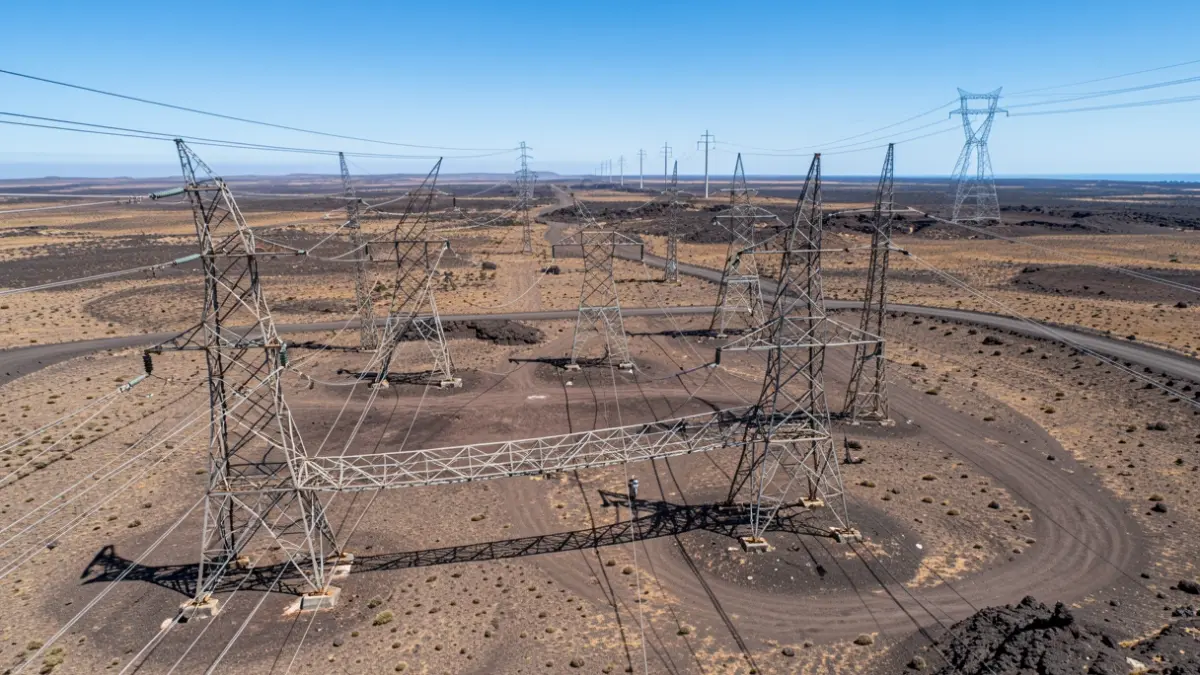
The Canary Islands Government's Ministry of Ecological Transition and Energy, led by Mariano H. Zapata, has greenlit the total dismantling of the obsolete 66 kV electrical line that ran through Fuerteventura. The General Directorate of Energy has granted Red Eléctrica (REE) authorization to act on the three main sections of the installation: Gran Tarajal–Matas Blancas, Salinas–Gran Tarajal, and Salinas–Corralejo.
This step was made possible through coordination with REE and the full connection and equipping of the new 132 kV network. This technical measure has been crucial to ensure that the removal of the old infrastructure does not affect the quality or continuity of the island's electricity supply.
Red Eléctrica will have a maximum of 18 months to remove the 344 pylons that make up the line, which extends over more than 93 kilometers. The regional administration is managing the planning of technical timelines for efficient execution.
Zapata highlighted that this action responds to a "historic claim from the Majorero people" to dismantle the old grid, complying with the requirements of the Environmental Impact Declaration and ensuring a renewed and modern electricity supply through the new 132 kV line.
The overall project involves the progressive dismantling of 344 pylons and over 93 kilometers of cabling across five municipalities: Tuineje, La Oliva, Pájara, Puerto del Rosario, and Antigua.
The Gran Tarajal – Matas Blancas section includes the removal of 105 pylons over 31.92 km, affecting Tuineje and Pájara. The Salinas – Gran Tarajal section involves dismantling 151 pylons over 39.07 km, spread across Puerto del Rosario, Antigua, and Tuineje. Finally, the Salinas – Corralejo section covers the removal of 88 pylons over 22.88 km, divided between Puerto del Rosario and La Oliva.
The authorization includes specific environmental conditions for the protection of avifauna, particularly to preserve pylons identified as roosting and nocturnal aggregation sites for the island's guirre population, balancing the removal of disused infrastructure with the environmental equilibrium.