The regional executive's letter urges Brussels, in coordination with the Spanish Government, to assess the situation, mobilize solidarity mechanisms provided for in European regulations, and convene an urgent meeting to agree on concrete measures and an action plan. This request comes amid growing pressure on first reception resources and public services in the islands, particularly on El Hierro.
In the letter, Clavijo warns of the reactivation of departures from various points on the West African coast, especially Senegal and Gambia, and the risk of new routes consolidating. He believes the response must go beyond managing consequences once boats reach the Canary Islands' shores. The President outlines five priority actions: an immediate assessment of migratory pressure and extraordinary needs in the Canary Islands; urgent review of solidarity and financing mechanisms under the European Pact on Migration and Asylum; strengthening cooperation with Morocco, Mauritania, Senegal, and Gambia; mobilizing competent European resources and agencies; and direct participation of the Canarian Government in monitoring the response.
The President requests an urgent meeting with representatives from the Commission and Spanish authorities. He recalls that the Canary Islands are an external border of the European Union and argues that the situation cannot be treated as an exclusively regional or state problem. "The credibility of the new European Pact on Migration and Asylum is also at stake in the Canary Islands; solidarity cannot be limited to a principle enshrined in European legislation: it must become effective when an external border of the Union faces an extraordinary situation," he states in the letter.
“"What we are seeing these days in El Hierro demands anticipation and coordination, and we need Europe to get involved before the pressure further overwhelms the islands' resources, with effective support for Spain, the Canary Islands, and reception facilities"
Clavijo added that "we are talking about protecting lives, attending to people with dignity, and ensuring that a European responsibility does not fall disproportionately on the territories of first arrival." In this regard, the Minister of the Presidency, Public Administrations, Justice, and Security, Nieves Lady Barreto, has written to the Minister of the Interior, Fernando Grande Marlaska, requesting immediate urgent and extraordinary measures, particularly the reinforcement of National Police and Civil Guard personnel in El Hierro.
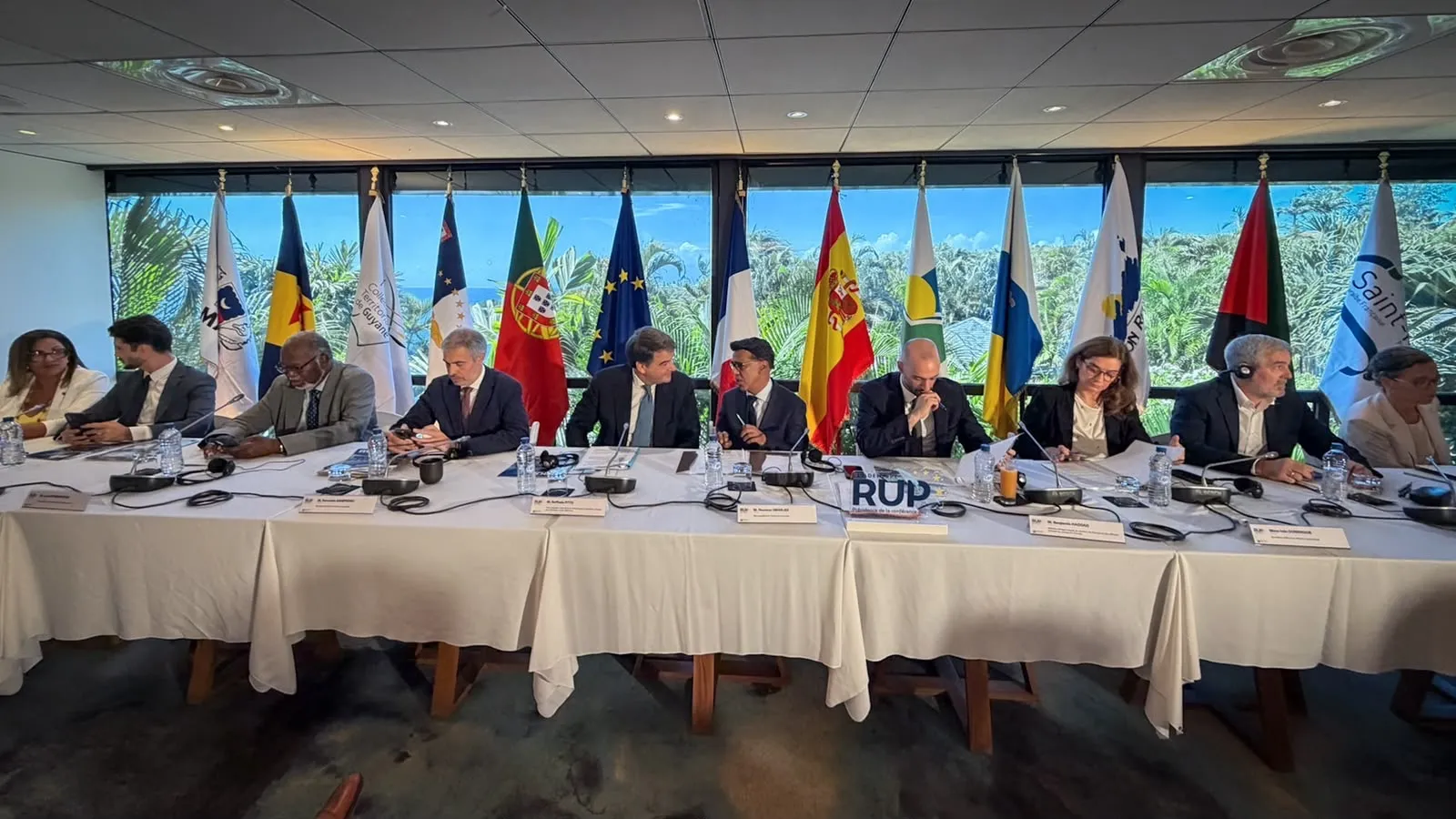
The request coincides with the final declaration of the XXX Conference of Presidents of the nine Outermost Regions (ORs) in Guadeloupe. The document acknowledges the migratory pressure and calls for a European response based on solidarity and shared responsibility. It requests effective coordination with the Commission, real application of solidarity mechanisms, and adequate funding for the reception, protection, and integration of migrants, especially unaccompanied minors. It also calls for exceptional situations affecting ORs to be considered in the future European mechanism for emergency response at external borders, with rapid intervention and sufficient resources.
The Canary Islands Government believes both initiatives address the need for European instruments adapted to the archipelago's reality, given its status as an Atlantic external border and the added difficulties of insularity. Clavijo argued that cooperation with West Africa must combine prevention of dangerous departures, fight against migrant trafficking networks, and protection of human rights.
The "Guadeloupe Declaration" also addresses other issues. The ORs demand that the recognition of their geostrategic importance translate into concrete regulatory and financial consequences, applying Article 349 of the Treaty on the Functioning of the EU. They consider the first legislative simplification package insufficient and demand a second package, with the Canary Islands reiterating the need to study 29 regulatory adaptations not included.
In the negotiation of the 2028-2034 European budget, the ORs request protection for cohesion allocations, maintenance of the agricultural POSEI, and creation of a POSEI-Transport. They propose a common budgetary security network and effective access to European programs. They also call for a coordinated position from Spain, France, and Portugal.
The declaration also defends the continuity of exceptions to the emissions trading scheme for air and maritime transport, measures to prevent port competitiveness loss, and adaptations to the carbon border adjustment mechanism. Regarding housing, it calls for solutions tailored to land pressure and residential demand in the ORs.
Clavijo has insisted that the unity of the nine regions must translate their demands into verifiable decisions, highlighting the urgency of the migratory situation, but also its impact on housing, transport, productive sectors, and the ability to decide on necessary European resources.