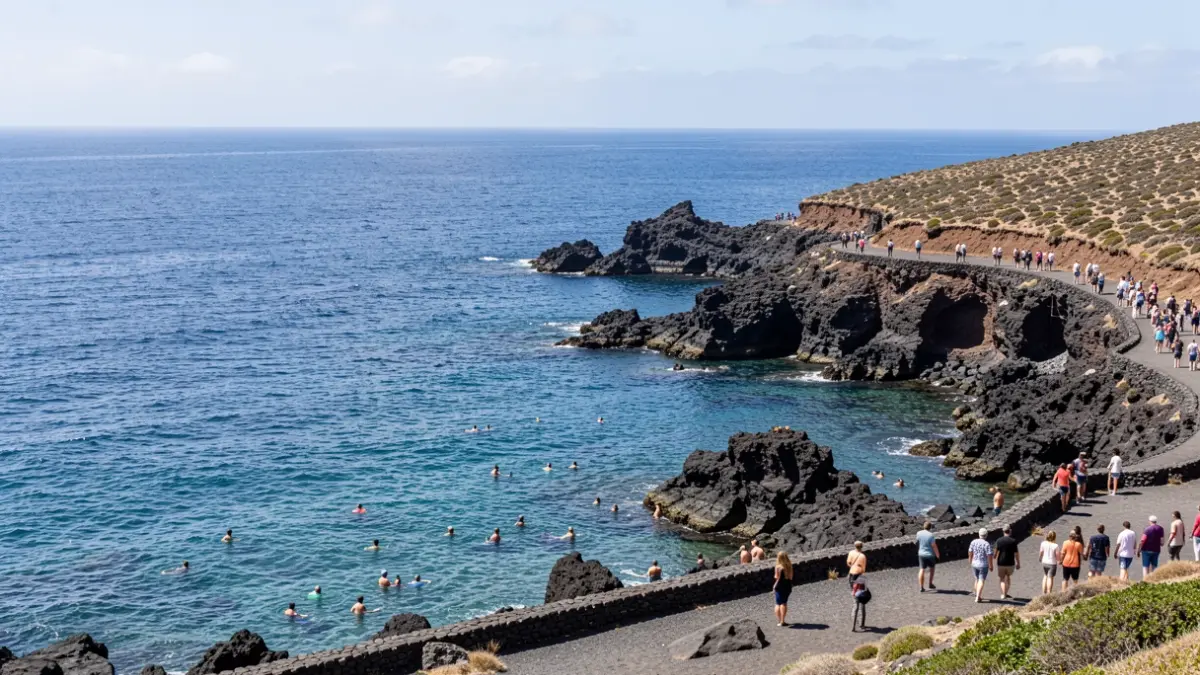
The municipality of El Pinar, on the island of El Hierro, has reversed its plan to install 115 concrete loungers at the well-known Tacorón bathing area. The agreement was reached after a meeting between representatives of the City Council and the local platform Salvar Tacorón.
According to the platform, the mayor of El Pinar, Juan Miguel Padrón, committed to abandoning the planned intervention and repairing the damage caused by the works that had already begun at the coastal site. This decision comes after significant community mobilization and a petition drive that, according to the group, gathered over 10,000 signatures in just one week.
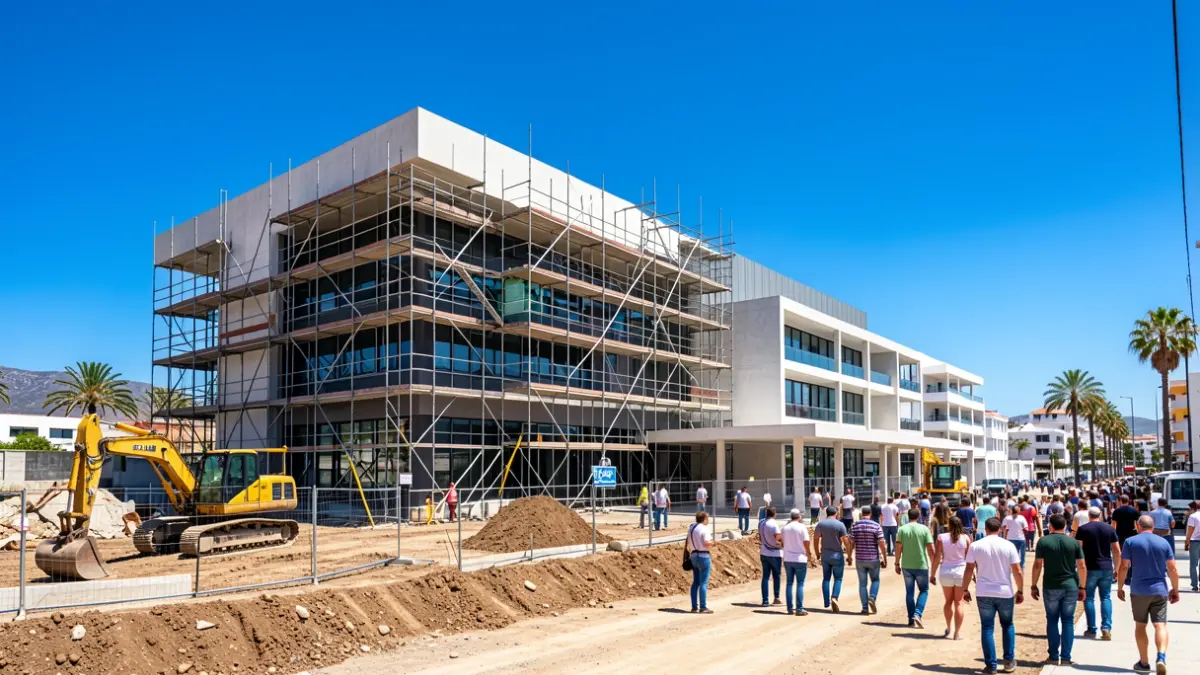
In addition to abandoning the loungers, the council has pledged to restore the area affected by the construction of a track and the disposal of waste resulting from the executed works. The Salvar Tacorón platform stated that the priority now should be to revert to the original project, focusing on improving existing facilities such as picnic areas and solariums, without introducing new elements that would alter the character of the space.
The local collective argues that this approach, centered on improving what already exists, had broader consensus among residents and visitors who value the unique nature of this environment.
The platform had strongly opposed the concrete loungers project, deeming it unsuitable for an area of high landscape and environmental value. Salvar Tacorón claims the intervention lacked the necessary environmental impact assessments and authorizations required for a protected zone, including approval from the Directorate General of Coasts and the Ministry of Ecological Transition.
The petition campaign on the Change.org platform, initiated by Salvar Tacorón, garnered nearly 10,000 signatures within a week, extending beyond the local scope to attract attention from residents and visitors across the Canary Islands and even internationally.
The social mobilization was considered a decisive factor in halting the project. Salvar Tacorón expressed gratitude for the mayor's decision, describing it as "sensible and responsible," and emphasized the crucial role of public response.
This case has sparked a wider debate on El Hierro's tourism development model and the importance of protecting its valuable natural spaces. The platform links this concern to territorial pressure in the Canary Islands, warning against replicating tourism growth models that have reportedly caused environmental and social tensions in other parts of the archipelago.
Salvar Tacorón advocates for a model focused on qualitative improvements to existing resources, conservation of natural heritage, trail maintenance, support for the primary sector, and the promotion of El Hierro's ethnographic and cultural values.
Future steps will concentrate on repairing the effects of the initial works and enhancing the existing facilities at the Tacorón bathing area, prioritizing the improvement of current public services without adding new permanent structures like the originally planned concrete loungers.