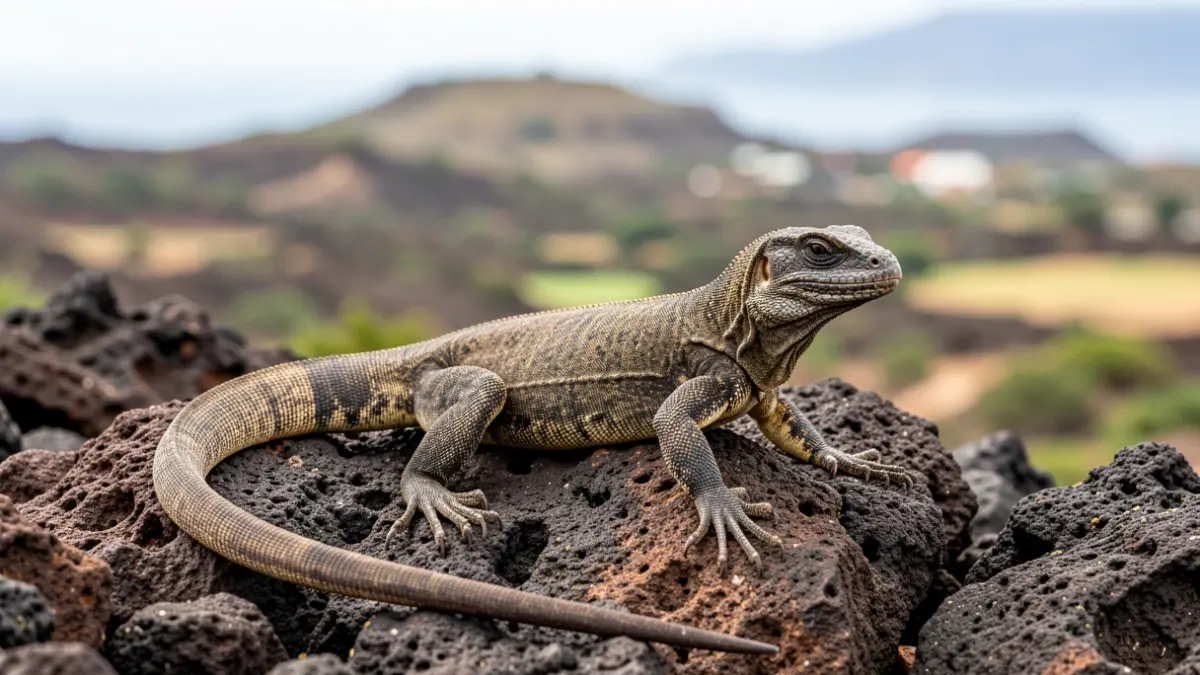
This emblematic Canary reptile, known for its broad head and long tail that can reach up to 70 centimeters, is critically endangered. The main threats to its survival are cats and rats, its natural predators, which have decimated its population over the decades.
The species was on the brink of extinction until a small surviving population was discovered in the Fuga de Gorreta cliffs. Since then, Canary administrations have implemented various recovery programs, including captive breeding, genetic improvement, reintroduction of specimens, and predator control. The El Hierro Giant Lizard Recovery Center, operational since 1995, plays a crucial role in these efforts.
The new project, recently presented by the Ministry of Ecological Transition and Energy of the Government of the Canary Islands, will focus on scientific monitoring, habitat improvement, threat control, and population reinforcement. The reproduction of these lizards begins in May, with egg-laying typically occurring between June and August.