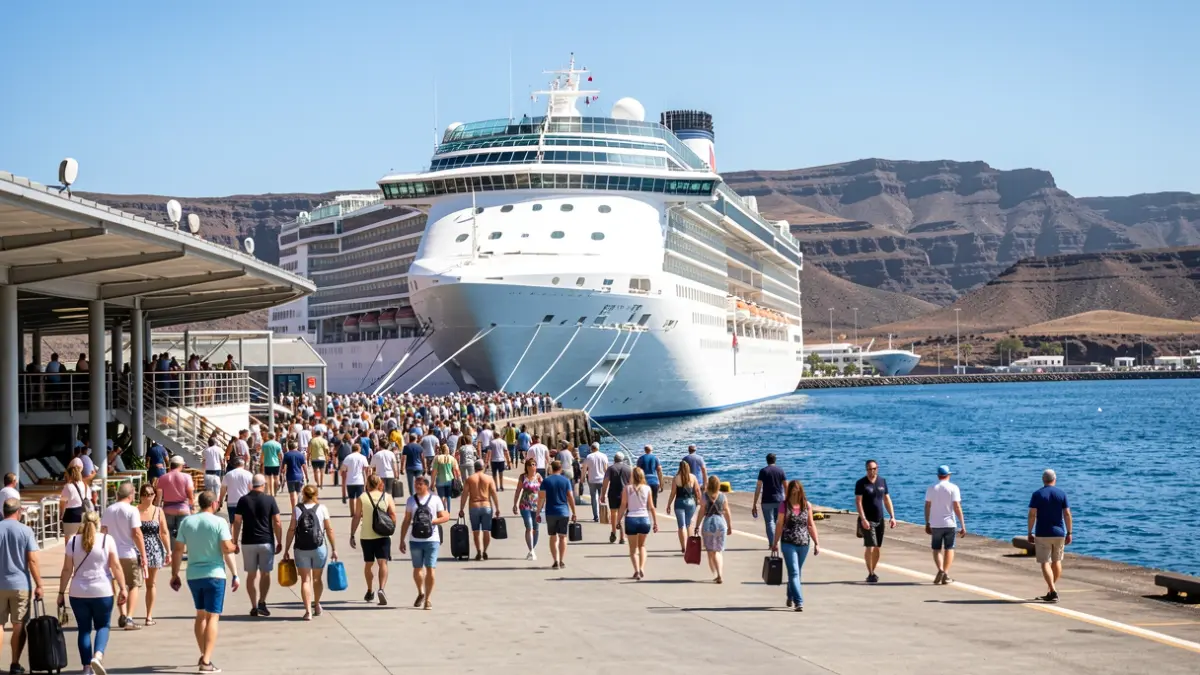
Urban health has become a primary concern for citizens, though not all territories start from the same baseline. According to the latest report published by the health platform Zava, Arrecife is the least healthy city in Spain. The capital of Lanzarote received the lowest score in an analysis comparing well-being indicators of the country's main urban centers, leaving the island in a compromised situation compared to top-ranking destinations like Vitoria or Madrid.
This report is not based on subjective opinions but on the cross-referencing of metric data that directly affects residents' daily lives. To determine each city's position, the study evaluated parameters such as the number of sports centers, the amount of green spaces per inhabitant, the availability of health centers, and pollution levels. In almost all of these, Arrecife was relegated to the last position on the table.
The lack of infrastructure that promotes an active lifestyle is a determining factor in Arrecife's situation.
Zava's analysis is clear in pointing out the lack of infrastructure that encourages an active lifestyle in Arrecife. While other Spanish cities have opted for pedestrianization and the creation of green lungs, the capital of Lanzarote shows a historical deficit in these areas. The scarcity of sports facilities, with one of the lowest numbers of gyms and training centers per 10,000 inhabitants, makes it difficult for the population to maintain consistent physical exercise routines without traveling long distances. Furthermore, the shortage of green areas, where asphalt predominates over vegetation, severely penalizes the city in well-being rankings. Overwhelmed health services, with perceived delays and a low ratio of primary care centers per inhabitant, have also been decisive in placing the city at the bottom.
It is paradoxical that, despite being in a privileged environment due to its climate and nature, Arrecife is the least healthy city in Spain. This fact clashes head-on with the image of the Canary Islands as a destination for well-being and outdoor sports. However, the study clearly differentiates between the natural environment and urban planning. While other Canarian capitals like Las Palmas de Gran Canaria or Santa Cruz de Tenerife manage to stay in the middle of the table thanks to their parks and larger networks of sports centers, Arrecife suffers the consequences of urban growth that has not always prioritized citizen health. The Zava report emphasizes that health does not only depend on genetics or diet, but on the environment that facilitates (or hinders) healthy choices.
Another black mark placing the capital of Lanzarote in this position is mobility. The healthiest cities in the national ranking (such as Vitoria-Gasteiz) share a common trait: the ease of getting around on foot or by bicycle. In Arrecife, the use of private vehicles remains predominant, which not only affects the physical activity levels of the population but also impacts local air quality, despite the beneficial influence of the trade winds.
The publication of this ranking has come as a cold shower for the island. However, various social groups see it as an opportunity to demand changes. To cease being the least healthy city in Spain, Arrecife needs a structural transformation that includes more bike lanes, the rehabilitation of degraded public spaces, and greater investment in accessible municipal sports centers. Urban health is the great challenge of the decade. This Zava study serves as a thermometer to measure how much progress still needs to be made. If Arrecife wants to climb positions in the next report, the strategy must necessarily involve 'greening up' the city and making sports infrastructure readily available to citizens.