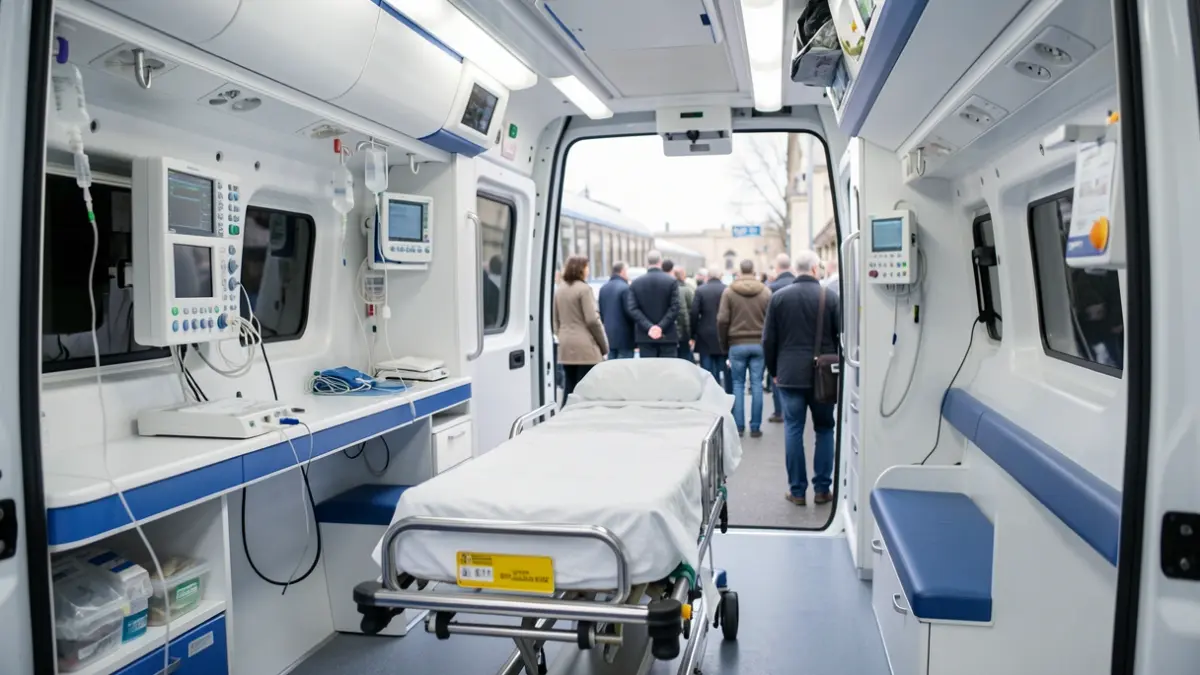
The motion, presented by Nueva Canarias-Bloque Canarista and Asambleas Municipales de Fuerteventura, aims to incorporate 5 ambulances for urgent services and 6 for non-urgent transport, addressing the current insufficiency of resources to meet the island's needs.
The proposing councilors, Carmelo Rodríguez Cabrera and Yurena Vera Ramos, argue that healthcare planning must consider distances, population growth, and the high number of tourists the island receives annually.
Currently, Fuerteventura has 9 urgent healthcare transport ambulances (7 basic life support and 2 advanced life support). The proposal requests adding 5 more (3 basic life support and 2 advanced life support medicalized), plus 6 units for non-urgent transport, increasing the total from 20 to a minimum of 31 vehicles.
The signatory parties warn that statistics can be misleading due to the island's length and the prolonged occupation of units during transfers, which temporarily leaves other emergencies unattended.
The motion recalls that healthcare transport professionals have long been alerting about these shortcomings, emphasizing the importance of sizing the service considering kilometers traveled, time occupied, territorial dispersion, and real availability.
The need to incorporate tourist pressure into healthcare planning is highlighted, demanding specific reinforcements during peak visitor periods, as planning solely based on the census ignores a part of the island's reality.
The initiative asks the Canary Islands Government to listen to healthcare transport professionals and to fulfill the agreement approved in the Canary Islands Parliament in April 2025 to professionally recognize Emergency Health Technicians (TES).
Ultimately, it is demanded that public healthcare calculate Fuerteventura's needs not only by the number of ambulances but also by distances, times, actual population, and effective response capacity.