
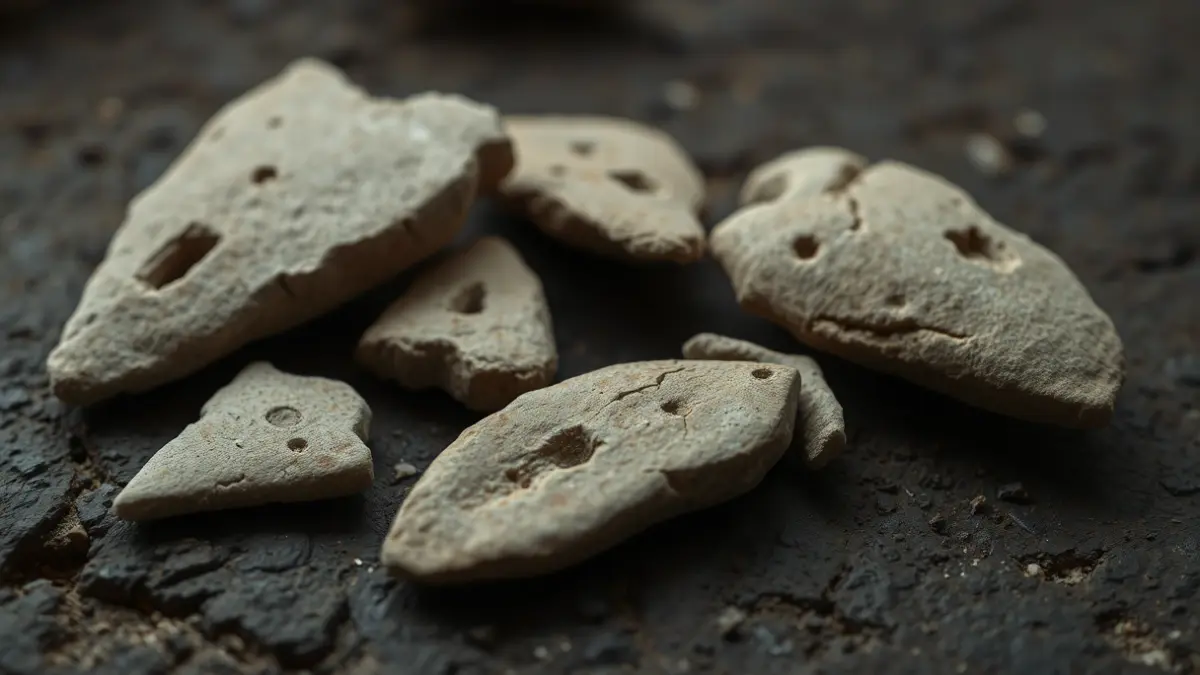
The discovery, published in March in the Journal of Archaeological Science: Reports, was presented by the Cabildo de Gran Canaria and the ULPGC. The research focused on the study of wear traces on lithic tools using traceology, a discipline that determines their function.
“"We have been able to determine that one of the tools was used for cereal harvesting, making it the first, most direct, and oldest evidence not only in Gran Canaria but also in the entire Canary archipelago."
This study confirms the existence of more complex agricultural practices than previously thought in the indigenous society, including harvesting methods different from manual uprooting. The uniqueness of the C008 granary at Roque Bentayga, excavated in volcanic tuff, lies in the preservation of organic remains, such as cut barley stalks, reinforcing the connection between the tools and agricultural activities.
The investigations are the result of an agreement between the Cabildo de Gran Canaria, through the Institute of World Heritage and the Biosphere Reserve, and the ULPGC. This agreement, initiated in 2022 and extended last year, involves an investment of 360,000 euros.
The site was used as a granary between the 10th and 13th centuries, and later as a funerary space between the 13th and 14th centuries. In the latter use, the employment of stone tools in the wrapping process of individuals was documented, characteristic of the island's funerary model. Other common lithic tools were also identified for working volcanic tuff and conditioning caves, essential for the daily activities and subsistence practices of the indigenous society due to the absence of metals.
“"Memory is a writing as prodigious as it is fragile, and if it receives the care it deserves, it becomes a powerful instrument of consciousness and social transformation."


