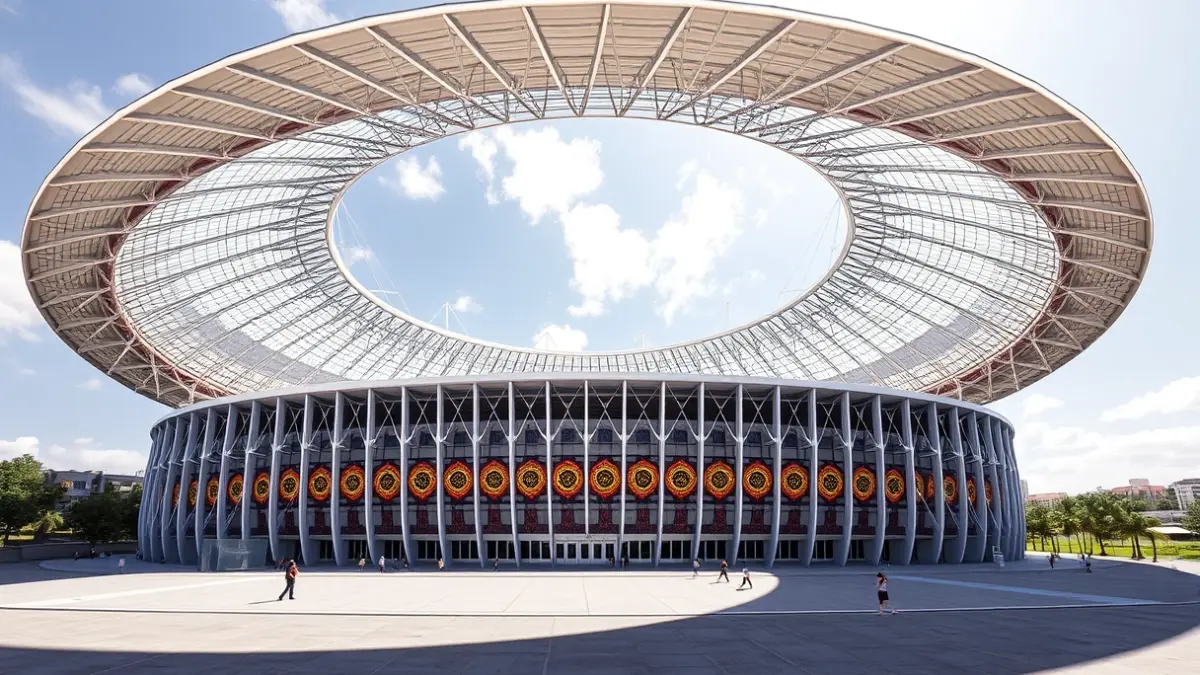
The General Directorate of Building and Activities of the city council has declared the project's compliance with applicable urban planning regulations, following a review of the complementary technical documentation provided by the Insular Sports Institute of the Island Council, the project's promoter. The process began on March 10, 2026, with a request for an urban planning report on the project's adherence to regulations.
The plan envisions a comprehensive transformation of the stadium to meet the international standards of the International Federation of Association Football (FIFA). This includes a significant increase in seating capacity, from 32,418 to 41,854 seats, representing a 29 percent increase over the current capacity.
Among the architectural innovations, a unique bicycle-wheel-like roof structure will be incorporated, improving coverage and construction efficiency. The facade will integrate a pattern of Canarian 'pintaderas', an identifying element that will connect the infrastructure with the island's traditional culture and symbolism. The construction will be carried out in phases to allow for partial continued use of the stadium during the works.
Regarding mobility, the project reorganizes the parking system, reaching a total of 597 spaces, with the possibility of expanding to 623. Additionally, it will functionally connect with an adjacent parking facility of at least 3,500 spaces, intended for large events. The comprehensive renovation project also includes measures to conceive the venue as a multifunctional facility and to improve its sustainability through the use of renewable energies, aerothermal, and geothermal solutions.