The state of healthcare in Canarian prisons has moved beyond the facility walls, sparking a civic mobilization that denounces what it perceives as structural neglect. Various associations, alongside healthcare professionals and unions, are urging the Government of Canarias to take over healthcare transfers in penitentiary centers, emphasizing the urgency of this measure.
This demand is not new. The Law 16/2003 on Cohesion and Quality of the National Health System stipulated that, within 18 months, healthcare for individuals deprived of liberty should be integrated into regional health systems. The goal was to ensure equivalent care to that of the general population. However, more than two decades later, only Catalonia, Navarre, and the Basque Country have implemented these competencies.
The lack of agreement on the cost of this transfer has led to a situation where the Ministry of Interior continues to manage healthcare in most prisons, even resorting to private healthcare due to staff shortages. Vacancies are not filled because prison doctors' salaries are significantly lower than those of their public health counterparts, making these positions unattractive, according to union organizations.
The Canarian Statute of Autonomy of 2018, in its article 151, allows for the autonomous community to assume competencies in prisons. Nevertheless, the Government of Canarias' priorities have focused on other areas, such as co-management of airports or the development of the Economic and Fiscal Regime (REF), leaving prison healthcare aside. Assuming these competencies is a delicate issue, as autonomous communities fear that the transfer will not be accompanied by the necessary state funding.
Collectives and unions argue that this delay has direct consequences for healthcare. Two deaths in custody in the Canary Islands—one in Tenerife and another in Gran Canaria—have triggered a social reaction that has led to the creation of a civic platform. This initiative, promoted by the Orahan Intercultural Association in Tenerife and the Rehoyando Association in Gran Canaria, seeks support to demand these transfers.
One of the cases that raised alarm was that of a Nigerian inmate who died in December 2025 at Tenerife II prison. According to the complaint filed with the Ombudsman, the inmate requested medical attention in late November 2025 for severe respiratory congestion, and his condition progressively worsened. On the night of December 19, 2025, the inmate activated his cell alarm without receiving a response, prompting other inmates to call for help. The situation recurred the following night, and on the morning of December 21, 2025, the inmate was transferred to the medical service, where he passed away. Prison sources, however, stated that the inmate did not activate the alarm and had an external consultation scheduled for later days, but died before he could be seen.
In Gran Canaria, the case of an inmate has reached the courts following a complaint from his family. According to the Prosecutor's Office, on November 7, 2023, he began experiencing severe chest pains consistent with a heart attack. Two days later, after being treated at the infirmary of Las Palmas II (Juan Grande) prison, he was returned to his module and subsequently sent to an isolation cell, where he was found dead on November 9. A medical report attributed the cause to an untreated acute myocardial infarction. The Public Prosecutor's Office has requested four years in prison for the doctor for an alleged crime of professional gross negligence leading to homicide.
These two deaths have intensified the demand from unions and social groups for the Government of Canarias to assume prison healthcare competencies, as stipulated by the 2003 law and the Statute of Autonomy. Unions like Tampm (Tu Abandono Me Puede Matar) and CCOO in prisons denounce that inmates do not have the same healthcare rights as the rest of the population. In Tenerife II, the medical staff should consist of eight doctors, but there are only three to attend to approximately 1,000 inmates, sometimes reduced to two per shift. In Las Palmas II (Juan Grande), with about 900 inmates, there is only one doctor who works via telemedicine due to their health condition.
The transfer of competencies would oblige the Ministry of Health to provide prisons with the necessary on-site staff and would help resolve the “information vacuum,” as Canarian Health Service records are not linked to those of penitentiary centers. This would facilitate data sharing, essential for knowing inmates' chronic pathologies or previous psychiatric treatments upon entry, avoiding starting diagnoses from scratch.
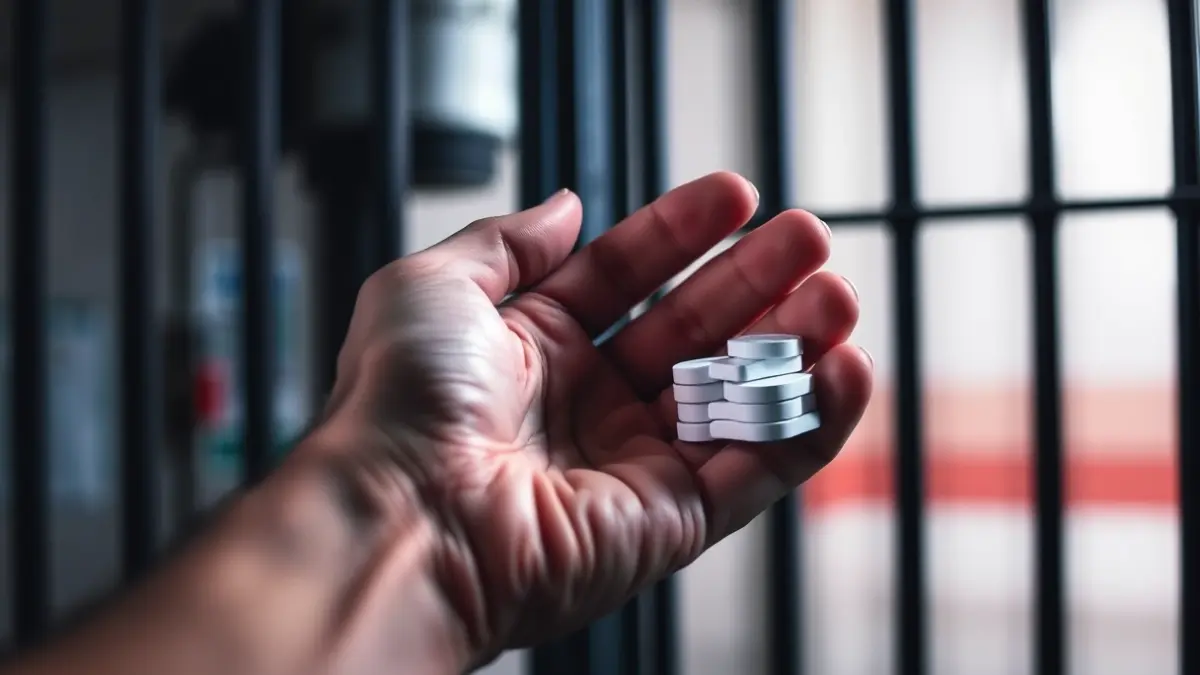
Furthermore, it would prevent the practice of giving inmates all three days' medication on Fridays, known as the “Friday package,” which carries a high risk of overdose or suicide, especially for those with addictions or mental health issues. It is estimated that 75% of inmates suffer from some type of pathology, mainly mental health problems, drug dependence, or addictions. The transfer would allow for daily distributions and proper medical follow-up.
The shortage of doctors in prisons also leads to the collapse of public hospitals, as any emergency must be referred. Prisoners have priority in emergency care, which delays attention for other citizens and saturates external services, according to Tampm. Proponents of the transfer argue that it is not a political option, but an obligation to guarantee equal rights in healthcare.
For her part, the Minister of Health of the Government of Canarias, Esther Monzón, has conveyed the unions' concerns to the Ministry of Interior to ascertain its plans. Although the Ministry intends to fill vacant medical positions, the regional Government will not, for now, request the transfer of prison healthcare to the State.